Most people grow up thinking orthodontists are the doctors who put braces on teenagers. That is the image that comes to mind — metal brackets, colorful rubber bands, and a few years of awkward school photos. But that picture misses a large part of what orthodontic care actually is and who it actually helps.
Orthodontists work with the structure of the mouth and jaw, not just the appearance of teeth. They assess how the upper and lower teeth come together, how the jaw moves, whether the bite is causing damage or discomfort, and whether the position of the teeth is making it harder to clean them properly. Their work connects to eating, speaking, breathing, jaw joint health, and long-term oral health in ways that most people do not fully understand until they sit down for a first consultation.
According to the American Association of Orthodontists 2025 Economics of Orthodontics Survey, the number of patients in active orthodontic treatment reached a record high in 2024, with an estimated 6.66 million people currently receiving care from AAO member orthodontists in the United States and Canada alone. That number reflects how much this field has grown beyond braces for teenagers. Adults now make up a substantial and growing portion of orthodontic patients, and treatments available today look nothing like the heavy metal hardware of previous decades.
This article covers what an orthodontist actually does, the full range of conditions they treat, what treatment involves from start to finish, what the risks and benefits honestly look like, what recovery and long-term outcomes are realistic, and what signs tell you it is time to call your orthodontist rather than wait for your next appointment.
Who an Orthodontist Is and How They Are Different From a Dentist
An orthodontist is a dentist who completed an additional two to three years of full-time specialist training in an accredited orthodontic residency program after finishing dental school. That residency focuses specifically on how to move teeth safely, how to guide jaw development, how to diagnose bite and alignment problems, and how to design and monitor treatment plans that can span months or years. This training is not optional and cannot be skipped. A general dentist cannot legally call themselves an orthodontist without completing this recognized residency.
A survey published in the American Journal of Orthodontics and Dentofacial Orthopedics found that 85% of people surveyed believed that dentists who offer orthodontic treatment are also orthodontic specialists. That is not accurate. General dentists can offer some basic alignment services, but they do not have the same depth of training in complex bite assessment, jaw growth guidance, and long-term treatment planning that a specialist orthodontist holds.
The distinction matters most in complicated cases. When bite problems are rooted in jaw structure, when multiple teeth are severely misaligned, or when a growing child shows signs of a developing skeletal problem, the depth of a specialist’s training becomes very relevant to the outcome.
Role
Education Required
Primary Focus
General Dentist
4 years dental school
Overall oral health, cavities, cleaning, gum care
Orthodontist
4 years dental school plus 2 to 3 years specialist residency
Tooth and jaw alignment, bite correction, facial development
Oral and Maxillofacial Surgeon
4 years dental school plus 4 to 6 years surgical residency
Jaw surgery, facial bone procedures, complex extractions
All orthodontists start as dentists, but the specialist pathway gives them a completely different depth of knowledge about tooth movement, bone biology, and jaw mechanics. When you see an orthodontist, you are seeing someone who has spent years focused on exactly the problems they will be treating for you.
What an Orthodontist Does Day to Day
It is easy to think of an orthodontic appointment as a quick wire tightening and a wave goodbye. The reality of what orthodontists do on a daily basis is considerably more involved than that.
What an Orthodontist Does Day to Day
Before any treatment begins, an orthodontist builds a detailed picture of the patient’s mouth, jaw, and facial structure. This diagnostic work includes several types of records. Panoramic X-rays show all the teeth, their roots, and their positions in the jaw. Cephalometric X-rays show the side profile of the skull and jaw, allowing the orthodontist to measure the relationship between the upper and lower jaws and how they relate to the rest of the face. Cone beam CT scans, which are now used more frequently thanks to digital advances, provide a three-dimensional view of the entire dental and skeletal structure without the need for physical molds. Photographs of the face and teeth are taken from multiple angles. Digital or physical impressions of the teeth are made to create accurate models.
This collection of records is not routine paperwork. It is the foundation of every decision that follows. The orthodontist studies these records to understand not just where the teeth are now, but why they are there, whether the problem is in the teeth alone or in the underlying jaw structure, and what kind of treatment will produce a stable result.
From there, a treatment plan is developed. A responsible orthodontist does not apply the same plan to every patient who walks in with crowded teeth. The plan accounts for the patient’s age, whether the jaw is still growing, the nature and severity of the problem, any health conditions that could affect bone healing, the patient’s preference between different appliance types, and what a realistic long-term result looks like.
Throughout the active phase of treatment, the orthodontist monitors progress at every appointment. They check whether teeth are moving in the right direction and at the right rate, whether any complications are developing, whether the supporting bone and gums are healthy, and whether any adjustments to the original plan are needed. Treatment plans do shift. A case that starts looking like it needs eighteen months may take twenty-two. A problem spotted mid-treatment may change the approach for the remaining months. Adapting to what is actually happening in the mouth is part of what an experienced orthodontist does well.
What a typical first orthodontic consultation involves:
A full review of medical and dental history
Visual and clinical exam of the teeth, gums, bite, and jaw movement
Panoramic and cephalometric X-rays
Digital scan or physical impressions of the upper and lower teeth
Photographs of the face and teeth from multiple angles
Discussion of findings and explanation of treatment options
Overview of likely timeline and costs
The Conditions an Orthodontist Treats
Orthodontists treat a wide range of conditions, not just visibly crooked teeth. Some problems are structural, some are functional, and some are both. Understanding the specific condition a patient has is what allows an orthodontist to choose the right approach rather than simply straightening what looks off.
Malocclusion — The Core Problem Behind Most Orthodontic Treatment
Malocclusion is the clinical term for when the upper and lower teeth do not fit together the way they should when the mouth closes. It is sometimes called a bad bite, and it is the most common reason people seek orthodontic care. Research indicates that malocclusion affects around 56% of people worldwide, though the severity varies enormously from person to person.
Malocclusion can be caused by genetics, childhood habits like prolonged thumb-sucking or pacifier use, early loss of baby teeth, jaw injuries, or a combination of factors. It is classified into three main types based on how the upper and lower jaws relate to each other.
Malocclusion Class
Jaw Relationship
Common Appearance
Class I
Jaws align normally but individual teeth are crowded or rotated
Upper and lower molars fit well but front teeth are overlapping or spaced
Class II
Upper jaw protrudes ahead of lower
Upper front teeth are far in front of lower, chin may appear set back
Class III
Lower jaw is forward of upper
Lower teeth sit in front of upper teeth when biting, chin appears prominent
Overbite
An overbite happens when the upper front teeth overlap the lower front teeth vertically by more than they should. A small overlap is actually normal and protects the front teeth from direct collision when biting. When that overlap exceeds roughly three millimeters, it becomes an overbite that may need correction.
Significant overbites can cause the lower front teeth to press against the roof of the mouth, leading to soreness and tissue damage. They can also cause noticeable tooth wear, jaw discomfort, and contribute to an appearance where the chin looks pushed back. Overbites are most often genetic but can worsen over time because of teeth grinding, missing lower back teeth, or habits during early childhood that pushed the upper jaw forward.
Signs that may indicate an overbite worth evaluating:
Upper teeth cover most or all of the lower front teeth when biting down
Lower front teeth are not visible when smiling with the mouth closed
Jaw clicks or aches with regular use
Visible or felt wear on the biting surfaces of the front teeth
The profile shows the chin sitting noticeably further back than the nose
Underbite
An underbite is when the lower jaw or lower front teeth sit forward of the upper teeth. It affects roughly five to ten percent of people and is less common than an overbite. Most underbites are genetic in origin — the result of a lower jaw that grew more than the upper jaw, or an upper jaw that did not grow enough to keep pace.
Left without treatment, an underbite can lead to teeth chipping from repeated contact, jaw joint problems, difficulty chewing properly, and in some cases breathing-related issues during sleep. Early treatment matters significantly for underbites in children because the jaw can be guided during its growth phase, which is far more straightforward than dealing with a fully developed adult jaw where bones no longer respond to growth guidance alone.
Crossbite
A crossbite occurs when some upper teeth sit inside the lower teeth rather than outside them when the mouth is closed. This can involve just the front teeth, just the back teeth, or both sections of the mouth. A crossbite can be dental — meaning only the tooth positions are involved — or skeletal, meaning the jaw itself is the source of the problem.
Untreated crossbites tend to worsen over time. The jaw adapts by shifting to one side to allow the teeth to meet, and this chronic shifting can create facial asymmetry, put ongoing strain on the jaw joints, and cause uneven wear across the teeth. Treating a skeletal crossbite in a child with a palate expander while the palate bones are still separate and movable is significantly simpler than addressing the same problem in an adult.
Open Bite
An open bite is when the upper and lower teeth do not touch in a certain area of the mouth even when it is fully closed. The most frequent type is an anterior open bite, where the front teeth do not meet. This often makes biting into food — like an apple or a sandwich — genuinely difficult, and it can affect the clarity of certain speech sounds.
Tongue thrusting, prolonged thumb-sucking, and extended pacifier use during early childhood are among the most common contributors to anterior open bites because these habits hold the front teeth apart during the years when they are coming in and positioning themselves. Addressing both the habit and the resulting dental position is part of a complete treatment plan for open bites.
Crowding
Crowding is one of the most frequently treated conditions in orthodontics. It happens when there is simply not enough space in the jaw for all the teeth to sit in their proper positions. Teeth end up overlapping, rotating, getting pushed forward or backward, or rising higher or lower than their neighbors. Genetics is the primary cause — the jaw size and tooth size do not match up.
Crowded teeth have consequences beyond appearance. Overlapping surfaces create areas where toothbrush bristles cannot reach and floss cannot pass through easily. Plaque accumulates in those areas, and over years this leads to a higher rate of cavities and gum disease. For this reason, treating crowding is often as much about long-term oral health as it is about how the teeth look.
Treatment for crowding may involve widening the dental arch with an expander, strategically removing one or more teeth to create space, or using braces or aligners to redistribute the teeth more evenly within the existing arch.
Gaps and Spacing
The opposite of crowding is too much space — gaps between teeth where they should be touching or sitting much closer together. This can happen because the teeth are naturally small relative to the jaw, because a tooth is missing and neighboring teeth have drifted apart, or because of an enlarged piece of tissue between the two upper front teeth called the labial frenum.
Gaps are not always a purely cosmetic concern. Missing teeth that have not been replaced can cause surrounding teeth to tip and rotate into the empty space over time, which changes the bite and creates problems that are more complex to address later.
Protrusion and Overjet
Overjet is different from overbite, though both terms describe ways the upper teeth are positioned beyond the lower. Overjet is the horizontal distance between the upper front teeth and the lower front teeth — how far the upper front teeth stick out forward. When overjet is large, the upper front teeth protrude noticeably and are sometimes described as buck teeth.
Significant overjet increases the risk of injury to the front teeth in any kind of fall or physical contact, because those teeth are more exposed and more likely to bear the impact. It can also make it difficult to close the lips comfortably without conscious effort.
Jaw Alignment Problems
Some orthodontic problems are not primarily about the teeth at all — they are about how the jaws developed and how they position themselves relative to each other. These are called skeletal problems, and they require a different kind of assessment and treatment than purely dental alignment issues.
In younger patients whose jaws are still growing, an orthodontist can use functional appliances — devices designed to guide how the upper and lower jaws grow in relation to each other — to correct or reduce skeletal problems before they become fixed. Once growth is complete, severe skeletal discrepancies can only be fully corrected through jaw surgery, which an oral and maxillofacial surgeon carries out in coordination with the orthodontist.
Jaw misalignment contributes to a range of problems beyond the teeth:
Problem
How It Connects to Jaw Position
TMJ pain and joint clicking
Improper bite puts stress on the jaw joint with every bite
Chronic headaches
Jaw muscle tension from compensating for a misaligned bite spreads upward
Sleep-related breathing issues
Jaw position influences airway size during sleep
Difficulty chewing
Upper and lower teeth cannot work together efficiently
Speech difficulties
Jaw and tooth position affect tongue placement for certain sounds
Facial asymmetry
One-sided jaw shifts from crossbite create uneven growth over time
Treatment Details
Understanding what orthodontic treatment actually involves — not just in general terms but in practical day-to-day terms — helps patients feel genuinely prepared rather than surprised at each stage. A lot of the anxiety people feel about starting orthodontic treatment comes from not knowing what to expect. The more clearly the process is explained, the more manageable it feels.
Treatment does not begin the moment an appliance is fitted. Before a single bracket is bonded or a first aligner is worn, the orthodontist spends time gathering detailed records. This diagnostic phase is what determines whether treatment will work and what it will look like. Without proper records, an orthodontist cannot accurately diagnose the problem or design a plan likely to succeed.
Once the records are complete, the orthodontist creates a personalized treatment plan. This plan specifies which appliances will be used, in what sequence, for how long, and what the goal positions for each tooth are. Some practices now use software that simulates tooth movement so patients can see a projected result before treatment starts. This simulation is a guide, not a guarantee, but it gives patients a realistic idea of where the treatment is headed.
The appliances orthodontists use are more varied today than they have ever been:
Traditional Metal Braces
Metal braces remain the most effective option for complex cases. Brackets are bonded to the front surface of each tooth, and an archwire runs through them, held in place by small elastic ties or self-ligating clips. The wire is adjusted at regular appointments — typically every four to eight weeks — to apply controlled pressure in specific directions. Modern metal braces are considerably smaller and more comfortable than the braces of previous decades, and many wires are now made from heat-activated alloys that apply more consistent, gentle force using body heat.
Ceramic Braces
Ceramic braces work identically to metal braces but use tooth-colored or clear ceramic brackets instead of metal ones. They are considerably less noticeable while still offering the same level of control over tooth movement. They are slightly more fragile than metal brackets and can discolor over time if the patient regularly consumes dark-colored food and drinks. They are a popular option for adults or older teenagers who want the effectiveness of braces with a less visible appearance.
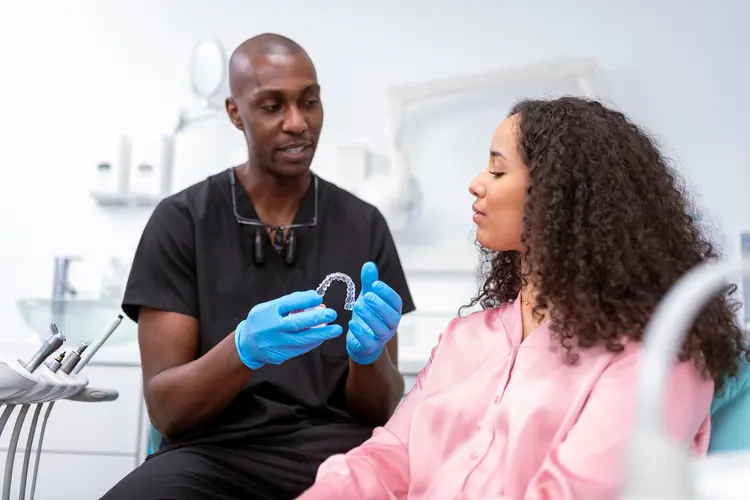
Clear Aligners
Clear aligner systems use a series of custom-made, removable plastic trays to move teeth gradually. Each tray is worn for a set number of days before the patient switches to the next tray in the series. They are nearly invisible when worn and can be removed for eating, brushing, and flossing. This makes oral hygiene during treatment significantly easier compared to traditional braces.
The key requirement with clear aligners is consistent wear — typically twenty to twenty-two hours per day. Patients who wear aligners for fewer hours than recommended will find their teeth are not tracking with the planned movement, which means the trays stop fitting properly and the treatment falls behind. Clear aligners are genuinely effective for mild to moderate alignment issues, and advances in the technology have expanded the range of problems they can treat. Complex skeletal problems and certain bite corrections are still better managed with traditional braces, but the gap has narrowed substantially.
Lingual Braces
Lingual braces are brackets and wires placed on the inner surfaces of the teeth — the side that faces the tongue — rather than the outer surface. From the front, they are completely invisible. They provide the same level of control as traditional braces. The main adjustments to expect are an initial speech impact as the tongue adapts to the hardware, and the need to clean more carefully since the inner surfaces of the teeth are harder to reach.
Palate Expanders
A palate expander is a device fitted to the upper arch that applies gentle outward pressure on the two halves of the palate. In children and young teenagers, the two halves of the palate have not yet fused together and are still connected by a cartilaginous seam. An expander takes advantage of this by gradually widening the upper jaw over a period of months, creating space for the teeth and correcting crossbites. Once the palate has been widened, the expander is left in place while new bone fills in the gap, solidifying the wider arch. Adults cannot have this procedure without surgical assistance because the palate fuses in the late teenage years.
Retainers
A retainer is the appliance worn after active treatment ends to hold the teeth in their corrected positions while the surrounding bone and periodontal ligaments fully adapt. Retainers can be fixed — a thin wire bonded to the back of the teeth — or removable, typically a clear plastic tray or a wire-and-acrylic device worn at night. Both types serve the same purpose. The choice between them depends on the patient’s case, the orthodontist’s recommendation, and patient preference.
The Stage-by-Stage Treatment Timeline:
Stage
What Happens
Approximate Duration
Records and diagnosis
X-rays, scans, photos, impressions
One to two visits
Treatment planning consultation
Orthodontist presents findings and plan
One appointment
Appliance fitting
Braces bonded or first aligners delivered
One appointment
Early active treatment
Initial tooth movement begins
First one to three months
Mid-treatment
Major repositioning occurring
Ongoing through treatment
Final active phase
Fine-tuning positions, closing gaps
Final months of active treatment
Debanding or final aligner
Braces removed, last tray completed
One appointment
Retainer fitting
Retainer made and fitted immediately
Same day or within a week
Retention
Retainer worn to hold results
Months to long term
One reality of treatment that surprises many patients is the soreness that follows each adjustment. When new force is applied — whether through a wire change or a new aligner tray — the teeth and surrounding bone respond with tenderness that typically lasts two to four days before settling. This is completely normal and expected. Soft foods, warm soups, and over-the-counter pain relief help significantly during those days. The soreness pattern becomes familiar quickly, and most patients find it much more manageable by the third or fourth adjustment than it was at the first.
Oral hygiene during treatment requires genuine effort, particularly with braces. Food collects around brackets and wires in ways that do not happen with natural teeth. Brushing carefully after every meal and flossing daily using a floss threader, orthodontic floss, or a water flosser is important throughout treatment. Skipping this leads to white spots — areas of enamel damage caused by plaque sitting undisturbed around the brackets — which become visible on the tooth surface once the brackets are removed. White spots are preventable but not reversible, which is why consistent oral hygiene during treatment is worth taking seriously from day one.
Foods to avoid with traditional braces:
Hard foods such as raw carrots, hard pretzels, crusty bread, ice, nuts, and hard candy
Sticky foods such as caramel, toffee, gummy candy, and chewing gum
Chewy foods such as tough cuts of meat and dense bagels
Foods requiring direct biting with front teeth such as whole apples and corn on the cob
For patients using clear aligners, these dietary restrictions do not apply since the trays are removed before eating. However, anything that stains — coffee, tea, red wine, curry — should not be consumed while the trays are in, as the plastic will discolor.
Risks and Benefits of Orthodontic Treatment
Any treatment that changes something in the body carries both genuine benefits and real risks. Orthodontics is no exception. Being honest about both sides of this allows patients to make properly informed decisions and to know what warning signs to look for during their treatment.
The Benefits
The most visible benefit is aligned teeth and a corrected bite, but the health effects that follow from that correction are the more meaningful part of the story.
When teeth sit in proper alignment, every surface of every tooth becomes accessible to a toothbrush and floss. The tight overlapping zones where plaque hides in crowded teeth disappear. This makes routine oral hygiene significantly more effective, which translates to lower rates of cavities and gum disease over a lifetime. It is not an exaggeration to say that straightening crowded teeth is one of the more meaningful things a person can do for their long-term dental health.
A corrected bite distributes the force of chewing across the teeth more evenly. When the bite is off, certain teeth bear far more pressure than they were designed to handle. Over years, this leads to accelerated wear, cracking, and sensitivity. Correcting the bite removes that uneven loading and gives each tooth a more sustainable workload.
For patients with jaw-related bite problems, orthodontic treatment often reduces or eliminates chronic symptoms that had nothing obvious in common with their teeth. Jaw aching, clicking joints, recurring headaches that seem to start around the jaw and temples, and muscle tension in the neck are all symptoms that can improve significantly when the bite is properly aligned and the jaw joints are no longer being strained to compensate.
Speech improvement is another outcome that gets less attention than it deserves. Certain sounds depend on the tongue making contact with specific tooth surfaces or regions of the palate. When teeth are not positioned correctly, producing those sounds clearly takes more effort and is sometimes not fully possible. Adults and children who have had lisps or other sound-production difficulties linked to their bite sometimes find speech becomes noticeably easier after treatment.
The confidence aspect of orthodontic outcomes is real and well-documented. Research consistently shows that people who are self-conscious about their teeth avoid smiling, limit social interactions, and experience lower self-confidence across multiple areas of life. This is particularly significant for children, where dental appearance can affect social experience at a formative age.
Benefit
What It Means Long Term
Improved hygiene access
Easier cleaning means fewer cavities and healthier gums for life
Even bite force distribution
Less wear, cracking, and sensitivity on individual teeth
Reduced jaw strain
Less pressure on the jaw joint with every bite
Headache reduction
Jaw muscle tension relief for many patients
Clearer speech
Proper tooth position supports more effortless sound production
Better confidence
Social ease from being comfortable with your smile
Long-term tooth preservation
Teeth that function correctly wear more evenly over decades
The Risks
Root resorption is one of the recognized risks of moving teeth orthodontically. When teeth move through bone, the tips of the tooth roots can shorten slightly as the surrounding bone remodels. According to research published in PMC, orthodontic treatment is associated with some degree of root resorption in most patients, and the severity varies widely based on treatment duration, force levels, the shape of the roots, trauma history, and individual genetic factors.
Minor root shortening is common and usually has no clinical consequence. The concern arises when resorption is more significant. Orthodontists monitor root length during treatment through periodic X-rays, and if resorption is detected early, adjustments to the treatment plan — reducing force, extending the gap between adjustments, or pausing treatment briefly — can help limit further progression. The key is monitoring. Root resorption rarely causes pain or visible symptoms, which is why regular imaging during treatment matters so much.
White spot lesions are another real risk, and unlike root resorption, this one is largely within the patient’s control. White spots are areas of enamel demineralization that develop when plaque sits on the tooth surface around brackets without being properly removed. They appear as chalky or opaque patches on the tooth surface and become noticeable once brackets are removed. They are permanent and cannot be brushed away after they form. Rigorous brushing after meals and consistent flossing throughout the treatment period is the most effective prevention.
Gum problems can develop during orthodontic treatment if oral hygiene is not maintained. The hardware of braces creates more areas for plaque to collect. If this plaque is not removed regularly, it leads to gum inflammation, and in prolonged or severe cases, to recession or early bone loss around the teeth. Attending regular dental cleanings throughout treatment — not just orthodontic appointments — is important precisely because of this risk.
Relapse after treatment — teeth moving back toward where they were — is not uncommon and is the main reason orthodontists emphasize retention so strongly. Teeth have a natural tendency to return toward their original positions in the months and years after treatment. Wearing a retainer consistently, particularly during the first year or two after active treatment ends, is what prevents this. Patients who stop retainer use too soon often notice gradual movement that eventually requires further treatment to address.
Risk overview and how to reduce each one:
Risk
Who It Affects Most
How to Reduce It
Root resorption
Patients with long treatment or large movements
Regular X-rays, follow the orthodontist’s adjustment schedule
White spot lesions
Anyone with braces who does not clean carefully
Brush after every meal, use fluoride toothpaste, rinse with fluoride mouthwash
Gum inflammation
Patients who skip dental cleanings during treatment
Continue seeing a dentist every six months throughout treatment
Treatment relapse
Patients who stop wearing their retainer early
Wear the retainer exactly as prescribed, indefinitely at night if advised
Bracket breakage
Patients who eat restricted foods
Avoid hard and sticky foods, use a mouthguard during contact sports
Discomfort after adjustments
All patients to some degree
Soft foods for two to four days after each adjustment, over-the-counter pain relief
One risk that deserves specific mention is the danger of at-home or mail-order aligner systems where no orthodontist physically examines the patient or takes diagnostic X-rays before treatment begins. Moving teeth without first imaging the roots, checking bone health, and assessing the bite in three dimensions is genuinely risky. Damage caused by unsupervised tooth movement can be severe and difficult to reverse. Seeing a qualified orthodontist in person for a proper diagnosis before starting any alignment treatment is the safest approach regardless of how straightforward a case looks from the outside.
Recovery and Outlook
Recovery in orthodontics does not mean a single hospital stay or a defined post-procedure period the way surgery does. Instead, it happens repeatedly throughout treatment — a cycle of adjustment, a few days of soreness, settling, and then the next adjustment. Understanding this rhythm makes the entire experience much more manageable.
After each appointment where the teeth are adjusted — new wire, higher-force wire, change in aligner tray — the teeth respond with pressure and tenderness. This is the biological signal that the bone around the teeth is beginning to remodel in response to the new force. The soreness typically peaks within the first twenty-four to forty-eight hours and fades significantly by day four or five. By the end of the first week, the teeth have largely settled, and the mouth feels relatively normal again until the next adjustment.
Practical ways to manage soreness after adjustments:
Eat soft foods for two to four days — yogurt, mashed vegetables, soup, soft-cooked pasta, scrambled eggs, smoothies
Use over-the-counter pain relief such as ibuprofen or paracetamol as needed, following the dosage on the label
Rinse with warm salt water to soothe the gum tissue
Use orthodontic wax on any bracket or wire causing localized irritation to the cheek or lip
Avoid very hot or very cold foods if the teeth are particularly sensitive after a wire change
For patients who require jaw surgery as part of a combined orthodontic and surgical treatment, recovery is more involved. After orthognathic surgery — which repositions the upper jaw, the lower jaw, or both — patients typically spend one or two days in the hospital. The weeks that follow involve significant swelling and bruising of the face, restricted mouth opening, and a liquid or soft diet for several weeks as the jaws begin to heal. Most patients transition from liquids to soft solid foods over the first four to six weeks, and return to eating normally within two to three months. Full bone healing after jaw surgery takes several months, and orthodontic treatment continues during this healing period to fine-tune the positions of the teeth as the new jaw relationship stabilizes.
For patients without a surgical component, the long-term outlook for orthodontic treatment is genuinely positive. Research and clinical experience consistently show that teeth moved into proper positions with well-designed treatment plans stay in those positions when retainers are worn as directed. The bone around the tooth roots takes time to fully adapt and harden around the new positions — a process that is most active in the first six to twelve months after active treatment ends — which is why retainer compliance during that period is so critical.
The health outlook after orthodontic treatment improves in measurable ways. Properly aligned teeth are easier to clean for life, which means the risk of cavities and gum disease decreases. A corrected bite distributes chewing force more evenly, reducing the risk of teeth cracking or wearing down unevenly over decades. Jaw joints that are no longer being overworked to compensate for a misaligned bite are less prone to pain and damage over time.
For children and teenagers who complete treatment during their growth years, outcomes tend to be very stable with proper retention. Natural minor tooth movement can still occur throughout adult life regardless of prior treatment, but it is usually minimal and manageable with consistent retainer use.
For adults, outcomes are equally good, though treatment may take slightly longer because denser adult bone responds more slowly to orthodontic forces. Adults tend to be some of the most consistent orthodontic patients because they understand what the treatment is for and are motivated to follow instructions carefully.
Realistic post-treatment timeline:
Timeframe After Treatment Ends
What to Expect
First week
Retainer fitted, teeth may feel slightly loose or mobile — this is normal
Weeks two to eight
Retainer worn full-time except for eating and cleaning
Months two to six
Transition to night-only retainer wear as directed
Six to twelve months
Bone around teeth continues adapting and stabilizing
One year and beyond
Teeth well-stabilized, night retainer wear typically sufficient
Long term
Ongoing night retainer use maintains results indefinitely
One thing worth making clear: even after treatment finishes and results look excellent, keeping up with regular dental check-ups every six months is still important. The dentist can check that the retainer is fitting properly, that the teeth have not shifted, and that the gum tissue and bone are remaining healthy in their new positions.
When to Call the Doctor
Most of what happens during orthodontic treatment is expected, and most discomfort is normal. But there are specific situations where waiting until your next scheduled appointment is not the right call. Knowing the difference between normal and concerning helps patients act at the right time — not too late, but not unnecessarily either.
A bracket has come loose or completely off the tooth. A detached bracket means that tooth is no longer part of the active treatment. It will not cause an emergency, but it should be addressed within a day or two rather than left for weeks. If the bracket is still hanging on the wire, leave it in place and call the office to schedule a repair. If it has come off completely, keep it and bring it to the appointment. If it is swallowed, this is almost never a health concern — the bracket is smooth and will pass — but let the office know.
A wire is poking the inside of the cheek or gum. This happens when a wire shifts slightly or extends past the last bracket as teeth move. Orthodontic wax pressed firmly over the sharp area provides immediate relief. If the wire has shifted significantly and wax is not helping, call the office. The team will often advise whether it can be managed temporarily at home until the next scheduled visit or whether a quick appointment is needed to clip or reposition the wire.
You notice swelling in the jaw, gums, face, or around a specific tooth. Swelling that develops during orthodontic treatment is not a normal part of the process. It may indicate an infection, a reaction to an appliance, or a problem with a tooth root. This should be evaluated the same day rather than waited out. If the swelling is accompanied by a fever, that urgency increases.
You experience sharp or increasing tooth pain that does not follow the normal post-adjustment pattern. Ordinary adjustment soreness is dull, widespread, and goes away within a few days. Pain that is sharp, focused on one specific tooth, getting worse instead of better after the first few days, or accompanied by sensitivity to temperature that is new and significant — these are worth calling about promptly. They can indicate nerve irritation, a crack in the tooth, or a root-related issue that should be assessed before the next regular appointment.
A specific tooth has become noticeably sensitive to cold in a way it was not before. New or increasing cold sensitivity during treatment can sometimes indicate that the pulp of the tooth — the nerve and tissue inside — is being stressed by the movement. Your orthodontist and general dentist should both be aware of this so the tooth can be monitored.
Your retainer no longer fits after a gap in wearing it. If you have gone several weeks or months without wearing your retainer and then find it no longer seats properly over the teeth, do not force it. A retainer that no longer fits correctly means the teeth have moved. Trying to force it back in can injure the teeth or gums. Contact the orthodontist, who will assess how much movement has occurred and whether a new retainer will hold the current position, or whether a short course of retreatment is needed first.
You notice white or chalky spots forming on the surface of the teeth near the brackets. These are early signs of enamel demineralization — the beginning stage of white spot lesions. They are a warning that plaque is not being cleared from those areas, and they need to be addressed immediately through improved brushing and fluoride use. Mention them to your orthodontist at the next appointment. If you spot them early and act quickly, the process can often be halted before it becomes a permanent mark on the tooth surface.
Your child reports jaw clicking, locking, or significant jaw pain during or after treatment. Some minor jaw awareness is expected, particularly in the early months when the bite is actively changing. But true clicking, catching, difficulty opening or closing the mouth, or jaw pain that is more than mild should be reported. TMJ-related problems can sometimes emerge or become more apparent during orthodontic treatment and may need to be assessed independently by the orthodontist or referred to a specialist.
A quick reference for when to contact your orthodontist:
What Is Happening
When to Call
Loose or detached bracket
Within one to two days
Wire poking and causing injury
Same day if severe; next day if manageable with wax
Swelling in the gum, jaw, or face
Same day — could indicate infection
Sharp or worsening tooth pain
Same day
Fever alongside dental discomfort
Same day
Retainer no longer fits after a gap
Within a few days, do not try to force it
White spots developing near brackets
At next visit, or sooner if spreading rapidly
Jaw locking or severe clicking
Within a few days
Swallowed a bracket or small part
Monitor — usually safe, but inform the office
The simple principle behind all of this is: if something feels wrong, call. Orthodontic offices fully expect questions and small problems between appointments. A two-minute phone call can tell you whether to come in same day, schedule a repair soon, or simply use wax and a soft diet until your next scheduled visit. Acting sooner rather than later on anything unusual is always the right instinct.
Talk to an Orthodontic Specialist Through Doctiplus
If you have questions about your own bite, concerns about your child’s dental development, or are wondering whether what you are experiencing during treatment is normal, a qualified dental or orthodontic specialist can help you get clarity quickly.
At Doctiplus, you can connect with certified healthcare professionals online, without registration, at any time. A consultation with a dental specialist can help you understand whether your concerns need an in-person orthodontic evaluation and give you a clear sense of what to expect before you commit to any next steps.
Final Thoughts
An orthodontist does far more than straighten teeth. They assess the entire relationship between the teeth, jaw, and facial structure, identify problems that affect eating, speaking, breathing, and jaw health, and carry out treatment plans that often take a year or more to complete properly. The conditions they treat range from mildly crowded front teeth to complex skeletal jaw problems that require surgical correction. The outcomes, when treatment is properly planned and patients are consistent, are genuinely meaningful for long-term health — not just for how the teeth look, but for how they function for decades.
Understanding what orthodontists actually do makes it easier to ask better questions, recognize when something needs attention, and feel more in control of your own care or your child’s. Whether you are eight years old or forty-five, it is never the wrong time to find out whether your bite and alignment are working the way they should.
About Bill Dorfman DDS (Dental Guides)
Dr. Bill Dorfman is a world-renowned cosmetic and general dentist based in Los Angeles, California, affectionately known as "America's Dentist". He operates his private practice, Century City Aesthetic Dentistry, located near Beverly Hills.






 Cardiologist