Most people think improving their mental health requires big changes a new therapist, a new medication, a complete lifestyle overhaul. But psychiatrists who work with patients every day know something that often gets overlooked: small, consistent daily habits can shift your mood more powerfully than you might expect.
These are not Instagram wellness tips. These are evidence backed behaviors that psychiatrists and mental health professionals regularly recommend to their patients and practice themselves.
Get Outside Within the First Hour of Waking Up
Get Outside Within the First Hour of Waking Up
One of the simplest things you can do for your mood costs absolutely nothing. Within the first 60 minutes of waking up, step outside and let natural light hit your eyes even on a cloudy day.
This is not just feel good advice. Natural morning light helps regulate your circadian rhythm, which directly controls your sleep wake cycle, cortisol levels, and serotonin production. Psychiatrists frequently recommend this to patients dealing with low mood, seasonal depression, and sleep disruption because disrupted circadian rhythms are deeply connected to depressive episodes.
Even five to ten minutes outside without sunglasses in the morning is enough to make a measurable difference over time.
Move Your Body But You Do Not Have to Go to the Gym
Exercise is one of the most well-studied and consistently recommended habits in psychiatry for improving mood. The reason is biological: physical movement increases dopamine, serotonin, and endorphins the same neurochemicals that many antidepressant medications target.
But here is the part most people miss you do not need an intense workout. Psychiatrists frequently point out that 20 to 30 minutes of moderate movement, like a brisk walk, light cycling, or even dancing around your kitchen, can reduce symptoms of anxiety and mild depression significantly.
The key is consistency, not intensity. A short daily walk beats a long gym session once a week every single time when it comes to mood regulation.
Eat Something Before 10 AM
Skipping breakfast, especially when you are already feeling low, is a habit that quietly makes mood instability worse. Blood sugar fluctuations which happen when you go long stretches without eating directly affect your emotional regulation, concentration, and energy.
Psychiatrists treating patients with mood disorders often ask about eating patterns because low blood sugar in the morning can amplify irritability, brain fog, and feelings of anxiety. You do not need a perfect breakfast. Something with protein and a slow-releasing carbohydrate eggs and toast, yogurt with fruit, peanut butter on a banana is enough to stabilize your blood sugar and give your brain what it needs to function emotionally.
Write Three Sentences in the Morning or Before Bed
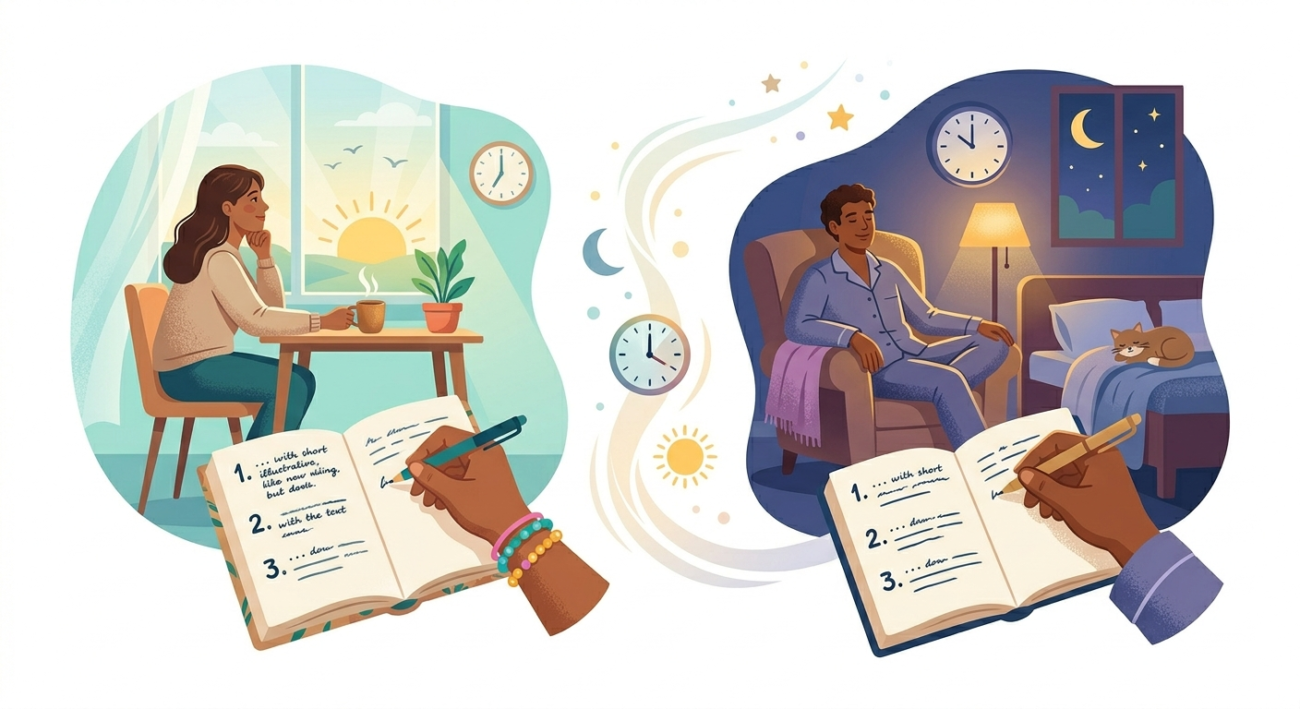
Journaling is often recommended in therapy, but many people abandon it because they feel like they have to write pages. Psychiatrists say that is not the point.
Write Three Sentences in the Morning or Before Bed
Writing just three sentences one thing you are thinking about, one thing you are grateful for, and one thing you are looking forward to activates a part of the brain involved in emotional processing and narrative meaning-making. It helps you externalize what is happening internally, which reduces the mental load of carrying unprocessed thoughts around all day.
It does not have to be poetic. It does not have to make sense to anyone but you. It just has to be honest.
Reduce the Number of Decisions You Make Before Noon
Decision fatigue is a real psychological phenomenon. The more choices you have to make early in the day what to wear, what to eat, what to do first the faster your mental energy depletes, and the more vulnerable you become to stress and low mood later on.
Reduce the Number of Decisions You Make Before Noon
Psychiatrists recommend simplifying your morning routine wherever possible. Lay out your clothes the night before. Keep breakfast options limited. Use a to-do list so your brain is not holding open tasks in working memory all morning. These small structural changes reduce cognitive load and preserve emotional resilience for later in the day when it matters more.
Drink Water Seriously
Dehydration affects mood more directly than most people realize. Even mild dehydration the kind where you do not feel thirsty yet has been shown to increase feelings of tension, anxiety, fatigue, and confusion.
Psychiatrists treating patients with chronic anxiety sometimes ask about daily water intake because the physical symptoms of dehydration (increased heart rate, lightheadedness, difficulty concentrating) can mimic or amplify anxiety symptoms. Starting your morning with a full glass of water before anything else, including coffee, is a small habit with a surprisingly noticeable effect on how you feel within a few hours.
Have One Conversation That Is Not About Work or Tasks
Human beings are deeply social creatures, and one of the quietest contributors to low mood is the slow erosion of meaningful connection. Many people spend their entire day communicating emails, meetings, messages but none of it is actual connection.
Psychiatrists often point out that having even one brief conversation per day that is warm, genuine, and not transactional a real chat with a friend, a family member, a neighbor has measurable effects on mood and emotional wellbeing. It does not have to be a deep conversation. It just has to feel human.
If you are isolated or find social interaction difficult, even a short check-in text to someone you care about counts.
Set a Consistent Bedtime and Actually Keep It
Set a Consistent Bedtime and Actually Keep It
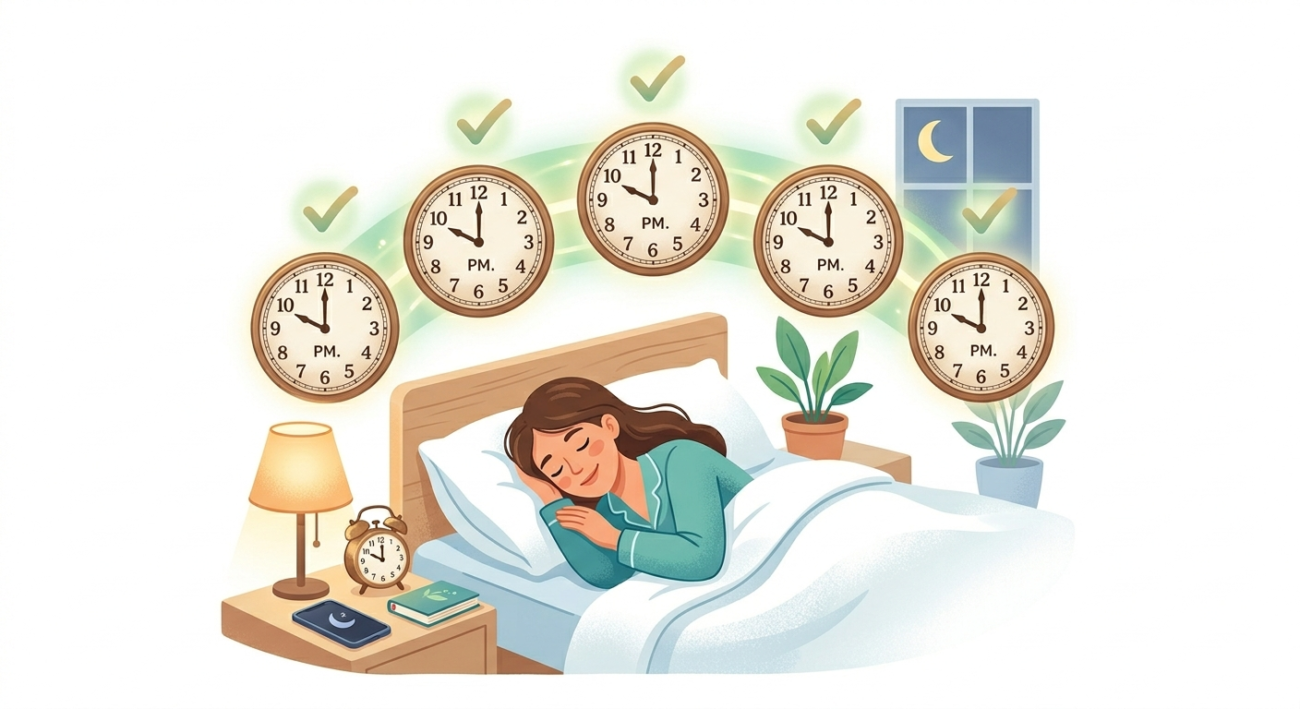
Sleep is not a mood booster it is a mood foundation. Psychiatrists consistently identify poor or irregular sleep as one of the most common factors underlying mood instability, irritability, low energy, and anxiety.
Going to bed at the same time each night, even on weekends, helps train your brain’s internal clock. This consistency improves sleep quality, reduces the time it takes to fall asleep, and makes it easier to wake up feeling genuinely rested rather than groggy and overwhelmed.
If you struggle to fall asleep, even dimming the lights in your home an hour before your target bedtime helps signal to your brain that it is time to wind down.
Limit Your News and Social Media to One Dedicated Window
One of the most consistent pieces of advice psychiatrists give in the current era is this: stop letting the news and social media run in the background of your day.
Constant passive exposure to distressing content war, health crises, political conflict, other people’s curated highlight reels keeps your nervous system in a low-grade state of alertness and comparison. Over time, this erodes mood even in people who feel like they are handling it fine.
Setting one dedicated window of 15 to 30 minutes for news and social media not first thing in the morning, not right before bed gives your brain the rest it needs from external stimulation while still keeping you informed.
Do One Small Thing You Enjoy Every Day
This one sounds simple enough that people dismiss it. But psychiatrists who work with depression know that one of the key features of low mood is a gradual withdrawal from activities that bring pleasure and that withdrawal makes depression worse, creating a cycle.
Behavioral activation deliberately scheduling one enjoyable activity per day, even when you do not feel like it is a core technique in cognitive behavioral therapy for depression. It does not have to be elaborate. Reading a chapter of a book, cooking a meal you like, listening to music while you get ready, taking a longer shower anything that counts as something you do for yourself rather than for productivity.
The goal is not to feel dramatically better immediately. The goal is to keep the relationship between your brain and pleasure alive.
A Word From Psychiatrists
None of these habits require a prescription, a gym membership, or a dramatic life change. What they require is consistency showing up for yourself in small ways, day after day, even when it feels like it is not working.
The brain responds to repetition. The same way that small negative habits compound into poor mental health over time, small positive habits compound into resilience, stability, and a measurably better baseline mood.
If you are struggling with persistent low mood, anxiety, or depression, these habits are not a replacement for professional help they are a starting point and a supplement. At Doctiplus, you can speak with a certified psychiatrist or mental health specialist online, without registration, 24 hours a day.
About Dr. Nina Paleologos (Psychiatrists)
Dr. Nina A. Paleologos is a highly accomplished, board-certified neurologist who specializes in neuro-oncology. She is nationally recognized for her expertise in diagnosing and managing primary malignant brain and spinal cord tumors







 Cardiologist