Most people think about brushing their teeth at least twice a day. Very few people think about cleaning the tool they use to do it. The toothbrush sits in your bathroom between uses, often in a holder with other brushes, sometimes with a cap over the bristles, sometimes right next to the toilet. And then you put it in your mouth and brush your teeth with it, trusting that it is doing more good than harm.
The truth is more complicated than that. Your toothbrush collects bacteria every single time you use it. It picks up microorganisms from your mouth, from the bathroom air, from surfaces nearby, and sometimes from other toothbrushes sitting too close. Research from the American Dental Association has confirmed that toothbrushes can harbor bacteria including fecal coliform bacteria that can be released into the air when the toilet is flushed, or spread to the toothbrush when someone touches a contaminated surface before handling their brush.
That sounds alarming, but the full picture is more reassuring than that single fact suggests. The ADA also notes that while toothbrushes have been shown to harbor bacteria, there is no evidence that these bacteria cause adverse health effects in healthy individuals. That does not mean toothbrush hygiene does not matter it absolutely does but it means that the goal is reasonable cleanliness rather than clinical sterility.
This article covers exactly what is happening on your toothbrush, why it matters, what cleaning methods actually work according to dental experts and research, what methods are a waste of time or actually harmful, how to store your toothbrush correctly, when to replace it, and special situations like illness or travel that change what you need to do. By the end, you will have a clear, practical routine that takes almost no extra time and genuinely makes your toothbrush safer and more effective.
What Is Actually Living on Your Toothbrush and Why It Matters
What Is Actually Living on Your Toothbrush and Why It Matters
Before getting into how to clean a toothbrush, it helps to understand what you are dealing with. Most people have a vague sense that toothbrushes get dirty, but the specific picture is more interesting and more manageable than the general anxiety around it.
Your mouth contains approximately 700 species of bacteria at any given time. Most of these are harmless and many are beneficial. Every time you brush, some of those bacteria transfer from your mouth to the bristles of your toothbrush. This is unavoidable and completely normal. The bristles also pick up food particles, toothpaste residue, dead cells from the gum tissue, and blood if your gums are inflamed.
A study published in PMC that assessed microbial contamination of toothbrushes found that aerobic bacterial growth was detected in toothbrushes across all groups tested before disinfection, with rates ranging from 75 percent to over 91 percent depending on the disinfection method used. A separate cross-sectional study published in PMC found that 93 percent of participants had never received professional advice regarding the storage and disinfection of toothbrushes, and 73 percent were completely unaware of the degree to which their toothbrush could be contaminated. That gap between what is happening and what people know about it is significant.
The bacteria most commonly found on used toothbrushes include Streptococcus mutans the main bacteria responsible for tooth decay Staphylococcus aureus, Pseudomonas, Lactobacilli, Escherichia coli, and Candida species. The presence of E. coli specifically often points to toilet proximity, since flushing an open toilet can send a fine aerosol of bacteria into the surrounding air that settles on any surface nearby including your toothbrush.
The good news is that the body has multiple lines of defence against the bacteria found on a typical toothbrush. The saliva in your mouth contains antibacterial compounds. Your immune system is already familiar with most of the bacteria that naturally live in your mouth. And the act of rinsing your toothbrush thoroughly after each use removes a significant portion of the contamination. The risk is most significant for people who are immunocompromised, recovering from illness, or living with someone who is sick and storing their toothbrushes in close contact.
Understanding what is on your toothbrush helps you make sensible decisions about how to clean and store it not decisions driven by marketing for expensive gadgets, but decisions rooted in what dental science actually recommends.
Bacteria Found on Toothbrushes
Primary Source
Potential Effect if Unchecked
Streptococcus mutans
Mouth tooth decay bacteria
Contributes to ongoing cavity formation
Staphylococcus aureus
Mouth and environment
Can cause infections in compromised individuals
Escherichia coli
Toilet aerosol from flushing
Associated with gastrointestinal illness
Pseudomonas species
Environment
Can cause infections in immunocompromised people
Lactobacilli
Mouth acid-producing bacteria
Contributes to enamel erosion over time
Candida species
Mouth fungal organism
Can contribute to oral thrush in susceptible individuals
Simplest Thing You Can Do That Most People Skip
The Simplest Thing You Can Do That Most People Skip
Roopali Kulkarni, DMD, MPH, a spokesperson for the American Dental Association and instructor at the University of Pennsylvania School of Dental Medicine, puts it simply: rinsing your toothbrush with warm water each time you use it is enough to keep it clean for most people.
That statement surprises many people who have read about UV sanitizers, hydrogen peroxide soaks, and antibacterial mouthwash baths for toothbrushes. But Dr. Kulkarni’s point reflects the evidence accurately. For the average healthy person using a normal toothbrush in a reasonably managed bathroom environment, a thorough rinse under running water before and after brushing is the most important cleaning habit and it costs nothing and takes about ten seconds.
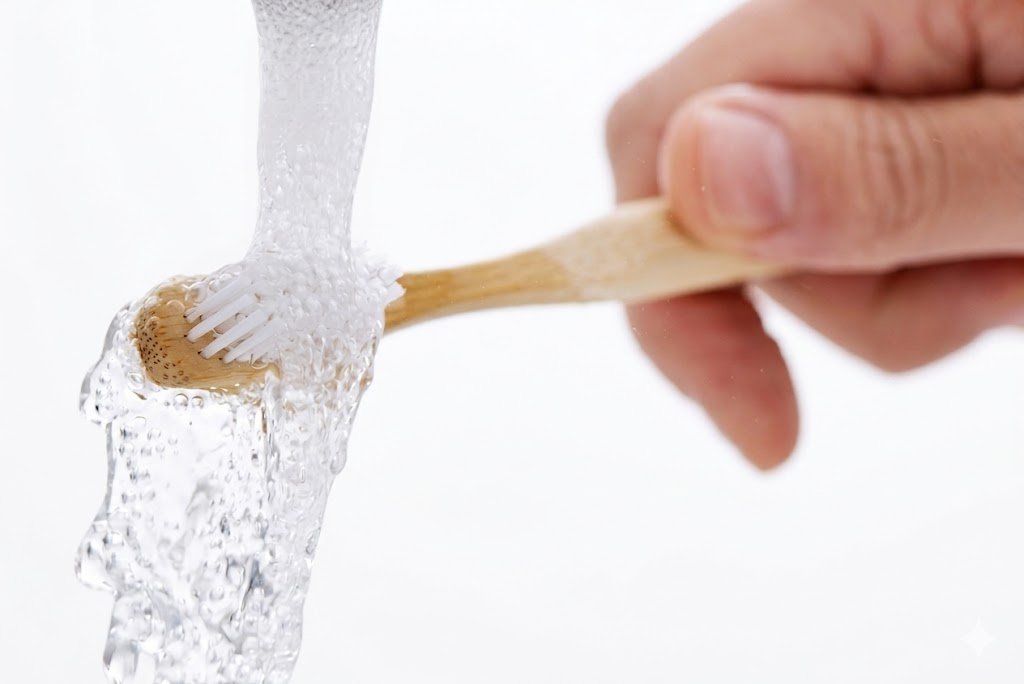
The rinse before brushing removes any dust, bacteria that have settled on the bristles since the last use, and any residue from previous brushing sessions. The rinse after brushing flushes away the toothpaste, food particles, and bacteria that have been dislodged during brushing. Hot running water is more effective than cold for this purpose because it softens the bristles slightly and helps release trapped particles more effectively.
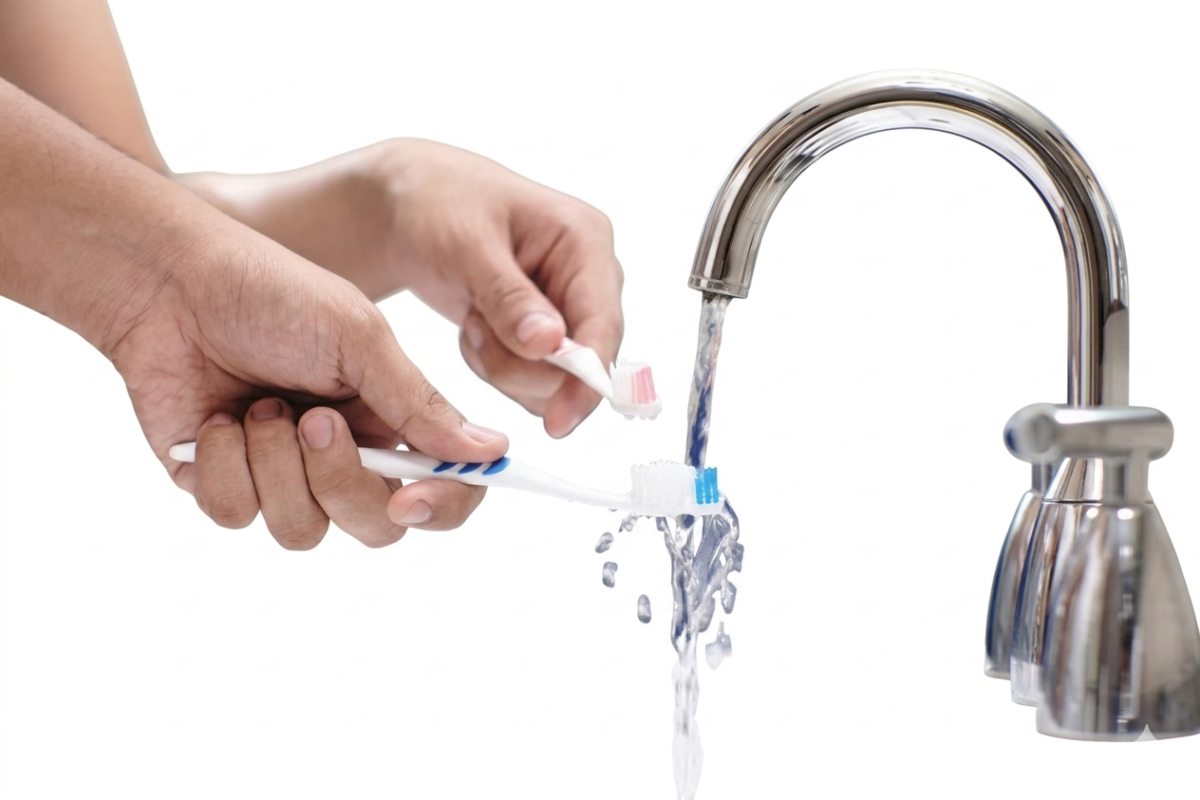
What the rinse after brushing should look like in practice is more thorough than most people do it. Rather than a quick pass under the tap, hold the toothbrush under warm running water and use your thumb to rub the bristles firmly, working from the base of the bristles toward the tips, for about fifteen to twenty seconds. Then rinse again with cool water, which firms the bristles back up and helps them return to their proper shape.
How to rinse your toothbrush correctly after each use:
Hold the brush under warm running water at the base of the bristles
Use your clean thumb to rub the bristles in the direction of the bristle tips for fifteen to twenty seconds
Work across all sides of the brush head, not just the front surface
Rinse under cool water to firm the bristles back up
Shake off excess water gently rather than pressing or squeezing the bristles
Store immediately upright in an open-air holder
This simple process, done consistently after every use, removes the bulk of contamination and is the foundation of all the other cleaning habits that follow.
Deep Cleaning Methods That Actually Work According to Dental Research
Beyond the daily rinse, there are periodic deep cleaning methods that dental research supports. These are worth doing once or twice a week, particularly if someone in your household has been sick, if you have had a cold sore, if your gums bleed regularly, or if you simply want an additional level of hygiene.
Soaking in Antibacterial Mouthwash
One of the most evidence supported methods for reducing bacterial load on a toothbrush is soaking it in antibacterial mouthwash. The American Dental Association references a study indicating that soaking a toothbrush in Listerine mouthwash greatly reduces bacterial load by approximately 85 percent.
The process is straightforward. Pour enough antibacterial mouthwash into a clean cup to fully cover the bristles. Place the toothbrush with the head down in the cup so the bristles are submerged. Leave it to soak for twenty to thirty minutes. Remove the toothbrush and rinse thoroughly under warm running water before using it again.
The important step many people miss is the rinse afterward. Mouthwash contains alcohol and other compounds that you do not want to brush your teeth with directly in concentrated form. A thorough rinse removes the soaking solution and leaves clean bristles ready for use.
One caution worth noting: the Centers for Disease Control and Prevention cautions that soaking toothbrushes in disinfecting solutions or mouthwash may actually spread germs under certain conditions, specifically if multiple toothbrushes are soaked in the same container or if the solution is not changed between uses. Always use a fresh amount of mouthwash each time and never soak more than one toothbrush in the same cup of solution.
Soaking in Hydrogen Peroxide Solution
Soaking a toothbrush in a three percent hydrogen peroxide solution is another method supported by dental research. The same ADA-referenced study found that soaking in three percent hydrogen peroxide greatly reduces bacterial load to a similar degree as mouthwash.
Three percent hydrogen peroxide is the standard concentration available at pharmacies and is safe for this purpose. Higher concentrations are not recommended because they can damage the bristles and the plastic components of the brush head.
Pour enough three percent hydrogen peroxide into a clean cup to submerge the bristles completely. Soak the toothbrush for fifteen to thirty minutes. Remove and rinse very thoroughly under warm running water before using. Hydrogen peroxide that is not fully rinsed off can cause temporary gum irritation, so be generous with the rinse.
Some dentists suggest keeping a cup of hydrogen peroxide next to the sink and soaking the toothbrush head in it between uses, changing the solution daily. This is a convenient approach for people who want ongoing sanitization without having to remember a weekly routine.
Denture Cleaning Tablets
Denture cleaning tablets dissolved in water can also be used to sanitize a toothbrush. These tablets contain enzymes, detergents, citric acid, and sodium bicarbonate that help break down food proteins and loosen particles from between bristles. They are particularly useful for electric toothbrush heads, which have more complex structures where debris can get trapped.
Dissolve one tablet in a cup of warm water, place the toothbrush head in the solution, and leave it for fifteen to twenty minutes. Rinse thoroughly before use.
Baking Soda Solution
For those who prefer a more accessible household option, two teaspoons of baking soda dissolved in a cup of water can be used as a soaking solution. Baking soda has mild antibacterial properties and is alkaline, which creates an environment less favorable for many bacteria. It is not as effective as hydrogen peroxide or mouthwash, but it is a reasonable and safe option for regular maintenance cleaning.
Cleaning Method
How Effective
How Often to Use
Cost
Warm water rinse
Good removes most debris and loose bacteria
After every single use
Free
Antibacterial mouthwash soak
Very good reduces bacteria by up to 85%
Once or twice per week
Low
Three percent hydrogen peroxide soak
Very good similar to mouthwash soak
Once or twice per week
Low
Denture cleaning tablets
Good especially for removing debris
Once per week
Low
Baking soda solution
Moderate mild antibacterial effect
Once or twice per week
Very low
UV sanitizer
Good to very good kills bacteria through UV light
As directed by device
High upfront cost
Methods That Sound Good But Dental Experts Warn Against
Methods That Sound Good But Dental Experts Warn Against
For every effective cleaning method, there are several that seem logical but are either ineffective, unnecessary, or actually harmful to the toothbrush. Knowing what not to do saves time, money, and potentially prevents damaging a perfectly good brush.
The Dishwasher
Putting a toothbrush in the dishwasher seems logical dishwashers clean and sanitize dishes, after all. The problem is temperature. The high heat of a dishwasher cycle damages the nylon bristles and warps the plastic handle and brush head. After a dishwasher cycle, the bristles are often distorted and splayed in ways that make them ineffective at cleaning teeth, and the damage to the plastic can create micro-cracks where bacteria can accumulate more easily. The ADA specifically states that microwaving or putting toothbrushes in the dishwasher is not recommended.
The Microwave
Microwaving a toothbrush has the same heat problem as the dishwasher but adds an electrical component for electric toothbrushes that makes it genuinely dangerous. The heat distorts the bristles and melts or warps the plastic. Some people have tried microwaving for just a few seconds, but even brief exposure to microwave energy can damage the brush in ways that are not immediately visible but affect its cleaning effectiveness. This method is not recommended by any dental authority.
Boiling Water
Boiling the bristles of a toothbrush does kill bacteria effectively, but it also permanently damages the bristles. Nylon bristles are designed to be flexible and rounded at the tips to clean teeth without damaging the enamel and gum tissue. Boiling water straightens, flattens, and warps them, turning a gentle cleaning tool into something that can scratch enamel or injure the gums. If someone is sick and the household wants to deal with a toothbrush quickly, replacing it entirely is a better choice than boiling.
Covering the Brush Head When It Is Wet
Many people use a plastic travel cap on their toothbrush at home, thinking it keeps the brush cleaner. This is the opposite of what actually helps. Covering a wet toothbrush traps moisture and warmth inside the cap exactly the conditions bacteria need to multiply. A dentist from Smile Cliniq explains it this way: if you are putting a cap on your toothbrush, stop immediately. Bacteria will thrive in that warm and cosy environment while the brush sits all day in the bathroom.
The only time a travel cap is appropriate is when traveling, and even then it should be placed on a dry brush for the shortest possible time and removed as soon as you reach your destination.
Sharing Toothbrushes
This seems obvious but it is worth stating clearly: sharing a toothbrush with anyone even a partner or close family member is something every dental authority strongly advises against. Brushing causes small amounts of bleeding in the gums of many people, even when the gums are healthy. This means that sharing a toothbrush can expose someone to the other person’s blood and all the microorganisms that come with it. The ADA notes that sharing a toothbrush could result in an exchange of bodily fluids and microorganisms between people. Each person in a household should have their own clearly identifiable toothbrush.
Using the Same Soaking Solution for Multiple Brushes
Using the Same Soaking Solution for Multiple Brushes
If you soak toothbrushes in mouthwash or hydrogen peroxide, never put more than one toothbrush in the same container of solution. Using one solution for multiple brushes essentially transfers bacteria from one brush to another through the soaking liquid the opposite of what you want to achieve.
Methods that are not recommended and why:
Dishwasher damages bristles with high heat
Microwave warps plastic and bristles, dangerous for electric brushes
Boiling water permanently distorts bristles making them abrasive
Covering with a cap when wet traps moisture and promotes bacterial growth
Sharing with another person transfers blood, saliva, and microorganisms
Soaking multiple brushes in the same solution cross-contaminates between brushes
Using household cleaning products like bleach or dish soap leaves harmful residue on bristles
How to Store Your Toothbrush So It Stays Cleaner Between Uses
The way you store your toothbrush between uses matters as much as how you clean it. Poor storage undoes the benefits of the best cleaning routine.
Dentist Karyn Kahn, DDS of the Cleveland Clinic says that the bacteria that live on a toothbrush after you use it are considered anaerobic meaning they will die in the presence of oxygen. So if you let your toothbrush air dry, it will take care of most bacteria.
This is one of the most useful and underappreciated facts about toothbrush care. Simply allowing the toothbrush to air dry after rinsing kills a significant portion of the bacteria through oxygen exposure. The conditions that promote ongoing bacterial growth are moisture and warmth so keeping the bristles wet by covering them or storing them in a closed container is counterproductive.
Store Upright in an Open Air Holder
The best storage position for a toothbrush is upright bristles pointing upward in an open holder that allows air to circulate freely around all sides. This position allows water to drain down and away from the bristles by gravity and allows oxygen to reach all surfaces of the brush. Wall-mounted holders that hold the toothbrush away from the sink and toilet are ideal because they keep the brush in clean air with good circulation.
Keep Toothbrushes Separated
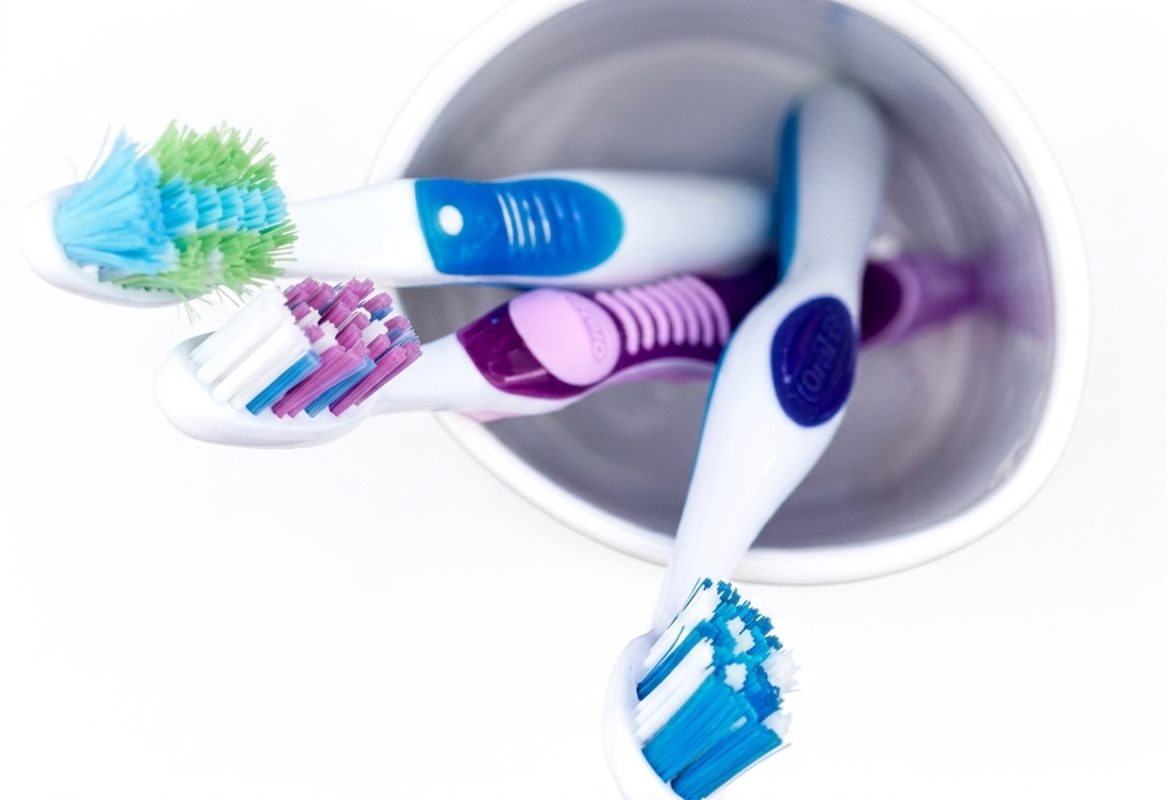
If you share a bathroom with others, keep your toothbrushes several inches apart from each other. When toothbrushes touch or are stored so closely that the bristles make contact, bacteria transfer directly between them. Many standard toothbrush holders push brushes close together if yours does this, consider switching to individual cups or a holder designed to keep brushes well spaced.
Keep the Toothbrush Away From the Toilet
Every time a toilet is flushed with the lid open, a fine aerosol of water particles from the toilet bowl is dispersed into the air. Research has confirmed that this aerosol can travel up to six feet from the toilet and can land on any surface in that radius including your toothbrush. If your toothbrush holder is anywhere near the toilet, move it further away, or make a habit of closing the toilet lid before flushing.
Dr. Kulkarni specifically advises keeping your toothbrush away from other toothbrushes when you are done brushing, so it does not get contaminated again. She also recommends that when traveling with a plastic bristle cover, you should take it off as soon as you arrive at your destination so the toothbrush has ventilation, because moisture makes more bacteria grow.
Do Not Store in a Shared Cup or Drawer
A common bathroom setup is all the family’s toothbrushes in a single shared cup. This allows the bristles of different brushes to touch, allows shared moisture to pool, and creates a warm, moist environment where bacteria thrive. A drawer is even worse because it adds darkness and further limits airflow. Individual open-air holders are the best option.
Toilet Lid Rule
Closing the toilet lid before flushing is one of the most impactful changes a person can make for the cleanliness of everything in the bathroom not just the toothbrush. It takes one extra second and keeps bacterial aerosols contained within the bowl. It is a simple habit that dental and public health professionals consistently recommend.
Storage guidelines at a glance:
Store upright with bristles pointing up in an open holder
Allow complete air drying between uses do not cover when wet
Keep at least six inches from the toilet
Store each person’s toothbrush separately so bristles do not touch
Close the toilet lid before flushing
Do not store in a closed drawer or shared cup
If traveling, remove the cap as soon as you arrive at your destination
How Often to Replace Your Toothbrush and How to Know When It Is Time
How Often to Replace Your Toothbrush and How to Know When It Is Time
Cleaning and storing your toothbrush correctly extends its useful life, but no toothbrush lasts forever and no amount of cleaning compensates for bristles that are too worn to do their job. The American Dental Association recommends replacing your toothbrush every three to four months, or sooner if the bristles become frayed. This recommendation exists because worn brushes are not effective at removing plaque bacteria and damaged bristles may injure gums.
The three to four month guideline is well-established but in practice, the condition of the bristles should guide replacement more than a calendar. Someone who brushes vigorously three times a day may find their bristles fraying at two months. Someone who brushes gently twice a day may find their brush is still in reasonable condition at four months. The visual condition of the bristles is the most reliable indicator.
Signs that it is time to replace your toothbrush:
The bristles are visibly splayed, bent, or flattened rather than standing upright
The bristles look discolored or stained in a way that does not rinse out
The brush has been used for more than four months regardless of bristle appearance
You or someone you live with has been sick with a cold, flu, strep throat, or another infectious illness
You have had a cold sore or oral herpes outbreak the virus can survive on bristles
You have been in the hospital or had dental surgery
The brush was dropped on the floor of a public space
Some dental professionals suggest keeping two toothbrushes in rotation using one while the other dries completely. This ensures that you are always brushing with a fully dried brush rather than one that has been sitting moist since the morning. A completely dry toothbrush has a significantly lower bacterial load than a moist one.
When Illness Changes the Timeline
When you are sick whether with a cold, the flu, strep throat, or any other infectious illness your toothbrush is collecting the pathogens responsible for your illness every time you brush. This creates a cycle of re-exposure that can prolong illness or contribute to reinfection. Dental authorities recommend replacing the toothbrush as soon as you begin to feel better, not waiting until the standard three to four month replacement date.
Gregorin Dental explains this clearly: if you are sick or you are at higher risk of infection, remember to disinfect your toothbrush and replace it with a brand new one. The cost of a new toothbrush is insignificant compared to the possibility of re-infecting yourself with the same pathogen that made you sick.
Situation
When to Replace
Normal use, bristles in good condition
Every three to four months
Bristles visibly frayed or splayed
Immediately, regardless of age
After a cold or flu
As soon as you begin to recover
After strep throat
Immediately after antibiotic treatment begins
After a cold sore outbreak
As soon as the sore heals
After dental surgery
Once cleared by your dentist to resume normal brushing
Toothbrush dropped in a public restroom
Immediately
After traveling with a capped brush for extended period
At the end of the trip
UV Toothbrush Sanitizers Are They Worth It
UV toothbrush sanitizers have become increasingly popular in recent years and are marketed as a high-tech solution to toothbrush bacteria. Understanding what they actually do and what their limitations are helps you decide whether they are worth the investment.
A study found that an ultraviolet toothbrush sanitizer is more effective than saline and antiseptic mouthwash for toothbrush disinfection. UV light at the right wavelength does kill bacteria effectively by damaging their DNA and preventing them from reproducing. In controlled studies, UV devices perform well against a range of oral bacteria.
However, there are important caveats. Dr. Kulkarni notes that if you feel better having an extra system in place to de-germify your toothbrush, look for sanitizers that are approved by the FDA or have the ADA seal of acceptance. Not all UV sanitizers on the market are equally effective, and some may not produce the correct wavelength of UV light or expose the bristles for long enough to achieve meaningful disinfection.
Some other experts say that using a UV sanitizer is not necessary and may damage your toothbrush over time if used every day. The plastic components of a toothbrush, particularly the bristles, can degrade with repeated UV exposure.
The honest assessment is that UV sanitizers provide an additional level of cleanliness beyond what a thorough rinse achieves, but they are not necessary for most healthy people. If you are immunocompromised, if you live with someone who is frequently sick, or if you simply want the reassurance of a higher level of sanitization, a quality FDA-cleared or ADA-accepted UV sanitizer is a reasonable investment. For everyone else, the rinse and occasional soak methods described earlier provide adequate hygiene at a fraction of the cost.
Special Situations That Change Your Cleaning Routine
Most of the guidance in this article applies to everyday life. But certain situations require adjusting your toothbrush care routine more carefully.
After a Cold Sore or Oral Herpes Outbreak
The herpes simplex virus type 1, which causes cold sores, can survive on toothbrush bristles. Brushing during an active outbreak transfers the virus to the toothbrush. Brushing again with the same toothbrush after the outbreak has healed can reintroduce the virus to the lips and trigger another outbreak. The solution is to replace the toothbrush as soon as a cold sore heals. Do not wait for the regular replacement date.
After Surgery or Illness
After any dental surgery, the dentist will give specific instructions about when and how to resume brushing. Use a new toothbrush when you are cleared to brush normally again. After any illness where you were brushing while symptomatic, replace the toothbrush when you have recovered.
When Living With Immunocompromised People
If you live with someone who is immunocompromised undergoing chemotherapy, living with HIV, recovering from a transplant, or otherwise having a weakened immune system toothbrush hygiene becomes more important for everyone in the household. Keep toothbrushes completely separate, replace them more frequently, and consider using a weekly mouthwash or hydrogen peroxide soak routine as standard practice.
When Traveling
Travel creates specific challenges for toothbrush hygiene. The cap that protects the bristles in your toiletry bag traps moisture if placed over a wet brush. Always let the toothbrush air dry completely before capping it for storage in your bag. At your destination, remove the cap immediately and store the brush in an open-air position if possible. Hotel bathrooms often have cups provided stand your toothbrush upright in one rather than keeping it capped.
Traveling tips for toothbrush care:
Let the brush dry fully before placing the cap on it for packing
Remove the cap immediately upon arriving at your destination
Store the brush upright in a cup rather than lying flat on the bathroom counter
Keep it away from any shared bathroom surfaces
Consider bringing a spare toothbrush in case one is dropped or contaminated
Replace the brush after returning from a long trip
Treatment Details Cleaning Electric Toothbrush Heads
Treatment Details Cleaning Electric Toothbrush Heads
Electric toothbrushes require the same basic hygiene practices as manual ones but have a few additional considerations because of their design.
The brush head of an electric toothbrush is replaceable and should be changed every three months just like a manual brush the ADA recommendation applies equally. In practice, electric toothbrush heads are often changed less frequently because they are more expensive than manual brushes, but worn electric brush heads are just as ineffective as worn manual ones and just as prone to bacterial buildup.
Rinsing an electric toothbrush head after every use follows the same principle as with a manual brush hold it under warm running water and use your thumb or fingers to work through the bristles, removing all visible toothpaste and debris. Then rinse the brush head separately from the handle.
The handle of an electric toothbrush is where additional attention is needed. The area around the base of the brush head where it connects to the handle collects toothpaste residue, water, and bacteria over time. Wiping this area with a damp cloth and allowing it to dry regularly keeps the connection point clean. Some electric toothbrush handles are waterproof and can be rinsed under water check the manufacturer’s guidance for your specific model.
For deeper sanitization of electric toothbrush heads, soaking in mouthwash or hydrogen peroxide follows exactly the same approach as with manual brushes the head can be removed and soaked in the solution bristles-down, then rinsed thoroughly before reattaching.
Electric toothbrush heads should not be put in the dishwasher or exposed to high heat in any form. The mechanisms inside the brush head particularly in oscillating or sonic heads can be damaged by heat, and the plastic components are not designed for dishwasher temperatures.
Electric toothbrush care checklist:
Rinse the brush head thoroughly after every use
Clean the connection point between head and handle regularly with a damp cloth
Replace brush heads every three months
Soak brush heads in mouthwash or hydrogen peroxide once a week
Never put the handle in water unless the manufacturer confirms it is waterproof
Store with the head upright and detached from the handle if possible for better air drying
Risks and Benefits of Proper Toothbrush Cleaning
Understanding the genuine benefits of the cleaning habits described above and the real risks of skipping them helps motivate consistent practice rather than treating toothbrush care as an optional extra.
Benefits
The most direct benefit is reduced bacterial load on the bristles. Research published in PMC found that soaking in chlorhexidine gluconate reduced aerobic bacterial growth from 91.6 percent in untreated brushes to significantly lower levels. That reduction in bacteria means every time you brush your teeth, you are putting a cleaner tool in your mouth one that is removing bacteria from your teeth rather than adding more.
Proper cleaning also extends the effective life of the brush. Bristles that are regularly rinsed and air-dried maintain their shape and flexibility for longer than bristles that remain wet and are used while still saturated. A brush in good condition cleans more effectively.
Correct storage, particularly keeping brushes away from the toilet and separated from other brushes, reduces the addition of environmental bacteria that have nothing to do with your mouth. This matters especially for bacteria like E. coli that are not natural residents of the oral environment but can cause health problems if they colonize the mouth in significant numbers.
The psychological benefit simply feeling confident that you are putting a clean tool in your mouth twice a day is also worth acknowledging. Oral health is deeply connected to overall wellbeing, and people who feel good about their oral hygiene routine are more likely to maintain it consistently.
Risks of Poor Toothbrush Hygiene
The risks of inadequate toothbrush care are not dramatic for most healthy people, but they are real and worth understanding. A contaminated toothbrush that is used repeatedly without any rinsing or sanitization can contribute to higher levels of Streptococcus mutans in the mouth, which increases the risk of cavities over time. It can reintroduce the bacteria or viruses responsible for a recent illness. For people with existing gum disease, a heavily contaminated brush can worsen gum inflammation.
For immunocompromised individuals, the risks are more significant. Introducing bacteria like Pseudomonas or fungal organisms like Candida into the mouth through a poorly maintained toothbrush can cause oral infections that a healthy immune system would otherwise prevent.
The risk of sharing toothbrushes deserves special emphasis. Every dental authority that addresses this topic the ADA, CDC, and the American Academy of Pediatric Dentistry advises against toothbrush sharing. The potential for transmitting blood-borne pathogens through shared toothbrushes is real and entirely preventable.
Benefit of Proper Care
Practical Effect
Lower bacterial load on bristles
Cleaner tool in the mouth at every brushing
Reduced re-infection after illness
Fewer cycles of getting sick, recovering, and getting sick again
Better gum health
Less bacterial exposure to already inflamed gum tissue
Maintained bristle shape
More effective plaque removal for longer
Reduced environmental contamination
Fewer bathroom bacteria colonizing the oral environment
When to Call the Doctor
Toothbrush hygiene rarely requires a call to a doctor, but there are situations where what seems like a simple hygiene question is actually pointing to something that deserves professional attention.
You have been getting the same illness repeatedly and cannot identify why. If you have had two or three episodes of the same cold, throat infection, or oral sore in quick succession, your toothbrush may be part of the cycle. Replace the toothbrush and also mention the pattern to your doctor, who can rule out other causes of repeated infections.
You have developed a new sore, ulcer, or unusual spot in your mouth. While toothbrushes do not directly cause most oral sores or lesions, damaged bristles can abrade the gum tissue and create entry points for bacteria. If you notice a persistent sore that does not heal within two weeks, contact your dentist. Persistent oral lesions always deserve professional evaluation.
You are immunocompromised and concerned about toothbrush hygiene. If you are undergoing chemotherapy, managing an autoimmune condition, living with HIV, or taking medications that suppress the immune system, ask your doctor or dentist specifically about toothbrush hygiene recommendations for your situation. The general guidance in this article applies broadly, but your clinical team may have specific recommendations based on your health status and the treatments you are receiving.
You have had cold sores repeatedly and wonder about the connection to your toothbrush. If you have had multiple cold sore outbreaks close together, mention this to your doctor or dentist. They can advise on antiviral treatments and confirm whether your toothbrush replacement habits are appropriate for managing recurrence.
Your gums bleed regularly when you brush and have not improved with time. Bleeding gums during brushing can be a sign of gingivitis, which is inflammation of the gum tissue caused by plaque buildup. This is not caused by an unclean toothbrush, but it does mean that the bacteria being transferred back and forth between your mouth and your toothbrush are having a more significant effect on your gum tissue than they would if your gums were healthy. A dentist can assess the gum health, recommend specific cleaning techniques, and advise on whether your brush type and cleaning routine need to change.
You have just come home from a hospital stay. Hospital environments contain bacteria that are different from and sometimes more resistant to antibiotics than the ones in your home. If you brushed your teeth during a hospital stay, replace your toothbrush when you return home. Mention to your doctor if you are concerned about any specific exposure during your stay.
Situation
Who to Contact
How Soon
Persistent oral sore not healing in two weeks
Dentist
Within a week
Repeated same illness in quick succession
GP or family doctor
At next available appointment
Immunocompromised and uncertain about hygiene
Doctor or dentist
At next scheduled appointment, or call to ask
Gums bleeding regularly during brushing
Dentist
Within two to four weeks
Recurring cold sore outbreaks
GP or dentist
At next appointment
Returning from hospital stay with concerns
Doctor
As soon as practical
A Practical Daily and Weekly Routine for Toothbrush Care
Putting all of the above together into a simple, realistic routine removes the guesswork and makes good toothbrush hygiene something that happens automatically rather than occasionally.
The daily routine requires almost no extra time. Before brushing, rinse the toothbrush under warm water for about five seconds. After brushing, rinse thoroughly for fifteen to twenty seconds, working the thumb across all sides of the bristles. Shake off excess water, store upright in an open holder, and close the toilet lid if it was open during brushing.
The weekly routine adds about five minutes. Once or twice a week, soak the toothbrush in antibacterial mouthwash or three percent hydrogen peroxide for twenty to thirty minutes. Rinse thoroughly before using again. This is also a good time to check the condition of the bristles if they are looking splayed or flattened, it is time for a new brush regardless of the calendar date.
The monthly routine is simply a reminder check. Are you at the four-week mark since the last time you checked the brush? Does everything look good with the storage setup are the brushes separated, is the holder clean, is the brush still in good condition? Clean the holder itself at least once a month holders collect water, toothpaste drips, and bacteria just as the brush does.
Daily, weekly, and monthly summary:
Daily rinse before and after every use, store upright and uncovered, close toilet lid
Weekly soak in mouthwash or hydrogen peroxide once or twice, check bristle condition
Monthly clean the toothbrush holder, assess whether replacement is needed
Every three to four months replace the toothbrush regardless of how it looks
After illness replace the toothbrush as soon as you recover
Talk to a Dental Specialist Through Doctiplus
If you have questions about your oral hygiene routine, concerns about recurring oral infections, or want specific advice about toothbrush care for your individual health situation, speaking with a qualified dental professional is always the right first step.
At Doctiplus, you can connect with certified dental health specialists online, without registration, at any time. A quick consultation can give you personalized guidance on oral hygiene practices, address any concerns about your current routine, and help you understand whether what you are experiencing needs an in-person dental appointment.
Final Thoughts
Cleaning and sanitizing your toothbrush does not require expensive equipment, complicated routines, or a great deal of extra time. The fundamentals are simple: rinse thoroughly after every use, let it air dry completely, store it upright away from the toilet, keep it separated from other brushes, and replace it every three to four months or sooner when life calls for it.
The deeper cleaning methods a periodic soak in mouthwash or hydrogen peroxide add a meaningful extra layer of hygiene with minimal effort and cost. The methods to avoid are mostly things that sound sensible but cause more harm than good: covering wet brushes, sharing between people, and using heat that damages the bristles.
Your toothbrush is one of the most used personal health tools you own. Treating it with the same basic care you give other things you rely on daily a brief rinse, proper storage, timely replacement keeps it doing what it is designed to do: remove bacteria and plaque from your teeth effectively and safely, twice a day, every day.
About Bill Dorfman DDS (Dental Guides)
Dr. Bill Dorfman is a world-renowned cosmetic and general dentist based in Los Angeles, California, affectionately known as "America's Dentist". He operates his private practice, Century City Aesthetic Dentistry, located near Beverly Hills.




 Cardiologist
One thought on “How to Properly Clean and Sanitize Your Toothbrush”