Sharp pain in your chest or side that catches you off guard with every breath. A strange clicking or popping sensation when you move in a certain way. Pain that gets worse when you cough, sneeze, laugh, or even try to sleep on your side. These are the kinds of symptoms that send people searching for answers and one of the most common questions that comes up is whether a rib can actually be dislocated and whether that is what is happening.
The short answer is yes. You can dislocate a rib. But the longer and more useful answer is that rib dislocation is not a single, simple injury. It is actually a term that covers several different types of rib injuries, each involving a rib or the cartilage connecting it moving out of its normal position. Understanding the differences between these injuries, what causes them, how they feel, how they are diagnosed, and what treatment looks like is what this article is here to explain.
One thing that makes rib dislocations genuinely tricky is that they are often confused with other chest injuries, broken ribs, bruised ribs, muscle strains, and even heart-related pain. Getting the diagnosis right matters because the treatment approach and the timeline for healing are different depending on what has actually happened. This article gives you the information to understand what might be going on, what signs point toward a rib dislocation specifically, and when the situation calls for immediate medical attention.
How the Rib Cage Is Built and Why Ribs Can Come Out of Place
Before getting into how a rib dislocates and what that feels like, it helps to understand how the rib cage is actually put together. Most people have a general sense of what ribs are, but the specific anatomy explains a lot about why certain types of rib injuries happen and why some feel the way they do.
How the Rib Cage Is Built and Why Ribs Can Come Out of Place
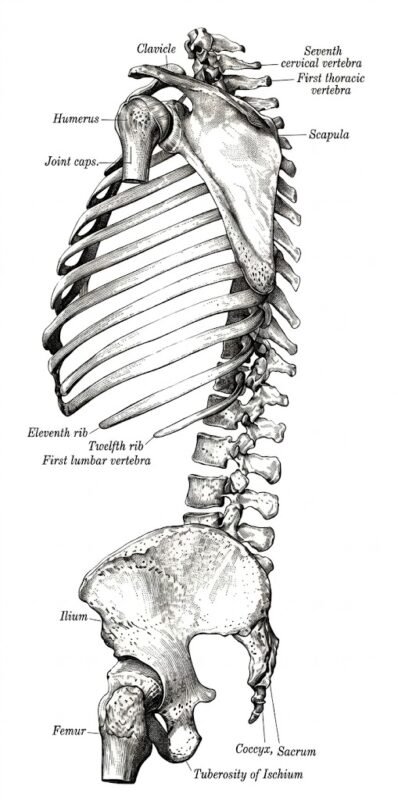
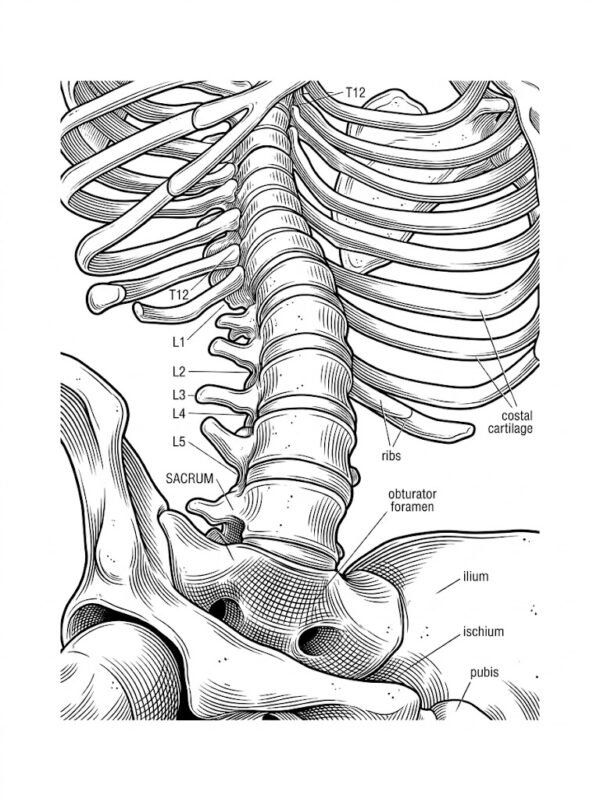
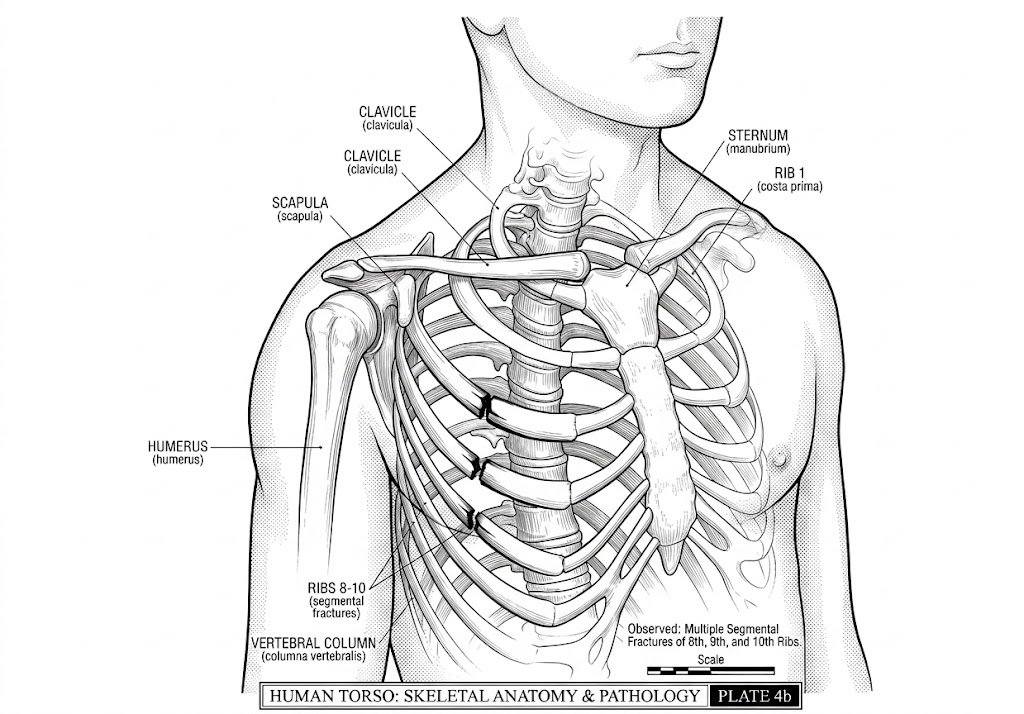
Humans have twelve pairs of ribs twenty-four ribs in total, twelve on each side. These ribs attach at the back to the thoracic vertebrae, the twelve vertebrae that make up the middle section of the spine. At the front, the picture is more varied. The first seven pairs of ribs known as true ribs connect directly to the sternum, which is the breastbone running down the center of the chest. They connect to the sternum through pieces of cartilage called costal cartilage, and the joint where the rib bone meets this cartilage is called the costochondral joint.
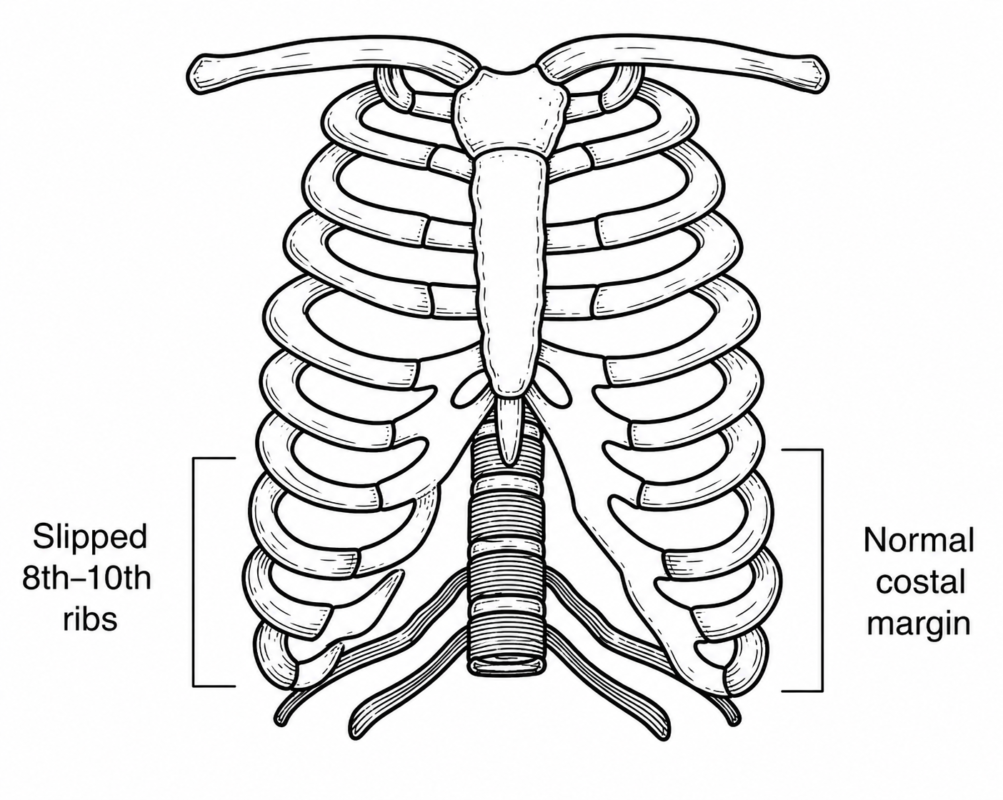
The next three pairs ribs eight, nine, and ten are called false ribs. They do not connect directly to the sternum. Instead, their cartilage connects to the cartilage of the rib above rather than to the sternum itself. This connection is made through the interchondral joints smaller, less robust joints than the ones connecting the true ribs. The last two pairs ribs eleven and twelve are called floating ribs because they have no connection at the front at all. They attach to the spine at the back and their front ends sit free in the muscle tissue of the abdomen.
This anatomy matters because different types of rib dislocation happen at different points in this system. A dislocation can occur at the back where the rib meets the spine. It can occur at the front where the rib bone meets the cartilage at the costochondral joint. It can occur at the sternocostal joint where the cartilage meets the sternum. Or it can involve the lower ribs slipping at their interchondral connections which is the basis of the condition known as slipping rib syndrome.
Understanding where the injury has occurred is the first step toward understanding what type of rib dislocation is present, what symptoms it produces, and how it should be managed.
Rib Type
Ribs Included
How They Connect at the Front
Where Dislocation Can Occur
True ribs
Ribs 1 through 7
Directly to sternum via costal cartilage
Costochondral joint or sternocostal joint
False ribs
Ribs 8, 9, and 10
Cartilage connects to rib above, not sternum
Interchondral joint most common in slipping rib syndrome
Floating ribs
Ribs 11 and 12
Not connected at front
Rarely dislocate at front, most movement is at spine
The Different Types of Rib Dislocation and What Each One Means
When someone says they have dislocated a rib, they could be referring to any one of several distinct injuries. Knowing which type helps explain the symptoms they experience and what treatment makes sense.
Costochondral Separation
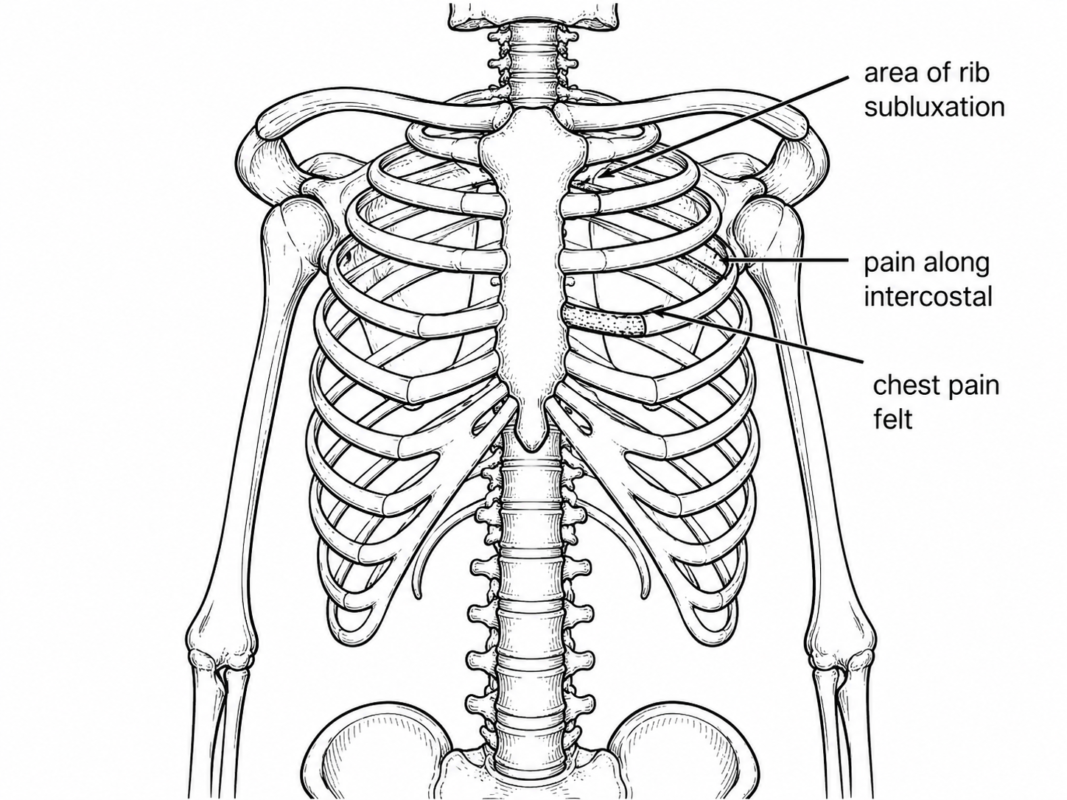
This is probably the most common type of what people call a dislocated rib. A costochondral separation occurs when the rib bone separates from the cartilage at the costochondral joint. The cartilage does not break the bond between the bone and cartilage is what fails. The rib and the cartilage are pulled apart from each other, leaving the rib partially or fully disconnected from its front attachment point.
Healthline describes costochondral separation as an injury that occurs when one or more ribs separates from the cartilage that connects it to the breastbone, usually caused by a sudden impact to the chest. Symptoms include sharp pain when breathing, coughing, or sneezing, and in less serious cases the injury can often be treated with rest and pain medication but in severe cases it has the potential to cause damage to internal organs.
This type of injury is particularly common in contact sports, car accidents, and falls. It can also happen from something as seemingly minor as severe, repeated coughing. The Combat Sports Clinic notes that costochondral separation is relatively common in combat sports and is sometimes called a separated rib or dislocated rib, and that you may feel a pop when the injury happens. Afterwards there is pain and tenderness at the place of injury, and it may hurt to cough, sit up, twist the body, or even breathe. It may also be possible to feel a bony lump or step in the rib itself where the bone and cartilage have slipped apart.
Slipping Rib Syndrome
Slipping rib syndrome is a condition that specifically affects the lower ribs typically ribs eight, nine, or ten. According to the Cleveland Clinic, slipping rib syndrome happens when the cartilage that attaches two lower ribs together becomes loose or unstable, causing one of the lower ribs to partially dislocate, slipping in and out of place and sometimes trapping the nerve beneath it. The medical term for this is interchondral subluxation subluxation being a partial dislocation of a joint.
What makes slipping rib syndrome particularly notable from a clinical standpoint is that recent data suggests it accounts for about five percent of all cases of chest wall pain, yet it is frequently undiagnosed because not all healthcare providers are familiar with it. When a rib first slips, the pain can feel sudden, sharp, and stabbing. A person may feel or hear the rib clicking or popping as it moves across the rib above or below it. After that initial sharp pain, a dull ache tends to linger. Most people with this condition notice the pattern repeating the rib slips, causes sharp pain, and then settles back with ongoing aching.
The rib might slip during coughing or sneezing, or with specific movements. Reaching overhead, rolling out of bed, bending sideways, or twisting the torso are all movements that can trigger an episode. The pain may also spread to the back, abdomen, or flank, which is one reason this condition is so often misdiagnosed as something related to the digestive system or kidneys.
Rib Dislocation at the Spine
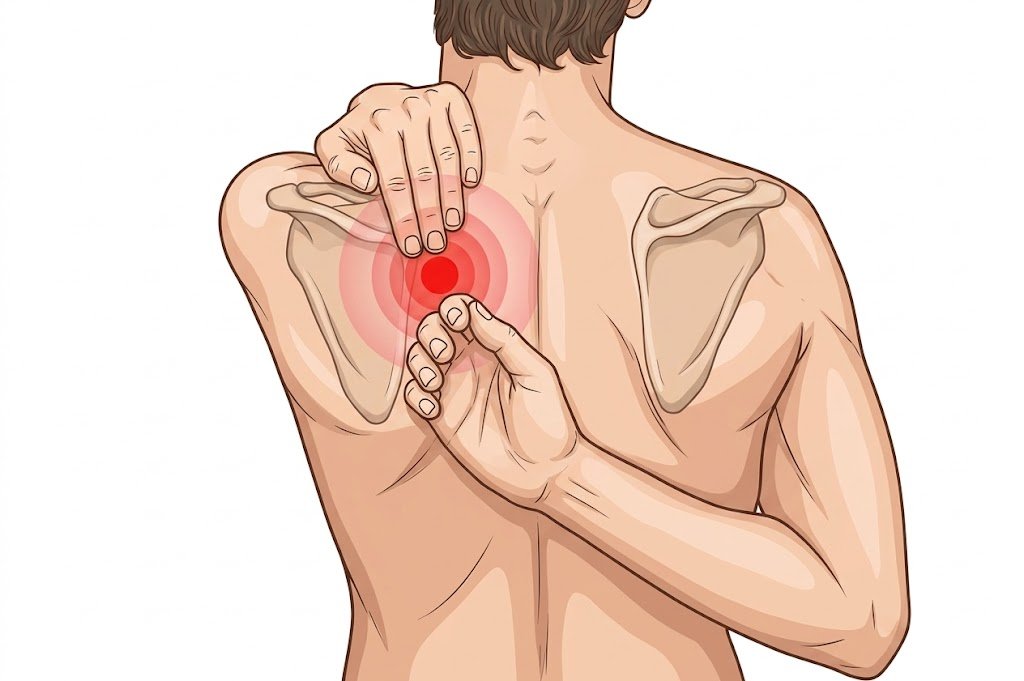
Less commonly, a rib can dislocate at the back where it connects to the thoracic vertebra. A rib dislocation can also occur in your back where the head of your rib attaches to your spine. This type of injury typically requires significant force a car accident, a severe fall, or a major impact from a sport. The first rib in particular has strong ligamentous support at its spinal attachment, making it one of the harder ribs to dislocate at the spine. A case report published in PMC described a 56-year-old man who presented to the emergency room with difficulty breathing after blunt chest trauma and was diagnosed with dislocation of the first rib an injury described as exceedingly rare. The first rib is not commonly dislocated in trauma because its articulations at the T1 vertebra and the manubrium are stabilized by strong ligaments.
Sternocostal Dislocation
This type of injury involves the point where the costal cartilage meets the sternum. Rather than the rib separating from its cartilage, the cartilage itself separates from the breastbone. This is less common than costochondral separation but can occur with the same types of trauma particularly high-energy impacts and severe twisting forces.
Type of Rib Dislocation
Where It Happens
How Common
Typical Cause
Costochondral separation
Rib bone pulls away from cartilage at front
Most common
Direct impact, fall, sports collision
Slipping rib syndrome
Lower rib cartilage becomes loose at interchondral joint
Accounts for 5% of chest wall pain
Repetitive strain, hypermobile cartilage, minor trauma
Spinal rib dislocation
Rib pulls away from thoracic vertebra at back
Least common
High-energy trauma car accident, severe fall
Sternocostal dislocation
Cartilage separates from breastbone
Uncommon
Blunt chest trauma, twisting force
What Actually Causes a Rib to Dislocate
What Actually Causes a Rib to Dislocate
The causes of rib dislocation range from dramatic high-impact trauma to surprisingly minor events. Understanding the cause is important both for diagnosis and for understanding how to prevent recurrence.
Direct Impact to the Chest
The most straightforward cause is a direct blow or force applied to the chest wall. This can happen in a car accident where the chest strikes the steering wheel or seatbelt, in a sporting collision in contact sports like rugby, football, wrestling, or martial arts, or in a fall where the side or front of the chest hits the ground or another hard surface. The force of the impact pushes the rib or cartilage beyond the range it can withstand, causing it to separate at one of the joints described above.
A PMC case report on operative treatment of multiple costochondral dislocations noted that most of these injuries are seen in the young male population and are a result of blunt chest trauma, often during contact sports. The study also noted that the prevalence of costochondral fractures and dislocations on CT after blunt chest trauma is between twenty and forty-two percent a significant figure that highlights how common these injuries are in high-impact situations.
Sudden Twisting or Reaching Movements
A rib can also dislocate without any direct impact. Violent or forceful twisting motions of the torso especially when combined with some compressive force can cause the cartilage or joint connections to fail. This type of mechanism is common in sports that involve rotation, such as golf, tennis, rowing, and gymnastics. It can also happen in everyday situations reaching suddenly behind you while your torso is twisted, turning sharply to one side while carrying something heavy, or getting out of a car in an awkward position.
Severe or Repeated Coughing
One of the most surprising causes of rib injury including dislocation is severe coughing. This is particularly relevant to costochondral separation and slipping rib syndrome. Persistent, forceful coughing from conditions like whooping cough, severe bronchitis, or a prolonged respiratory illness can apply enough repeated stress to the cartilage and joint connections that they eventually give way. Healthline notes that although less common, chronic and untreated coughing can cause rib cartilage injuries, and a costochondral separation can occur due to trauma such as landing hard on your feet, or even from violent coughing or sneezing.
Repetitive Strain and Overuse
Slipping rib syndrome in particular is associated with repetitive movements and underlying cartilage hypermobility a situation where the cartilage connecting the lower ribs is naturally looser or more flexible than normal. In people with this anatomy, activities involving repeated twisting, bending, or arm movements above the head can gradually loosen the interchondral connections until slipping starts to occur. Athletes involved in swimming, rowing, and throwing sports are among those most commonly affected by this mechanism.
Underlying Weakness or Pre-existing Conditions
Certain conditions can make the rib cage more vulnerable to dislocation. Osteoporosis where bone density is reduced makes the ribs themselves more fragile. Connective tissue disorders like Ehlers-Danlos syndrome, which affects the integrity of ligaments and cartilage, can predispose people to joint instability throughout the body including at the rib connections. Previous rib injuries that have not healed fully can also create weak points where dislocation is more likely.
Common causes of rib dislocation:
Direct blunt trauma to the chest, car accidents, falls, sporting collisions
Severe twisting of the torso combined with compressive force
Forceful or repeated coughing or sneezing over an extended period
High-impact sports contact sports, martial arts, rugby, football
Repetitive upper body movements in sports like rowing, swimming, throwing
Landing hard on the feet with force transmitted upward through the torso
Underlying cartilage hypermobility or connective tissue disorders
Previous incompletely healed rib injuries
How to Know If You Have Dislocated a Rib The Symptoms
How to Know If You Have Dislocated a Rib The Symptoms
This is where the article gets to the question most people actually want answered. The symptoms of a dislocated rib overlap with several other conditions, which is why people often spend a long time not knowing what is wrong with them. But there are specific patterns of symptoms that strongly suggest a rib dislocation rather than a muscle strain, broken rib, or something unrelated to the chest wall entirely.
Pain That Changes With Breathing and Movement
The most consistent symptom of any rib dislocation is pain that is clearly affected by breathing, movement, and pressure. The pain is typically sharp and well-localized meaning you can usually point to a specific spot rather than describing a vague ache across the chest. It worsens with deep breathing, coughing, sneezing, laughing, and bending or twisting the torso. It may ease somewhat when you are completely still and breathing shallowly, which is why many people with rib injuries instinctively breathe in a shallow, guarded way.
Pain when coughing, laughing, or sneezing is one of the hallmark symptoms of rib injuries described across multiple clinical sources, alongside swelling and tenderness around the site of the injury.
A Popping, Clicking, or Catching Sensation
One of the most distinctive symptoms of rib dislocation particularly slipping rib syndrome is a physical sensation of something popping, clicking, or catching in the chest or side. This is the rib or cartilage moving out of or back into position. Some people describe it as feeling like a bone grinding across another bone. Others describe a sharp catch that is immediately followed by a wave of pain.
The Cleveland Clinic describes this precisely: when your rib first slips, the pain can feel sudden, sharp, and stabbing. You may feel or hear your rib clicking or popping as it moves across your other rib. After that, the pain may linger as a dull ache.
Not everyone with a rib dislocation experiences this clicking. Costochondral separation, for example, may produce a pop at the moment of injury but not on an ongoing basis. Slipping rib syndrome, by contrast, tends to produce recurring clicks because the rib continues to move in and out of its unstable position with certain movements.
A Visible or Palpable Step or Lump
In some cases of costochondral separation, particularly where the displacement is significant, a small lump or step can be felt at the injury site the point where the rib bone has separated from the cartilage. This is caused by the end of the rib sitting in a slightly different position than it did before the injury, creating a palpable change in the normal contour of the chest wall. The Combat Sports Clinic notes that it may be possible to feel a bony lump or step in the rib itself where the bone and cartilage have slipped apart.
Pain That Radiates
Rib dislocation pain does not always stay in one place. Depending on which rib is affected and which nerves are being irritated or compressed, the pain can radiate to the back at the same level as the injured rib, into the abdomen, or downward toward the flank. Slipping rib syndrome in particular is known for producing pain patterns that look like they might be coming from the abdomen, kidney, or gallbladder which is a significant reason why it is so often misdiagnosed. The Physiopedia clinical review notes that pain in slipping rib syndrome may radiate from the costochondral area to the chest or to the same level in the back, and may be exacerbated by certain postures and movements including lying or turning in bed, rising from a chair, driving, stretching, reaching, lifting, bending, twisting the trunk, and coughing.
Tenderness at a Specific Point
Pressing directly on the injured joint produces sharp, localized pain. This is one of the most reliable ways a clinician distinguishes a rib dislocation or costochondral injury from a generalized muscle strain, which tends to produce more diffuse tenderness over a wider area rather than a single sharp point of pain. If you press on the area where your rib connects to the cartilage and it produces a sharp, reproducible pain, that is clinically meaningful.
Difficulty Sleeping in Certain Positions
People with rib dislocations typically find it very difficult to sleep on the affected side or on their stomach. The pressure from the mattress on the injured area is uncomfortable enough to prevent sleep. Sleeping on the back can also be difficult because lying flat compresses the chest wall. Many people with this injury find that sleeping at a slight incline either with extra pillows or in a recliner is the most comfortable position. Study.com notes specifically that when suffering from a costochondral separation, it is best to sleep sitting upright if possible to avoid exerting pressure on the costochondral joint as it is healing.
Key symptoms that suggest a rib dislocation:
Sharp, well-localized pain that worsens with breathing, coughing, or movement
A clicking, popping, or catching sensation in the chest or side
A palpable lump or step at the rib-cartilage junction
Pain that radiates to the back, abdomen, or flank
Specific point tenderness where the rib meets cartilage
Difficulty sleeping on the affected side or lying flat
Pain that begins suddenly after a specific movement, impact, or coughing episode
How Rib Dislocation Is Different From a Broken Rib
Since people often confuse rib dislocations with broken ribs, and since the two injuries can also occur together, it is worth understanding how they differ and how a doctor tells them apart.
How Rib Dislocation Is Different From a Broken Rib
A broken rib also called a rib fracture is a crack or complete break in the rib bone itself. A rib dislocation involves the rib or its cartilage moving out of its normal joint position without necessarily breaking the bone. Both injuries produce pain with breathing, tenderness over the injury site, and pain with movement, which is why they are easily confused.
The key differences are in how they are detected and in what the treatment priorities are. Rib fractures show up on X-rays, though Research from 2022 suggests that costal cartilage fractures and dislocations are often missed on conventional chest X-rays, with MRI or CT scans found to be more effective when it comes to detecting cartilage injuries. This is particularly relevant for costochondral separation and slipping rib syndrome, where the injury involves cartilage and soft tissue rather than bone structures that do not show up well on plain X-rays.
A broken rib also carries a different set of risks. A sharp fragment from a fractured rib can potentially injure surrounding organs the lungs, liver, spleen, or blood vessels depending on which rib breaks and in which direction the fragment moves. Multiple rib fractures on the same side of the chest can cause a dangerous condition called flail chest, where a section of the chest wall moves independently of the rest, severely compromising breathing. These risks are less prominent with a cartilage dislocation, though severe costochondral injuries can still cause complications.
Feature
Rib Dislocation
Broken Rib
What is injured
Cartilage connection or joint
The rib bone itself
Visible on X-ray
Often not requires CT or MRI
Usually yes
Popping or clicking sensation
Common, especially in slipping rib syndrome
Less common
Risk of organ injury
Low to moderate
Higher if bone fragment displaces
Can occur together
Yes often seen alongside fractures
Yes
Typical cause
Impact, twisting, coughing
Direct impact, blunt trauma
Treatment Details for a Dislocated Rib
The treatment approach for a dislocated rib depends on which type of dislocation is present, how severe it is, and whether there are any complications such as accompanying fractures or damage to nearby structures.
Rest and Activity Restriction
The most fundamental treatment for rib dislocation in the majority of cases is rest. This means avoiding activities that stress the chest wall heavy lifting, intense exercise, vigorous upper body movements, and anything involving significant twisting of the torso. The injury needs time to heal without being repeatedly stressed, and continuing to aggravate it by exercising through the pain is one of the most reliable ways to prolong recovery.
The Combat Sports Clinic makes a particularly important point: with this injury, you cannot just pop it back into place, and you should not try. Unlike a dislocated shoulder or finger, where a trained clinician can maneuver the joint back into position under controlled conditions, a dislocated rib cartilage joint is not something that can be safely relocated by manipulation at home or even by most general practitioners. Attempting to do so risks further injury. The injury heals through rest and controlled rehabilitation rather than manual relocation.
Pain Management
Managing pain effectively during recovery is both a comfort measure and a practical necessity. When rib pain is so severe that a person cannot take a deep breath or cough properly, they are at risk of developing chest complications pneumonia in particular because shallow breathing prevents proper lung expansion and clearance. Nonsteroidal anti-inflammatory drugs such as ibuprofen or naproxen are commonly used to manage pain and reduce inflammation. These medications both reduce pain and address the inflammatory component of the injury.
In more severe cases, a doctor may prescribe stronger pain relief or use an intercostal nerve block an injection of local anesthetic near the intercostal nerve running beneath the injured rib to provide more complete pain relief and allow the patient to breathe and cough more normally. Lidocaine patches applied directly over the painful area are another option used in some cases.
Icing the injured area during the first two to three days after the injury helps reduce swelling and pain. The ice should never be applied directly to the skin wrapping it in a cloth or using a dedicated ice pack prevents skin damage. Applications of twenty to thirty minutes every few hours during the acute painful period are the standard recommendation.
What Not to Do Avoid Wrapping
Many people instinctively reach for a bandage or compression wrap when they injure their ribs. This is the wrong approach for rib injuries. Healthline specifically states that it is not a good idea to wrap a bandage around your chest because the bandage can restrict breathing. Restricting the chest wall during recovery from a rib injury is dangerous because it prevents the lung expansion needed to keep the airways clear. Rib belts are sometimes used for very short periods in the acute phase one to four days according to some clinical guidance but they should be used cautiously and only on the advice of a doctor, not as a default home remedy.
Physical Therapy
Once the acute pain has subsided enough to allow movement, physical therapy plays an important role in safe recovery. A physiotherapist experienced with chest wall injuries can guide breathing exercises that maintain lung health without stressing the injury, gentle stretching that prevents the surrounding muscles from tightening and becoming a separate source of pain, and a gradual return to normal activity. For cases of slipping rib syndrome where the underlying issue is cartilage hypermobility, the physiotherapist may also work on improving postural control, trunk muscle strength, and movement patterns to reduce the likelihood of recurrence.
Electrotherapy and Ultrasound Therapy
In some clinical settings, high-voltage electrostimulation and ultrasound therapy are used as part of the treatment for costochondral injuries. These methods are known to reduce pain intensity and promote more efficient healing of the soft tissue structures involved.
Surgery, When It Is Necessary
Surgery for rib dislocation is rare and is generally reserved for cases where the injury is part of a larger, complex chest wall injury multiple rib fractures, flail chest, or significant displacement that cannot be managed conservatively. A case published in PMC described the first reported case of successful operative management of costochondral dislocation of multiple rib fractures after a high-energy trauma, where the costochondral lesions were surgically stabilized with plates and screws. The patient experienced no pulmonary complications during the primary admission and showed full consolidation at seven months without pain. However, this level of intervention is the exception rather than the rule.
For slipping rib syndrome specifically, surgical options include rib resection removing the affected rib which is considered when conservative treatment has failed and the pain significantly affects quality of life. Vertical rib plating to stabilize the slipping rib is another surgical option that has shown good results in published case series.
Treatment
When Used
Duration
Rest and activity restriction
All cases primary treatment
6 to 12 weeks minimum
NSAIDs ibuprofen, naproxen
All cases for pain and inflammation
As needed during healing
Ice application
First two to three days after injury
20 to 30 minutes every few hours
Intercostal nerve block
Moderate to severe pain not managed by NSAIDs
Administered by a doctor
Physical therapy
After acute pain subsides
Several weeks, guided progression
Rib belt
Short-term only acute phase
One to four days maximum
Surgery
Complex injuries, failed conservative treatment
One procedure plus recovery
Risks and Benefits of Treatment
Understanding both the benefits of following the recommended treatment approach and the risks of handling it incorrectly helps patients make better decisions throughout their recovery.
Risks and Benefits of Treatment
Benefits of Proper Treatment
Following the recommended treatment plan rest, pain management, controlled breathing, and graduated return to activity gives the injured cartilage and joint structures the best possible environment for healing. Cartilage has a limited blood supply compared to bone, which is one reason rib cartilage injuries tend to take longer to heal than bone fractures. Protecting the injury during this healing window is what allows the tissue to repair itself effectively.
Effective pain management during recovery is not just about comfort. When pain is adequately controlled, a person can breathe deeply and cough properly, which prevents the development of pneumonia and keeps the airways clear. Patients are encouraged to cough and take deep breaths despite the pain that these actions cause, because the active coughing and deep breaths can prevent the complications of costochondral separation such as pneumonia.
Physical therapy after the acute phase improves outcomes significantly. It prevents the stiffness and muscle weakness that develop when an injured area is completely immobilized for too long, and it provides a structured path back to normal activity and sport.
Risks of Poor Management
The most significant risk of not managing a rib dislocation properly is that the injury heals incompletely or incorrectly, leading to ongoing pain, instability, and a tendency for the problem to recur. Returning to heavy exercise or contact sport before the injury has properly healed is one of the most common reasons rib injuries become chronic problems.
For injuries that are part of more complex chest trauma where a fractured rib has also displaced there is a risk of internal organ injury if the injury is not properly assessed and managed. This is why any significant chest injury should be evaluated medically rather than simply rested at home without assessment.
There is also a risk specific to slipping rib syndrome misdiagnosis. Because the pain pattern can closely mimic abdominal or digestive conditions, patients are sometimes investigated extensively for gallbladder disease, kidney stones, or gastrointestinal problems before the rib is identified as the source. This delay in diagnosis prolongs suffering and means the appropriate treatment is not started when it should be.
Recovery and Outlook
Recovery from a rib dislocation takes longer than most people expect, and this is a consistent source of frustration for patients particularly those who are active and want to return to exercise or sport.
For costochondral separation, bruised ribs and costochondral separations generally take three to four weeks to heal, while broken ribs typically require six to eight weeks for recovery. Healing may be prolonged if the injury is repeatedly aggravated by overuse or strain. Severe costochondral separation can take between two to three months to heal completely, and strenuous physical effort should be avoided for at least eight weeks after the injury.
Slipping rib syndrome has a more variable timeline depending on whether it is being treated conservatively or surgically. Conservative treatment rest, physiotherapy, activity modification can reduce symptoms significantly over weeks to months, but in cases where the cartilage hypermobility is the underlying issue, some degree of ongoing management may be needed long-term.
One realistic expectation that many patients are not told upfront is that a small bump or step may remain at the injury site permanently after a costochondral separation. When the rib and cartilage heal back together, they sometimes do so in a slightly different alignment than before the injury, leaving a palpable irregularity. This is usually not painful in the long term and does not affect function, but patients who find it unexpectedly can become anxious about it.
The outlook for most people with a rib dislocation is good, provided the injury is properly diagnosed and managed. In the case of slipping rib syndrome particularly, the Cleveland Clinic notes that diagnosis can be difficult unless your healthcare provider is already aware of the syndrome a reminder that seeking care from someone familiar with chest wall injuries makes a real difference to how quickly and accurately this condition is identified and treated.
What to expect during recovery:
Acute pain is most intense in the first week and gradually decreases over following weeks
Deep breathing and coughing remain painful for several weeks this is normal
Sleeping comfortably improves progressively from about two to three weeks onward
Return to light activity is usually possible around four to six weeks
Return to sport or heavy manual work takes eight to twelve weeks minimum
A small residual bump at the injury site may persist permanently
Slipping rib syndrome may require longer management if cartilage hypermobility is the underlying cause
When to Call the Doctor
This is one of the most important sections of this article. While many rib dislocations can be managed at home after a proper diagnosis has been made, there are several situations where waiting to see a doctor is not appropriate and some where emergency care is needed immediately.
Go to the Emergency Room or Call Emergency Services Immediately If:
You are experiencing difficulty breathing shortness of breath that is not just from the pain of the rib injury itself, but a genuine inability to get enough air. This can indicate a pneumothorax a collapsed lung which is a serious complication that can occur when a displaced rib or rib fragment injures the lung tissue. It requires emergency treatment.
You notice that one side of your chest is moving differently than the other when you breathe one side rising and falling with breathing while the other moves differently or stays relatively still. This can indicate a flail chest, which is a medical emergency.
There is any coughing up of blood after a chest injury. This indicates potential internal damage to the lung tissue or airways and requires immediate evaluation.
You develop a fever, increasing chest pain, and shortness of breath in the days following a rib injury. This combination can indicate pneumonia developing as a complication of the injury, or an infection in the chest cavity.
See a Doctor Within 24 to 48 Hours If:
You had any significant impact to the chest and have pain that is affecting your breathing. Even if you feel the injury is mild, having it assessed with imaging rules out fractures, internal injury, and other complications that may not be obvious from symptoms alone.
You feel a clicking, catching, or popping sensation in your ribs without a clear history of impact. Slipping rib syndrome often develops without a dramatic traumatic event, and people sometimes dismiss the symptoms for months before seeking evaluation. Early assessment leads to earlier diagnosis and faster access to appropriate treatment.
You have chest pain on one side that also produces pain in the abdomen or back and you are not certain what is causing it. This combination of symptoms needs evaluation because it could represent a rib issue or something else entirely and the two can be distinguished clinically.
You have pain that is not improving after several weeks of rest and conservative management. A review of the diagnosis and imaging at this point can determine whether the injury is healing as expected or whether a different approach is needed.
See a Doctor at Your Next Available Appointment If:
You have had a minor chest wall injury that is healing but you have not been assessed yet and want to confirm the diagnosis. Even if symptoms are mild and improving, getting a clear diagnosis gives you accurate information about expected healing time and what activities are safe to continue.
You have ongoing, intermittent sharp pain in your lower chest or side that comes and goes with specific movements and has been present for weeks or months without a diagnosis. This pattern is consistent with slipping rib syndrome and is worth raising with a doctor who can assess for it specifically.
Situation
Action Needed
How Urgent
Shortness of breath after chest injury
Emergency room immediately
Emergency
One side of chest moving differently to other
Emergency room immediately
Emergency
Coughing up blood after chest injury
Emergency room immediately
Emergency
Significant chest impact affecting breathing
See a doctor within 24 hours
Urgent
Clicking or popping ribs without obvious injury
See a doctor within a few days
Soon
Chest pain radiating to abdomen or back
See a doctor within 24 to 48 hours
Urgent
Pain not improving after several weeks
Book an appointment
Within a week
Intermittent lower chest pain with movement for months
Book an appointment
Within a few weeks
Minor injury, improving, no assessment yet
Book at convenience
Non-urgent
Talk to a Medical Specialist Through Doctiplus
If you are experiencing chest pain, a clicking or popping sensation in your ribs, or pain that worsens when you breathe, cough, or move, speaking to a qualified medical professional is the right step to take. A doctor can assess your symptoms, determine whether imaging is needed, and guide you toward the right treatment approach for your specific situation.
At Doctiplus, you can connect with certified healthcare professionals online, without registration, at any time. A consultation with a specialist can help you understand whether your symptoms are consistent with a rib dislocation, what your management options are, and whether an in-person assessment or imaging is something you need to arrange promptly.
Final Thoughts
Yes, you can dislocate a rib and it is more common than most people realize. The term covers several different injuries: costochondral separation at the front of the chest, slipping rib syndrome affecting the lower ribs, spinal rib dislocation at the back, and sternocostal dislocation at the breastbone. Each of these produces a recognizable pattern of symptoms sharp, movement-dependent pain, clicking or popping sensations, point tenderness, and difficulty breathing deeply that distinguishes them from other chest injuries, though the similarities with broken ribs mean that proper imaging is often needed to confirm the diagnosis.
Treatment for most rib dislocations is not surgical. Rest, effective pain management, controlled breathing, and a gradual return to activity under physiotherapy guidance are the foundation of recovery for the majority of cases. What matters most is getting an accurate diagnosis early, understanding what the healing process will involve, and avoiding the mistake of returning to heavy activity before the injury has properly healed.
If your chest hurts in a way that matches what this article describes especially if there is any clicking, any pain with breathing, or any history of recent impact the right move is to have it assessed. Rib dislocations are treatable, recoverable injuries for the vast majority of people who get them. But managing them correctly starts with knowing what you are dealing with.
About Dr. Michael T. Havig Orthopedic Surgeon
Dr. Michael T. Havig combines medicine expertise with precise joint reconstruction and thoughtful orthopedic care for knees, hips, and shoulders.




 Cardiologist