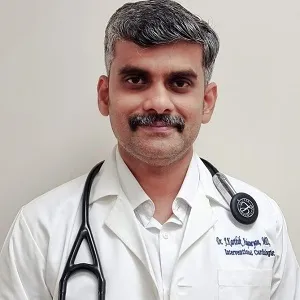
About Dr. Ashish Agrawal
Dr. Ashish Agrawal is a cardiologist and interventional cardiologist practicing in Mumbai. His clinical work focuses on the diagnosis and treatment of cardiovascular conditions, with particular experience in coronary interventions, angioplasty, cardiac catheterization, cardiac pacing, and structural heart procedures. Current professional listings report more than 23 years of overall medical experience.
Dr. Agrawal completed his MBBS from MGM Medical College and Hospital, followed by an MD in Medicine from B.J. Medical College, Pune, and a DM in Cardiology from Maharashtra University of Health Sciences. He completed his cardiology training at KEM Hospital and Seth GS Medical College in Mumbai, where he received a gold medal in his post-doctoral DM Cardiology course.
His professional career has included positions at BJMC Pune, KEM Hospital Mumbai, and Baroda Heart Institute and Research Centre before establishing his specialist practice in Mumbai.
Patients looking for related specialists can browse the Doctiplus cardiology directory.
Focus Areas
- Interventional cardiology
- Coronary artery disease
- Coronary angioplasty
- Coronary angiography
- Cardiac catheterization
- Cardiac pacing
- Pacemaker implantation
- Device therapy
- Balloon mitral valvuloplasty
- Peripheral angioplasty
- Renal angioplasty
- Chronic total occlusion
- Post-stent complications
- Echocardiography
- Structural heart procedures
Patients can learn more about heart disease and cardiovascular conditions through the National Heart, Lung, and Blood Institute.
Specialties And Cardiology Approach
Cardiology involves evaluating conditions affecting the heart and blood vessels, from common risk factors such as high blood pressure and cholesterol to coronary artery disease, rhythm problems, valve disorders, and structural heart conditions.
Dr. Agrawal has developed a particular focus on interventional cardiology, using catheter-based procedures to diagnose and treat selected cardiovascular problems. His professional listings include coronary interventions, cardiac pacing, device therapy, and peripheral vascular procedures among his areas of expertise.
A cardiology assessment generally considers symptoms, medical history, blood pressure, laboratory findings, ECG results, imaging, and other diagnostic information before deciding whether medication, monitoring, lifestyle measures, or an invasive procedure is appropriate.
Coronary Artery Disease
Coronary artery disease occurs when the blood vessels supplying the heart become narrowed or blocked. Depending on the severity and clinical situation, treatment can include medication, lifestyle changes, angioplasty, stenting, or surgery.
Dr. Agrawal has extensive experience in interventional treatment of coronary artery disease. His professional records include coronary angiography, angioplasty, primary and elective PCI, and treatment of complex coronary lesions.
Patients with suspected coronary disease may undergo tests such as an ECG, echocardiogram, stress testing, CT coronary angiography, or invasive coronary angiography depending on their symptoms and clinical findings.
Coronary Angiography And Angioplasty
Coronary angiography uses a catheter and contrast imaging to examine the coronary arteries. It can identify significant narrowing and help cardiologists determine whether an intervention may be useful.
Dr. Agrawal has performed more than 5,000 diagnostic cardiac catheterizations, according to current professional information. His listed expertise also includes coronary angiography and angioplasty.
Coronary angioplasty, also called PCI, uses a catheter-based technique to improve blood flow through a narrowed coronary artery. A stent may be placed when clinically appropriate.
Interventional Cardiology
Interventional cardiology uses minimally invasive catheter techniques to treat selected heart and vascular conditions.
Dr. Agrawal’s professional experience includes primary and elective angioplasty, cardiac catheterization, balloon mitral valvuloplasty, peripheral angioplasty, renal angioplasty, graft angiography, graft angioplasty, and treatment of chronic total occlusions.
His experience also includes specialized devices used during coronary procedures. The specific intervention depends on the patient’s anatomy, symptoms, disease severity, previous procedures, and overall health.
Cardiac Pacing And Pacemakers
Pacemakers are devices used to help maintain an appropriate heart rhythm in patients with certain electrical conduction problems or abnormally slow heart rates.
Dr. Agrawal has professional experience in cardiac pacing and device therapy. Current listings state that he has implanted more than 100 permanent pacemakers as a primary operator, including VVIR, VDD, and DDDR systems.
Before implantation, a cardiologist generally reviews symptoms, ECG findings, rhythm monitoring, heart structure, and the underlying cause of the rhythm problem.
Balloon Mitral Valvuloplasty
The mitral valve controls blood flow between two chambers of the heart. In selected patients with significant mitral stenosis, balloon mitral valvuloplasty can be considered as a catheter-based treatment.
Dr. Agrawal’s professional record includes experience with balloon mitral valvuloplasty, including emergency and pediatric procedures. Current listings report more than 100 BMV procedures performed as a primary operator.
Whether this treatment is suitable depends on the valve’s structure, the severity of narrowing, symptoms, and other clinical findings.
Peripheral And Renal Angioplasty
Cardiovascular disease can also affect arteries outside the heart. Peripheral artery disease may reduce blood flow to the limbs, while narrowing of renal arteries can affect blood flow to the kidneys in selected cases.
Dr. Agrawal’s listed specialist interests include peripheral angioplasty, renal angioplasty, and peripheral vascular interventions.
Catheter-based treatment is considered only when clinically appropriate. The decision depends on symptoms, imaging findings, disease severity, and the patient’s overall cardiovascular risk.
Chronic Total Occlusion
A chronic total occlusion is a complete blockage of a coronary artery that has been present for an extended period. These lesions can be technically challenging to treat and require detailed assessment before intervention.
Dr. Agrawal lists chronic total occlusion, or CTO, among his specialist areas. His interventional experience includes complex coronary procedures and post-stent interventions.
Treatment decisions depend on symptoms, the affected vessel, alternative blood-flow pathways, heart function, and the expected benefit of reopening the artery.
Echocardiography And Cardiac Assessment
Echocardiography uses ultrasound to examine the heart’s structure and function. It can provide information about heart chambers, valves, pumping function, and blood flow.
Dr. Agrawal’s professional profile includes experience with transthoracic and transesophageal echocardiography. Current professional information reports that he has performed more than 10,000 two-dimensional and Doppler echocardiograms.
The type of echocardiogram selected depends on the clinical question and the information needed by the cardiology team.
Structural Heart Procedures
Some heart conditions involve structural abnormalities that can be treated through catheter-based techniques rather than conventional open surgery in selected patients.
Dr. Agrawal’s listed procedures include ASD and VSD device closure, in addition to balloon mitral valvuloplasty and other interventional procedures.
The suitability of a device-based procedure depends on the anatomy of the defect, its size, associated symptoms, and findings from cardiac imaging.
Post-Stent And Complex Coronary Care
Patients who have undergone coronary stenting may require continuing medical treatment and follow-up. In some circumstances, a previously treated artery can develop another narrowing or a complication requiring specialist assessment.
Dr. Agrawal’s professional profile specifically lists post-stent thrombosis PTCA among his areas of procedural experience. He has also worked extensively with complex coronary interventions.
Follow-up after an intervention typically includes medication review, assessment of symptoms, cardiovascular risk-factor management, and further testing when clinically indicated.
Patient Care And Communication
Cardiology often involves decisions that patients may find difficult to understand, particularly when an invasive procedure is being considered. Clear discussion of the diagnosis, available options, expected benefits, possible risks, and alternatives can help patients participate in treatment decisions.
Dr. Agrawal’s professional profile emphasizes patient satisfaction and describes his work across both diagnostic and interventional cardiology. His experience includes coronary interventions, pacing, echocardiography, and vascular procedures.
Patients preparing for a consultation can bring previous ECGs, echocardiograms, angiography reports, blood-test results, medication lists, and hospital discharge summaries. A record of symptoms and previous cardiac procedures can also be useful.
Professional Experience
Dr. Agrawal began his professional career with training and clinical work in medicine at BJMC Pune. He subsequently served as an Assistant Professor in Medicine before moving into specialist cardiology training at KEM Hospital, Mumbai.
After completing his DM in Cardiology, he worked as an Assistant Professor and Super Speciality Medical Officer in Cardiology at KEM Hospital. He also worked as an interventional cardiologist at Baroda Heart Institute and Research Centre, a center known for primary angioplasty.
He now practices as an interventional cardiologist in Mumbai, with current listings associating him with The Heart Clinic, Indigo Hospital, and Aditi Hospital.
Academic And Professional Contributions
Dr. Agrawal has maintained an academic component alongside his clinical practice. His professional record notes participation in academic meetings and research work during his cardiology career.
During his postgraduate education, he achieved a high ranking in competitive medical examinations and received a gold medal in his post-doctoral DM Cardiology course. His academic achievements also include strong examination results during his MD training.
He is a member of the Cardiological Society of India, maintaining professional involvement within the country’s cardiology community.
Professional Recognition
Dr. Agrawal received a gold medal in the post-doctoral DM Cardiology course at KEM Hospital and Seth GS Medical College, Mumbai. His professional profile also records several academic distinctions from his medical and postgraduate training.
Among his documented academic achievements are first position in institute-level MBBS examinations, distinction in Physiology and Microbiology, a high national postgraduate entrance ranking, and strong rankings in superspecialty entrance examinations.
These achievements form part of his broader academic and clinical background in cardiology.
Credentials And Education
Dr. Ashish Agrawal completed his MBBS from MGM Medical College and Hospital in 2003. He then completed his MD in Medicine from B.J. Medical College, Pune, in 2008, followed by his DM in Cardiology from Maharashtra University of Health Sciences in 2012.
His cardiology training included work at KEM Hospital and Seth GS Medical College, Mumbai, where he completed his DM and later worked in the cardiology department.
His Maharashtra Medical Council registration is listed as 2004020463, according to current professional records.
Clinic And Appointment Information
Dr. Agrawal currently practices in Mumbai at The Heart Clinic, with additional professional associations with Indigo Super Specialty Hospital and Aditi Hospital in Mulund. Current professional listings also identify consultation locations around LBS Marg and Bhandup/Mulund.
Current listings show a consultation fee of approximately ₹1,500 at some of his Mumbai consultation locations. Appointment schedules and fees can change, so patients should confirm the latest consultation timings, fees, availability, hospital arrangements, and insurance information directly with the relevant facility before visiting.







 Cardiologist
Reviews
There are no reviews yet.