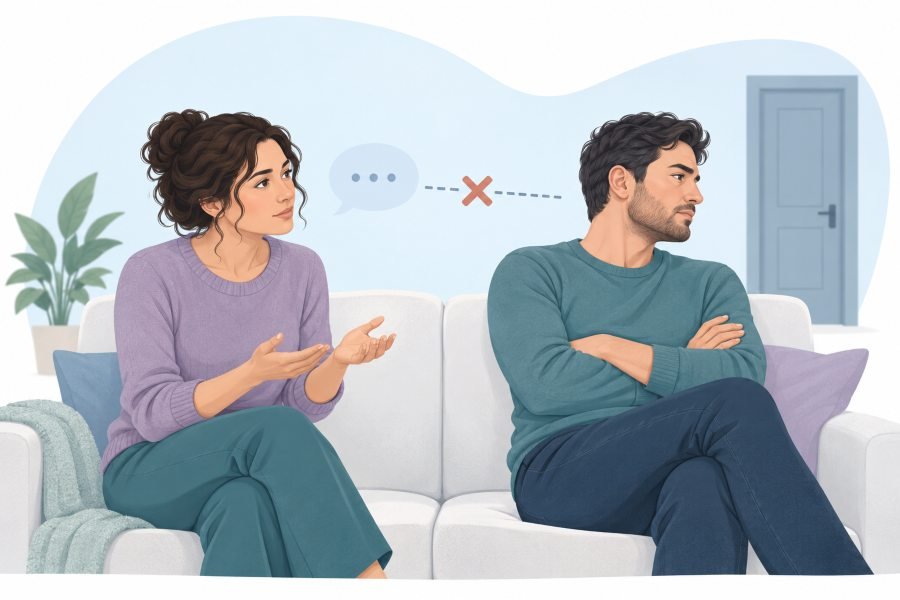
Emotional immaturity is not about age, silliness, or liking cartoons at thirty-five. It describes a steady gap between what a person feels and what they can hold, name, and handle without making the feeling somebody else’s problem. The emotion arrives at full volume, the skills to carry it are missing, so it gets acted out instead: a raised voice, three days of silence, a joke aimed at the softest spot, a flat refusal to talk about the thing that actually hurt. Most adults have moments like this. The pattern becomes a problem when it is the default setting, when the people nearby start editing themselves to avoid setting it off, and when nothing ever gets repaired afterwards.
This piece is about spotting that pattern honestly, understanding where it comes from without excusing the damage, knowing what you can and cannot change in another adult, and what it does to a body over years of practice.
What Emotional Immaturity Actually Means
Maturity, in the emotional sense, is closer to a set of habits than a personality type. It means you can feel something strongly and still choose what you do next. You can hear Criticism without treating it as an attack on your worth. You can be wrong out loud. You can tolerate another person being upset with you without either collapsing or going to war. That is roughly what sits behind the American Psychological Association’s entry on emotional maturity, which frames it as the ability to respond to situations in a controlled, appropriate way rather than in the way a much younger version of you would have.
The Situation
A Mature Response
An Immature Response
A partner says, “I felt ignored at dinner tonight”
Asks what happened, sits with the discomfort, checks whether it is a pattern
“So now I am a terrible partner? Great. Add it to the list.”
A manager gives corrective feedback on a report
Separates the work from the self, asks what good looks like
Goes quiet for three days, tells colleagues the manager has a problem with them
A friend cancels plans twice in a row
Says plainly that they miss them and asks if everything is alright
Reads it as rejection, stops replying, waits to be chased
Money is tighter than expected this month
Opens the banking app, writes down the numbers, makes a plan
Avoids the app entirely, spends more to feel better, snaps at whoever mentions it
A child melts down in a supermarket aisle
Stays regulated, names the feeling, gets them out of the shop
Matches the child’s volume, threatens, feels ashamed later, says nothing about it
Why Getting Older Does Not Settle The Question On Its Own
Why Getting Older Does Not Settle The Question On Its Own
There is a real biological story underneath some of this. The regions of the brain that handle planning, impulse control, and consequence weighing are the last to finish wiring, and the National Institute of Mental Health notes that this process runs well into the mid-twenties. A nineteen-year-old who reacts badly to Criticism is working with hardware that is still under construction. A forty-five-year-old is not.
Beyond that window, personality does keep moving. Large studies tracking adults over time find that most people drift towards being more conscientious, more agreeable and more emotionally steady as the years pass, a pattern psychologists call the maturity principle, and more recent work has examined how that change plays out facet by facet and alongside close partners. The drift is real, but it is an average, not a promise. Some people move a long way. Some barely move at all.
What separates those two groups is mostly what life asked of them, and whether anyone let them off the hook.
Being responsible for someone who cannot manage themselves- a child, a patient, an ageing parent- forces regulation because the alternative causes visible harm
Work where feedback is direct and the consequences land on you rather than on somebody else builds tolerance for being criticised
Long relationships that survive require repair, and repair is the single most maturing skill there is
Grief, illness and failure that get faced rather than numbed tend to reorganise a person’s priorities permanently.
Therapy, honest friendships and anything that gives accurate feedback about your effect on others speeds the whole process up.
On the other side, being consistently rescued from consequences, having a partner who manages every difficult feeling for you, or living in a setting where your temper buys compliance will keep a person frozen at whatever age the pattern started.
Patterns That Turn Up Again And Again
Emotional immaturity is not one behaviour. It is a cluster, and most people who fit the description show several of these rather than all of them. Reading this list about someone else is easy. Reading it about yourself is the useful version.
Emotional outsourcing. The feeling is real, but the job of managing it gets handed to whoever is closest. Their mood becomes your weather report, and your evening depends on it.
Feelings treated as facts. “I feel disrespected” becomes “you disrespected me” with no step in between where the evidence gets checked.
Conflict that goes straight to character. A disagreement about the dishes arrives at “you have always been selfish” within four minutes.
Withdrawal used as a punishment. Silence that is not a pause to calm down but a sentence being served by the other person.
An allergy to being wrong. Apologies that arrive as trades, “I am sorry but you also”, or as performances designed to close the subject rather than repair anything.
Difficulty holding someone else’s emotion. If you are sad, they change the subject, fix it, minimise it, or become sadder than you so that you end up doing the comforting.
Scorekeeping. A running ledger of favours, slights and who did what in 2019, produced during arguments as evidence.
Low tolerance for boredom and discomfort. Waiting, silence, admin and slow progress feel unbearable, so they escape through phone, drink, drama or a sudden new project.
Black and white reading of people. Someone is wonderful until they disappoint, then they are written off entirely, often permanently.
What It Sounds Like When You Are Standing In It
What It Sounds Like When You Are Standing In It
Transcripts are more useful than adjectives here. These are the lines people actually report hearing, what tends to be happening underneath them, and the effect they have on the person listening.
What Gets Said
What Is Usually Going On
What It Does To The Listener
“I am fine.” (said flatly, for hours)
Overwhelm with no language attached to it
Teaches them to guess, then to walk on eggshells
“You are too sensitive.”
The feeling in the room is unbearable, so the messenger gets blamed
Makes them distrust their own perception
“After everything I do for you.”
Effort is being used as currency to buy immunity from criticism
Guilt replaces honest conversation
“It was a joke. Relax.”
A real grievance smuggled out sideways
Removes any safe way to object
“You always do this.”
One incident collapsed into a whole identity
Defence becomes the only available move
“Nothing I do is ever enough.”
Shame arriving faster than the ability to hear feedback
Stops them raising anything at all next time
Where This Comes From Without Letting Anyone Off The Hook
Almost nobody arrives here on purpose. Emotional skills are taught the way language is taught, by living around people who use them. A child raised in a house where feelings were loud and unpredictable learns to scan faces, not to name emotions. A child raised where feelings were not mentioned learns that the whole category is embarrassing. A child who had to manage a parent’s moods learns to keep the peace at any cost and never learns to have needs of their own. None of that is the adult’s fault. What happens next still is.
There is also a medical side that deserves care rather than armchair diagnosis. Difficulty controlling emotional responses can accompany ADHD, mood disorders, trauma histories, brain injury, chronic pain, thyroid problems, sleep deprivation, and the ordinary chemical havoc of perimenopause. Cleveland Clinic’s overview of emotional dysregulation as a clinical symptom is a reasonable starting point if the pattern seems more like a body problem than a habit problem.
Homes where big feelings were dangerous, so shutting down became the only safe move
Homes where feelings were never discussed, leaving no vocabulary beyond good, bad and fine
Being the child who managed an adult, which builds vigilance instead of self-knowledge
Being shielded from every consequence, so the cost of a reaction never had to be felt.
Long stretches of untreated stress, sleep debt, pain or illness, which strip regulation from anyone
Cultures and workplaces where volume gets results and calm gets ignored.
Substance use, which reliably borrows tomorrow’s self-control to pay for tonight
Living Or Working With Someone Who Reacts This Way
The hardest sentence in this whole subject is that you cannot mature another adult. You can invite, you can model, you can set terms. You cannot install skills in someone who is not interested in having them. What you can change is how much of your own life is organised around managing their reactions.
The Situation
What Usually Fails
What Tends To Help
They go silent for days after a disagreement
Chasing, apologising for something you did not do, guessing
Say once that you are available when they want to talk, then live your day normally
Every conversation about a problem becomes about their hurt feelings
Arguing about who is more wronged
Name one specific behaviour and one specific request, then stop
They minimise something that mattered to you
Escalating until they take it seriously
State the effect plainly, once, without asking them to agree
Their mood decides the tone of the whole house
Pre-managing, warning the children, smoothing everything in advance
Keep your own routine steady so the household has a second weather system
They apologise, then repeat it the next week
Accepting the apology as evidence of change
Watch behaviour over weeks, not words on the night
Conversations turn into character attacks
Defending your character
Ending the conversation and returning to it when both of you are calm
Two cautions matter here. First, none of this works if you are the only one doing it, and a relationship where one person does all the regulating is not a relationship; it is a job. Second, patience is the right response to immaturity and the wrong response to control. Those are different things, and the difference is covered further down.
Growing Up Emotionally When Nobody Taught You How
Growing Up Emotionally When Nobody Taught You How
If you read the earlier lists and recognised yourself, the good news is that this is skill work rather than a personality transplant. The skills are unglamorous, and they respond to practice.
Start with language, because it does more than it sounds like it should. Neuroimaging work at UCLA found that putting feelings into words reduced activity in the brain’s threat centre while increasing activity in regions linked to deliberate thought. Saying “I am embarrassed and a bit resentful” does something measurably different from saying “I am angry”, partly because it is more accurate and partly because naming forces a pause. For the physical side of that pause, Mayo Clinic’s guidance on managing anger before it manages you covers the basics well, including the underrated value of leaving the room.
The Skill
What Practice Actually Looks Like
How You Know It Is Working
Naming the feeling precisely
Twice a day, write the feeling in three words rather than one, including the uncomfortable one underneath
You start noticing hurt before it converts into anger
The pause
Twenty minutes away from the conversation, no rehearsing, no drafting a reply in your head
You return with a point rather than a case
Separating behaviour from identity
Saying “that landed badly” instead of “you are cruel”, and hearing feedback as about one thing you did
Criticism stops feeling like an obituary
Repair
Going back within a day and naming your part first, with no “but” attached
Conflicts end rather than pause
Tolerating being disliked
Holding a reasonable no without softening it three times
You stop agreeing to things you resent later
Sitting with discomfort
Ten minutes of boredom without reaching for a screen, once a day
Urgency stops running your decisions
Two things are worth holding on to while you practise. Progress is measured in shorter recovery times, not in never reacting, so the first real sign of change is usually that the storm lasts an hour instead of a week. And repair matters more than restraint, because everyone loses their temper eventually, while the households that stay warm are the ones where somebody comes back and says, “I was unfair to you last night.”
When It Is Not Immaturity At All
This is the part that a thoughtful article has to include, because the language of emotional immaturity gets borrowed to describe things that are far more serious, and that mislabelling can keep people stuck in situations they should be leaving.
Immaturity is clumsy. It hurts people without a plan. Control is different. If the behaviour has a direction to it, if it consistently benefits one person, if the rules change so you can never get them right, if there is monitoring, threat, financial restriction, or fear in the room, that is not a skills gap. Patience will not fix it, and self-improvement is not the answer. The same goes for anything physical. Speak to a domestic abuse service, a doctor, or a helpline in your country rather than to a self-help checklist.
Fear rather than frustration when you hear their key in the door
Rules that shift, so the same action is fine one week and a betrayal the next.
Your money, your movements, your phone or your friendships being controlled or monitored
Any physical violence, including the sort that gets described afterwards as an accident
Threats of self-harm used to stop you from leaving or from raising an issue
Emotional reactions severe enough to cause job loss, self-harm, or blackouts, which need a medical assessment rather than a conversation about maturity
A sudden change in temperament in an adult who was previously steady, which is worth taking to a doctor because it can have a neurological or hormonal cause
What Years Of Unmanaged Emotion Do To The Body
What Years Of Unmanaged Emotion Do To The Body
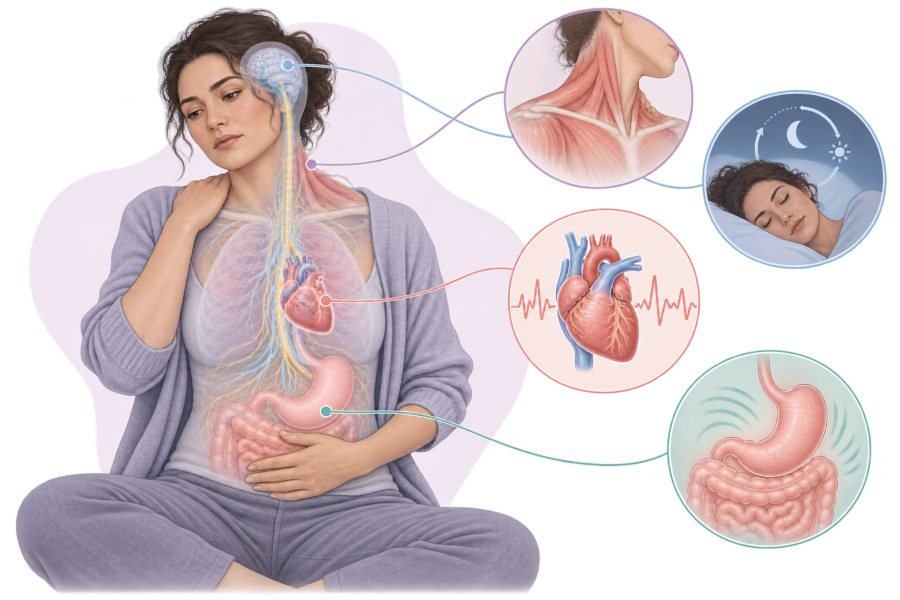
The part of this subject that gets discussed least is the physical bill. Emotion that is never processed does not stay in the mind politely. It runs through the same stress pathways that govern blood pressure, sleep architecture, digestion and inflammation, and the effects are measurable in hours rather than decades. In a randomised study covered by the American Heart Association, eight minutes of recalling an anger-provoking memory impaired blood vessel function in healthy young adults, with the impairment still present forty minutes later. That was one recalled argument in a laboratory, in people averaging twenty-six years of age. A household running on that several times a week is a different proposition entirely.
The relationship side has its own long record. The Harvard Study of Adult Development, which has followed participants for more than eight decades, found that the quality of people’s close relationships in midlife predicted their physical health in later life better than cholesterol readings did. Satisfaction in relationships turned out to protect the body, not only the mood. That cuts both ways. Chronic conflict, silence and vigilance are not neutral conditions to live in.
Sleep goes first, usually as a delayed onset or a three in the morning wake, and everything else regulates worse without it.
Blood pressure and heart rate stay elevated for longer after each episode, so recovery never quite completes
Digestive symptoms, tension headaches, jaw clenching and shoulder pain cluster in people living with unpredictable households
Appetite swings in both directions, and comfort eating or skipped meals follow the emotional weather rather than hunger.
Alcohol use creeps up as a regulation shortcut, which then worsens sleep and control the following day.
Immune function and wound healing are slower in people under sustained relational stress.
In children in the home, the same stress shows as stomach aches, school refusal and sleep trouble long before anyone can say what is wrong.
None of this is a reason to panic about a bad week. It is a reason to treat emotional skills as part of physical health rather than as a personality question. If you have been living inside this pattern for years, whether as the person who reacts or the person who absorbs, a conversation with your doctor about sleep, blood pressure and stress is a practical next step, and it is often an easier door to walk through than a therapist’s. Bring the specifics: the number of bad nights, the physical symptoms, the drinking if it applies. Emotional regulation is one of the few areas where working on the mind shows up in the bloodwork.
This article is for general information and is not medical advice or a substitute for assessment by a qualified professional. If emotional symptoms are severe, worsening, or affecting your safety or someone else’s, contact a doctor, a mental health service, or your local emergency number.
About Dr. Nina Paleologos (Psychiatrists)
Dr. Nina A. Paleologos is a highly accomplished, board-certified neurologist who specializes in neuro-oncology. She is nationally recognized for her expertise in diagnosing and managing primary malignant brain and spinal cord tumors







 Cardiologist