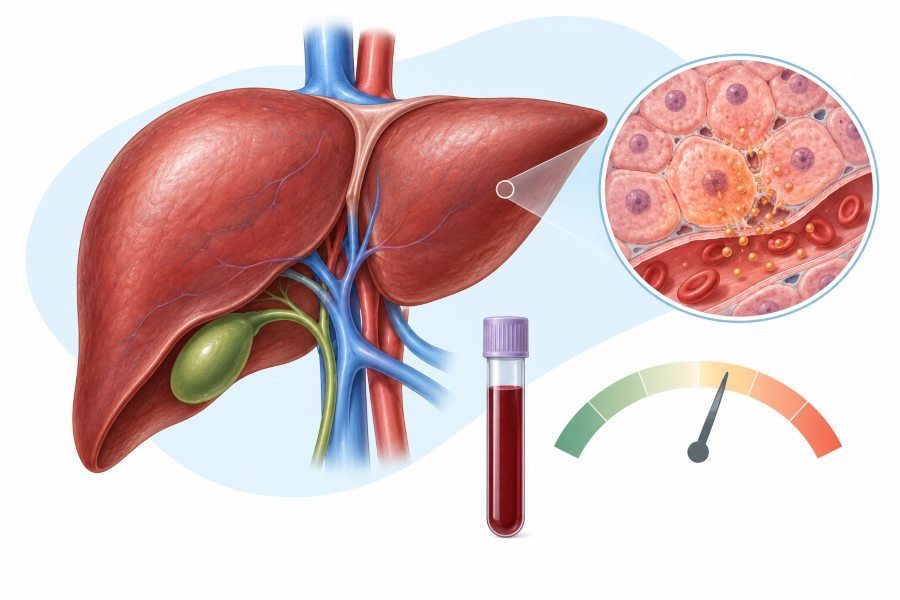
An ALT result arrives with almost no context. One number, a range beside it, and a flag if it crossed the line. What that number cannot tell you on its own is whether you are looking at a week of heavier drinking than usual, a statin your body is unhappy with, a fatty liver that has been building quietly for a decade, or something that needs attention today.
The good news is that the same number becomes far more informative once you ask a second question, which is not whether it is high but how high. That single distinction reorganises everything that follows, and it is how a doctor reads your result even if nobody says so out loud.
The Range Your Lab Calls Normal Is Probably Too Generous
Start here, because it reframes the rest. Laboratory ALT ranges were built from populations that included large numbers of people with undiagnosed fatty liver, which quietly pushed the upper limit upward. Several bodies have since argued for tighter thresholds based on people with no liver risk factors at all.
Source
Upper limit suggested
Notes
Many hospital labs
Around 40 to 55 U/L
Derived from general population samples
American College of Gastroenterology
29 to 33 for men, 19 to 25 for women
From populations screened for liver risk
AASLD steatotic liver disease pathway
Above 33 for men, above 25 for women
Used as a trigger in the MASLD decision tree
Japan Society of Hepatology
Above 30, either sex
A deliberately simple public threshold
The ACG guideline on abnormal liver chemistries spells out the first of those and makes a blunt observation alongside it. Because upper limits vary so widely between institutions, a clinician may not think to investigate an ALT of 70 when the reporting lab calls anything under 55 normal, even though that level carries measurably higher liver-related mortality.
Japan took the most direct route to the same problem. In 2023 the Japan Society of Hepatology launched what it calls the Nara Declaration, a national campaign built on one instruction the public can actually remember: if your ALT is above 30, go and see your doctor. A review of the initiative in Hepatology Research explains the reasoning, which is that chronic liver disease progresses silently to cirrhosis and liver cancer while public awareness of a raised ALT stays close to zero. Validation work has since found that threshold reasonable for identifying fatty liver disease in health check populations, including in Japanese adults in their twenties, where a cutoff of just above 30 performed well.
So a result of 38, marked normal on your printout, may still be worth raising if you carry risk factors. That is not a reason to panic. It is a reason not to file the result away as settled.
What ALT Is Doing In Your Blood At All
What ALT Is Doing In Your Blood At All
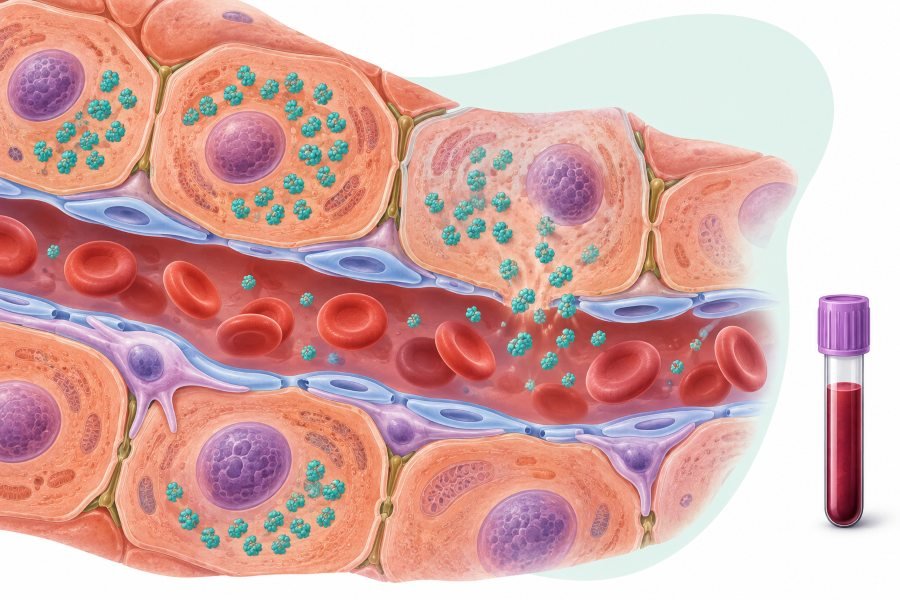
ALT is an enzyme that lives mainly inside liver cells, where it helps convert amino acids into usable energy. It is not supposed to be circulating in any quantity. When liver cells are injured or inflamed, their membranes become leaky and ALT spills into the bloodstream, which is why MedlinePlus describes the ALT blood test as a way of detecting liver injury before symptoms appear.
Two consequences follow, and they pull in opposite directions. ALT is sensitive, so it often rises before anyone feels unwell. But it measures leakage rather than function, so a badly scarred liver that has stopped leaking can produce a completely normal ALT. A great many people with fatty liver sit inside the normal range. A normal ALT is reassuring, not exonerating.
How High Is High
Clinicians sort raised ALT by multiples of the upper limit of normal, because the size of the elevation narrows the list of causes dramatically. Roughly:
Viral hepatitis, autoimmune liver disease, drug injury, less common inherited conditions
Assessment within days to weeks
Marked
Above fifteen times, often in the hundreds or thousands
Acute toxic injury, acute viral hepatitis, loss of blood flow to the liver, bile duct obstruction
Same day, sometimes emergency
The Mild Zone, Where Almost Everyone Lands
The Mild Zone, Where Almost Everyone Lands
Most raised ALT results sit here, and most of them come from one of four places.
Fatty liver is now the commonest single explanation across much of the world. The condition was renamed in 2023 to metabolic dysfunction-associated steatotic liver disease, shortened to MASLD, replacing the older non-alcoholic fatty liver disease. The new name matters because it puts the metabolic drivers at the centre: waist circumference, blood pressure, blood sugar, triglycerides. The AASLD decision tree for steatotic liver disease sets out how a raised ALT plus one cardiometabolic feature is worked through, including which other causes get ruled out first.
Alcohol is the second, and it is the one most consistently under-reported in clinic rooms. The ACG guideline flags a specific pattern worth knowing: heavier regular intake combined with an AST that runs higher than the ALT points towards alcohol-related liver injury rather than fatty liver from metabolic causes. An honest number given to your doctor genuinely changes which tests get ordered.
Medications and supplements make up the third group, and they are frequently missed because people do not think of them as drugs. The NIH maintains LiverTox, a reference on drug-induced liver injury, which notes that drug injury can mimic virtually any liver disease and remains a diagnosis of exclusion. Bodybuilding products, green tea extract in concentrated form, and various herbal preparations appear in that literature far more often than their reputations suggest.
The fourth is not the liver at all. ALT exists in smaller amounts in muscle, so a hard training session, a new gym programme or a muscle injury can lift it without anything hepatic going on.
The Middle Ground
Elevations in the five to fifteen times range narrow the field considerably and usually prompt a fuller set of tests rather than watchful waiting. Chronic hepatitis B and C sit high on that list, which is part of why screening recommendations have widened so much. The CDC now recommends hepatitis C screening at least once for every adult, on the grounds that a large share of infected people have no idea and that the infection is now curable in the great majority of cases with a short oral course.
Autoimmune hepatitis belongs here too, as do the inherited conditions clinicians screen for when nothing obvious explains a persistent elevation: haemochromatosis, Wilson disease in younger people, and alpha-1 antitrypsin deficiency. Coeliac disease and thyroid disorders both turn up in this territory more often than people expect, which is why the standard second-round panel looks broader than the problem seems to warrant.
When The Number Is Very High
When The Number Is Very High
ALT in the hundreds or thousands is a different conversation with a different clock attached. Paracetamol, called acetaminophen in the United States, is a leading cause of acute liver injury worldwide and can produce extraordinary enzyme levels, sometimes after doses taken over several days rather than one deliberate overdose. Anyone who suspects they have taken too much needs emergency assessment straight away rather than a wait-and-see approach, because effective treatment is time sensitive and the early hours often feel deceptively fine.
Acute viral hepatitis, a sudden loss of blood flow to the liver during severe illness or shock, and a stone obstructing the bile duct round out the usual causes at this level. These present with symptoms rather than as a surprise on a routine panel, and they are handled urgently for good reason.
The Other Numbers Change The Meaning
ALT is rarely read alone. The relationship between ALT and AST tells you something the two values separately do not: ALT running above AST points one way, while AST at roughly twice ALT points towards alcohol-related injury. Alkaline phosphatase matters too, because a pattern dominated by ALP rather than the transaminases suggests a bile duct problem instead of injury to the liver cells themselves. Clinicians formalise this as a ratio between ALT and ALP, both expressed as multiples of their upper limits, which sorts injury into hepatocellular, cholestatic and mixed patterns.
Bilirubin is the one that changes urgency most sharply. A raised ALT with a normal bilirubin and normal clotting is a different clinical situation from a raised ALT with rising bilirubin, which suggests the liver’s actual function is being affected rather than just its cells leaking.
Things That Lift ALT And Are Not Liver Disease
Hard exercise in the day or two before the blood draw, especially resistance training or a new routine
Muscle injury, including after a fall or an unusually strenuous physical job
Coeliac disease and thyroid disorders, both correctable and both regularly missed
A recent viral illness of almost any kind
Obesity acting through the metabolic pathway rather than through any distinct disease
Some medications at ordinary therapeutic doses, which resolve on stopping
What A Proper Work-Up Looks Like, In Order
What A Proper Work-Up Looks Like, In Order
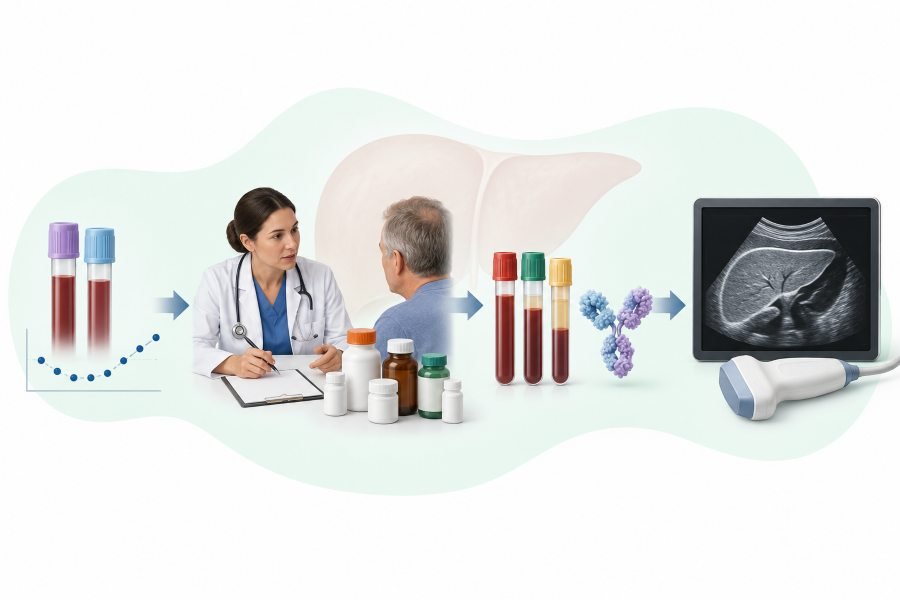
The first step is the one people find most anticlimactic. The ACG guideline opens by recommending that the panel simply be repeated before any investigation begins, because a proportion of abnormal results are not reproducible. If yours came back mildly raised and you were told to come back in a few weeks, that is the guideline being followed rather than your concern being dismissed.
If the elevation persists, expect a conversation before more tests. Alcohol, every medication and supplement you take including ones bought online, recent illness, exercise, weight history, family history of liver disease, and whether anyone has ever mentioned fatty liver on a scan. Most diagnoses at the mild end are made here rather than in the laboratory.
The blood work that follows typically covers hepatitis B and C, iron studies, autoimmune markers, immunoglobulins, thyroid function, coeliac antibodies, and ceruloplasmin in younger patients. An ultrasound usually comes alongside it. Increasingly, clinicians also calculate a FIB-4 score, which combines age, the two transaminases and platelet count into an estimate of how likely significant scarring is, and which decides whether you need a specialist or can be followed in primary care.
Certain things do not wait for any of this. Yellowing of the eyes or skin, pale stools with dark urine, severe or persistent abdominal pain, vomiting that will not settle, confusion or unusual drowsiness, or easy bruising and bleeding all need urgent assessment regardless of what the number said.
Can You Actually Bring It Down?
Often yes, and faster than most people expect, provided you are treating the cause rather than the number.
Where fatty liver is the driver, weight loss is the intervention with the strongest evidence behind it. Losing around seven to ten percent of body weight, sustained over months rather than achieved in a fortnight, improves liver fat and inflammation meaningfully. Exercise is worth doing on its own account, because regular activity reduces liver fat even when the scales barely move, which matters for anyone who has found weight loss difficult.
Where alcohol is involved, stopping or cutting back substantially produces the quickest change of anything on this list, often visible on a repeat test within a few weeks. Where a medication or supplement is the culprit, stopping it under medical supervision does the same, which is why the supplement cupboard deserves an honest audit rather than a quick mention.
Coffee is the mild curiosity in this area. Observational studies have repeatedly linked regular coffee consumption with lower liver enzymes and lower rates of fibrosis. It is an association rather than a prescription, and it will not offset the things above, but it is one of the few habits in this field where the evidence leans gently in a pleasant direction.
What does not work is treating the number directly. Liver detox products, cleanses and milk thistle regimens have no meaningful evidence behind them, and some supplement products marketed for liver health have themselves caused liver injury.
Why The Liver Gets Away With It For So Long
Why The Liver Gets Away With It For So Long
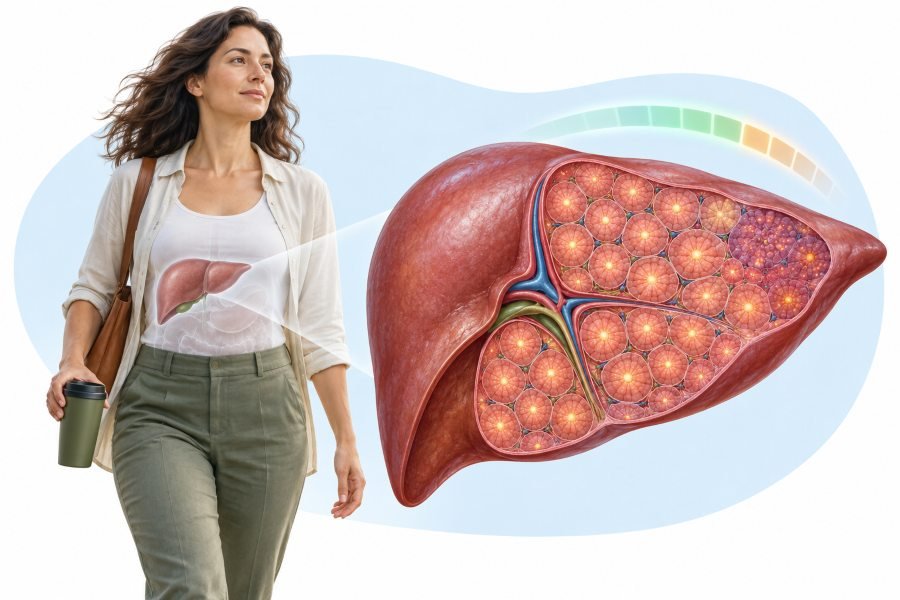
The liver is unusually uncomplaining. It has enormous functional reserve and almost no pain fibres in the tissue itself, which means damage can accumulate for years while a person feels entirely well and nothing on the outside looks wrong. That silence is the whole reason a mildly raised enzyme on a routine panel is worth a second look rather than a shrug, and the reason campaigns built on a single memorable number exist at all.
It also means the useful response is unglamorous and long-term. Know your own baseline and keep your results, because a slow climb across three annual panels says far more than one value. Get the hepatitis screening you are entitled to at least once, since one of the commonest serious causes on this list is now curable in a couple of months. Be honest about alcohol with the one person whose job it is to help rather than judge. Treat the metabolic picture, waist, blood pressure, blood sugar and lipids, as one project rather than four, because the liver sits downstream of all of it. And go back for the repeat test, because in this corner of medicine the second result is usually where the answer actually lives.
Disclaimer
This article is general health information and is not medical advice. It cannot replace an assessment by a clinician who knows your history, medications and examination findings. Reference ranges differ between laboratories and countries, and no enzyme value should be interpreted in isolation. Do not start or stop any medication or supplement on the basis of a test result alone. Seek emergency care for suspected paracetamol or acetaminophen overdose, jaundice, severe abdominal pain, persistent vomiting, confusion or unusual bleeding.
References
Kwo PY, Cohen SM, Lim JK. ACG clinical guideline: evaluation of abnormal liver chemistries. American Journal of Gastroenterology. 2017;112(1):18-35. doi:10.1038/ajg.2016.517
Kawaguchi T, Yoshiji H, Mochida S, Takehara T. The Nara Declaration: a new collaborative flow for chronic liver disease between primary care physicians and gastroenterologists and hepatologists. Hepatology Research. 2026;56(1):3-8. doi:10.1111/hepr.70065
Prevalence and health checkup-based detection of metabolic dysfunction-associated steatotic liver disease in Japanese young adults. Scientific Reports. 2025. doi:10.1038/s41598-025-26346-w
Miwa T, et al. Usefulness of health checkup-based indices in identifying metabolic dysfunction-associated steatotic liver disease. JGH Open. 2024. doi:10.1002/jgh3.13110
Clinical course and diagnosis of drug induced liver disease. In: LiverTox: Clinical and Research Information on Drug-Induced Liver Injury. Bethesda, MD: National Institute of Diabetes and Digestive and Kidney Diseases. NCBI Bookshelf ID NBK548733.
American Association for the Study of Liver Diseases. Steatotic liver disease decision tree, 2023. Alexandria, VA: AASLD.
Centers for Disease Control and Prevention. CDC recommendations for hepatitis C screening among adults, United States, 2020. Atlanta, GA: CDC.
US National Library of Medicine. ALT blood test. MedlinePlus medical tests.
About Dr. Thomas W. Longley, MD Physician
Dr. Thomas W. Longley provides thoughtful family medicine with a practical approach to everyday health concerns and ongoing patient care.






 Cardiologist