There is a specific misery to a canker sore. It is tiny, it is invisible to everyone else, and it turns swallowing your own coffee into a decision you have to think about.
Here is the honest starting point, because it shapes everything below. You cannot make a canker sore vanish overnight. What you can realistically do is take most of the pain away within an hour, and shorten the whole episode by a few days if you act early. Most minor ones heal on their own in seven to fourteen days. The goal is to stop it hurting and stop it dragging on, not to find a cure that does not exist yet.
First, Make Sure It Is Actually A Canker Sore
First, Make Sure It Is Actually A Canker Sore
This matters more than people expect, because the wrong assumption sends you to the wrong aisle of the pharmacy.
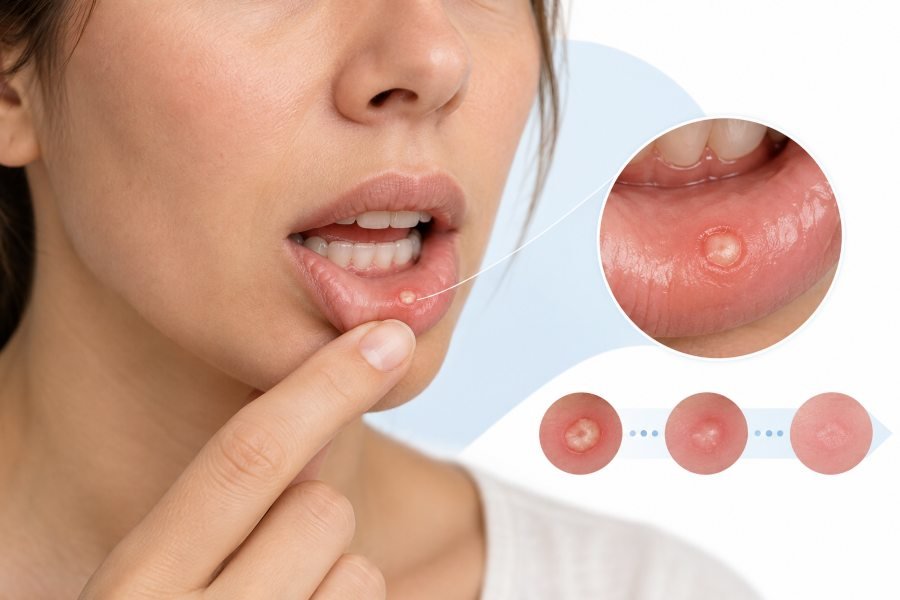
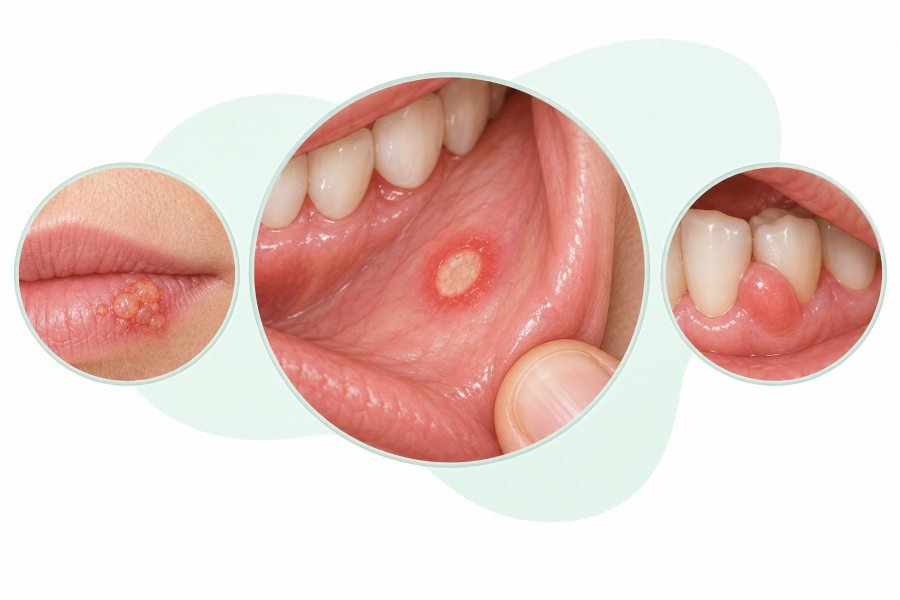
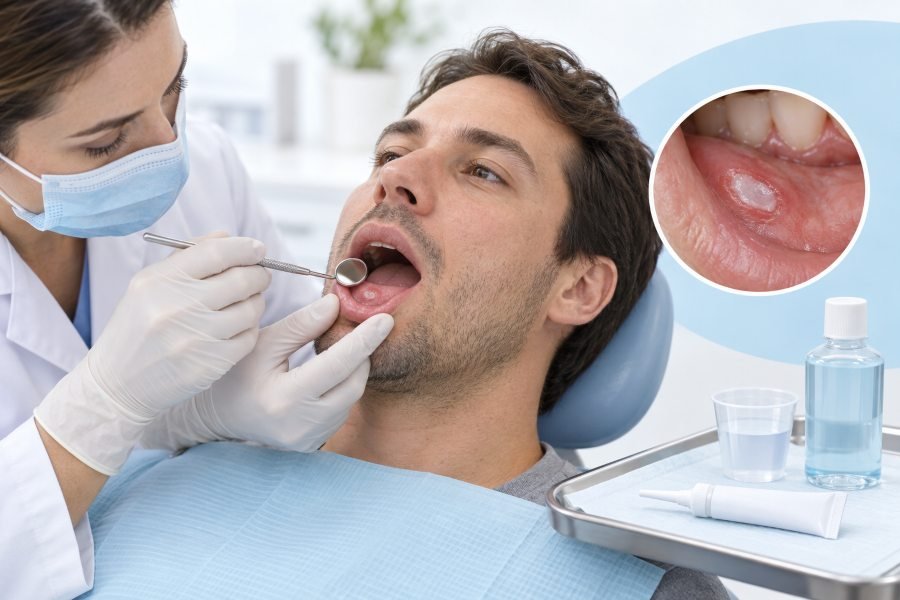
A canker sore, or aphthous ulcer, sits inside your mouth on soft tissue: the inner lip, the cheek, under the tongue, the floor of the mouth, the soft palate. It is round or oval, with a white or yellowish center and a red rim. It is not contagious, and it is not caused by a virus you can pass to anyone.
A cold sore is a different animal entirely. It forms on or around the lip border, starts as a cluster of blisters, crusts over, and is caused by herpes simplex virus. It is contagious, and it responds to antiviral treatment that does nothing for canker sores. The MedlinePlus overview from the US National Library of Medicine is a clean, quick reference if you want to check which one you are looking at.
There are other mouth ulcers that mimic canker sores: trauma ulcers from a sharp filling, burns from hot food, oral lichen planus, thrush, and a few conditions that need a proper look. The Cleveland Clinic guide to the different types of mouth ulcers is useful here, and it repeats the rule worth memorizing: any mouth sore lasting more than three weeks needs to be examined.
Three Types Worth Knowing
Minor. Around 80 percent of cases. Under a centimeter, shallow, gone in one to two weeks, no scar.
Major. Larger than a centimeter, deeper, with irregular edges. These can take two to six weeks and may leave scarring. They usually need prescription help.
Herpetiform. Crops of ten to a hundred pinhead ulcers that can merge into larger raw patches. Despite the name, herpes has nothing to do with it.
What Actually Helps In The First Forty-Eight Hours
What Actually Helps In The First Forty-Eight Hours
Timing is the single most underrated factor. Many people feel a tingle, burn, or rough patch a day before the ulcer appears. Treating at that stage changes the trajectory more than treating on day four does.
Topical corticosteroids are the strongest evidence-backed option. This is triamcinolone acetonide in a dental paste, clobetasol or fluocinonide gel, or a dexamethasone rinse for multiple ulcers. A 2026 umbrella review that pooled 41 systematic reviews found that topical corticosteroids and low-level laser therapy consistently reduced pain and shortened healing time, while the evidence for preventing recurrence remained weak across the board. Availability varies by country. In the United States, these are generally prescription items, while in the UK, hydrocortisone buccal tablets can be bought over the counter.
Barrier products buy comfort. Hyaluronic acid gels and oral bandage pastes form a film over the raw surface so food, air, and your own tongue stop provoking it. They do not speed biology much, but they make eating survivable, and they are very low risk.
Topical anesthetics numb, briefly. Benzocaine or lidocaine gels give you fifteen to thirty minutes of relief, which is often enough to get through a meal. Use them before eating rather than constantly.
Antimicrobial rinses reduce severity. Chlorhexidine gluconate rinse will not stop a sore from forming, but it lowers secondary bacterial load and tends to shorten and soften an episode. It stains teeth with extended use, so it is a short-course tool.
The American Dental Association’s canker sore page keeps the over-the-counter approach appropriately simple: topical anesthetics and antimicrobial rinses for temporary relief, and avoid hot, spicy, and acidic foods while it heals.
Home Measures That Are Genuinely Worth Doing
None of these are dramatic. Together they make the week noticeably easier.
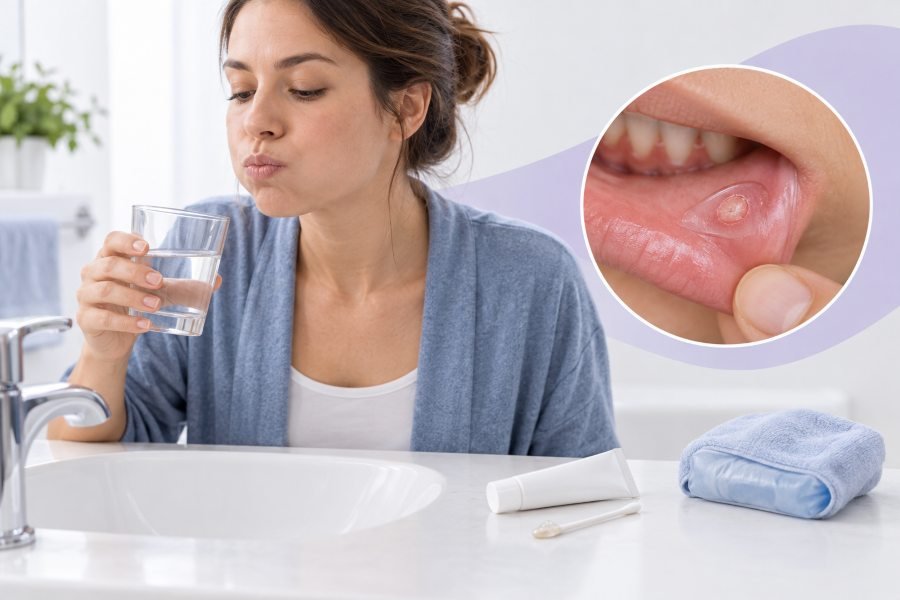
Salt water rinse. Half a teaspoon of salt in a cup of warm water, swished for thirty seconds, a few times a day. It stings for a moment and then settles the tissue.
Baking soda rinse. One teaspoon in half a cup of warm water. Gentler than salt if the sting is too much.
Cold. Ice chips held against the ulcer numb it and reduce swelling. Cold yogurt, milk, and smoothies without citrus are the easiest foods to get down.
Switch your toothbrush and slow down. A soft-bristle brush and a lighter hand stop you from re-traumatizing the same spot every morning.
Use a straw for anything acidic, and skip alcohol-based mouthwash entirely until it heals.
Rearrange your plate temporarily. Citrus, tomato, vinegar, crisps, nuts, salted snacks, very hot drinks, and carbonated soda all reliably make things worse.
The NHS self-care guidance for mouth ulcers covers the same practical ground and is a reasonable checklist to work from if you are managing this at home without seeing anyone.
Popular Remedies That Deserve More Caution Than They Get
Popular Remedies That Deserve More Caution Than They Get
Some widely shared advice does real damage.
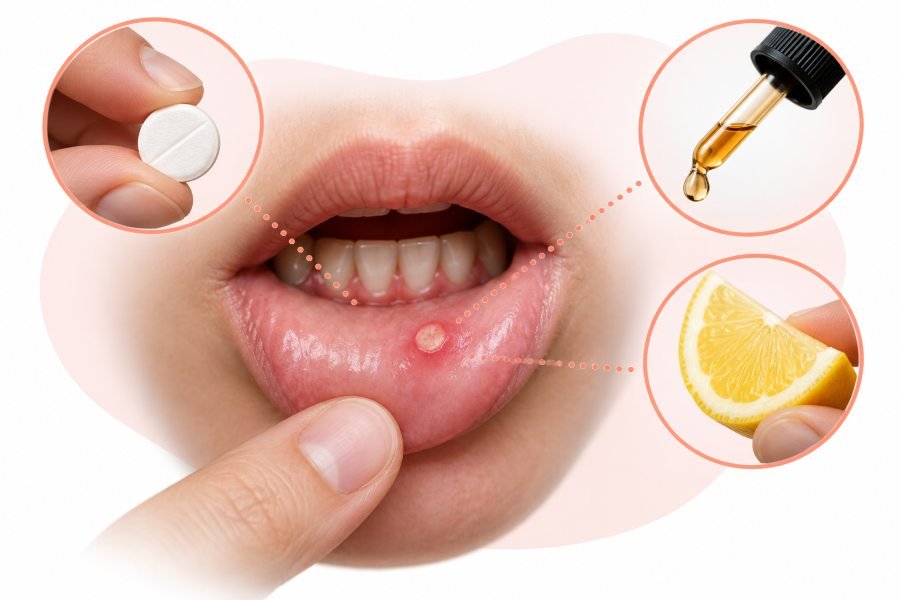
Holding an aspirin against the sore causes a chemical burn on top of the ulcer you already have. Do not do it.
Burning the sore with alum powder is a folk remedy that trades a small painful ulcer for a larger chemically injured one. Cauterization does have a legitimate medical version using silver nitrate or Debacterol. Still, it belongs in a dental or medical office, applied to a diagnosed ulcer by someone who can see what they are doing.
Hydrogen peroxide rinses are fine when diluted and occasional. Used repeatedly at full strength, they irritate the mucosa and delay healing.
Undiluted essential oils applied directly to broken tissue are a common cause of contact irritation. Diluted rinses are a different matter, and some herbal preparations have modest short-term evidence behind them.
Benzocaine needs a genuine safety note. The US Food and Drug Administration has warned that oral benzocaine products can cause methemoglobinemia, a rare but potentially fatal blood disorder, and that these products should not be used in children under two years old. Symptoms to take seriously include pale, gray, or blue-tinged skin or lips, breathlessness, headache, fatigue, and a racing heart, which can appear within minutes or up to a couple of hours after use. Adults should stick to labeled doses rather than reapplying every twenty minutes.
Honey is the one home remedy with a better track record than its reputation suggests, with small trials showing reduced pain and faster healing. It is a reasonable thing to try, with the standard caveat that honey is never given to infants under one year.
Why You Keep Getting Them
If this happens two or three times a year, it is almost certainly nothing. If it happens monthly, or you are rarely without one, the pattern itself is the useful information.
Sodium lauryl sulfate in toothpaste. The evidence is mixed, and the studies are small, but switching to an SLS-free toothpaste for two months is cheap and occasionally decisive.
Stress and poor sleep. Well documented, frustratingly hard to act on.
Hormonal cycles. Many women notice a reliable premenstrual pattern.
Specific foods. Chocolate, nuts, strawberries, tomatoes, cheese, and coffee come up repeatedly in food diaries.
Stopping smoking. A real and temporary phenomenon, not a reason to start again.
Medications. Some NSAIDs, beta blockers, nicorandil, and certain chemotherapy agents are associated with oral ulceration.
Nutritional gaps matter more than most people realize. Low iron, ferritin, folate, vitamin B12, and zinc are all associated with recurrent ulcers, and correcting a real deficiency can change the pattern entirely. One randomized trial of sublingual B12 found reduced ulcer duration, pain, and frequency even in people whose baseline B12 was normal, which is interesting but not yet enough to call it settled.
Then there are the conditions that use mouth ulcers as a calling card: celiac disease, Crohn disease and other inflammatory bowel disease, Behçet disease, HIV, and rarer immune conditions such as cyclic neutropenia. This is why a doctor faced with truly relentless ulcers will usually order blood work rather than reach for another gel.
Keeping a short diary for two months, noting each ulcer, what you ate, where you were in your cycle, and how you slept, is unglamorous and unusually effective at finding your own pattern.
Prescription And In-Office Options For Stubborn Cases
Prescription And In-Office Options For Stubborn Cases
When ulcers are large, frequent, or interfering with eating and sleeping, there is a real ladder of treatment above the pharmacy shelf.
Potent topical steroids come first, with a dexamethasone mouth rinse used when there are too many ulcers to treat individually. The MSD Manual summary of recurrent aphthous stomatitis treatment lays out the usual sequence clearly. For a single large major ulcer, a clinician may inject steroid directly into the lesion.
Beyond that: doxycycline rinses, Amlexanox paste where it is still available, and low-level laser therapy, which has become one of the better-supported in-office options for cutting pain quickly. Systemic treatment, meaning a short prednisone course, colchicine, dapsone, or newer agents such as apremilast, is reserved for severe recurrent disease or for ulcers tied to an underlying condition like Behçet disease, and always under specialist supervision. The Mayo Clinic overview of canker sore diagnosis and treatment options is a fair patient-level guide to what your clinician might suggest and why.
When To Stop Managing It At Home
Get checked if any of the following apply:
A sore that has not healed in three weeks. This is the important one. Persistent non-healing ulcers occasionally turn out not to be aphthous ulcers at all.
An ulcer larger than a centimeter, deep, or leaving scars.
Ulcers that are constant, or return before the last one has healed.
Fever, swollen lymph nodes, or feeling systemically unwell alongside them.
Difficulty drinking enough, or signs of dehydration, particularly in children and older adults.
Ulcers appearing elsewhere on the body, especially genital ulcers or eye inflammation.
Diarrhea, unexplained weight loss, or persistent fatigue alongside recurrent ulcers.
New ulcers that began after starting a medication.
Any mouth sore in someone who is immunosuppressed or undergoing cancer treatment.
Questions People Actually Ask
Question
Answer
How Long Does A Canker Sore Take To Heal?
A minor one typically takes seven to fourteen days. Major ulcers can take two to six weeks.
Can You Get Rid Of One Overnight?
No. Barrier gels, topical anesthetics, or corticosteroid pastes can reduce pain quickly, but they cannot make the sore disappear overnight.
Are Canker Sores Contagious?
No. Canker sores are not contagious and cannot be spread through kissing, food, or shared utensils.
Is Salt Water Good Or Bad For Them?
Salt water can help keep the area clean and may soothe the sore, although it can sting briefly.
Does Toothpaste Really Cause Canker Sores?
Sodium lauryl sulfate may increase canker sore frequency in some people. Trying an SLS-free toothpaste for eight weeks may help.
Do Vitamins Help?
Correcting deficiencies in iron, B12, folate, or zinc can reduce recurrence. Taking supplements without a deficiency is less predictable.
Taking Care Of Your Mouth Between Flare-Ups
Most of what protects you from the next one happens when you do not have a sore at all. A soft brush used gently, dental visits that catch the sharp filling or rough crown before it starts carving at your cheek, wax over the bracket that keeps digging in, sleep that is not perpetually five hours, and a diet with enough iron and B12 in it will collectively do more than any gel you buy during an episode.
It is also worth treating your mouth as a piece of diagnostic equipment. Recurrent ulceration, bleeding gums, persistent dryness, and sores that will not close are some of the earliest visible signals of anemia, autoimmune disease, gut disease, and nutritional gaps, often appearing before anything else does. Paying attention to a small painful spot on your inner lip is not fussiness. Sometimes it is the first useful thing your body has told you in months.
Medical disclaimer:This article is general health information and is not a substitute for professional medical or dental advice, diagnosis, or treatment. Medication availability, strengths, and regulatory status differ by country. Always consult a qualified doctor, dentist, or pharmacist about your own symptoms, particularly before starting a prescription treatment or a supplement, and seek prompt care for any mouth sore that does not heal within three weeks.
About Bill Dorfman DDS (Dental Guides)
Dr. Bill Dorfman is a world-renowned cosmetic and general dentist based in Los Angeles, California, affectionately known as "America's Dentist". He operates his private practice, Century City Aesthetic Dentistry, located near Beverly Hills.




 Cardiologist
One thought on “How To Get Rid Of Canker Sores: What Actually Helps, And How Fastgg”