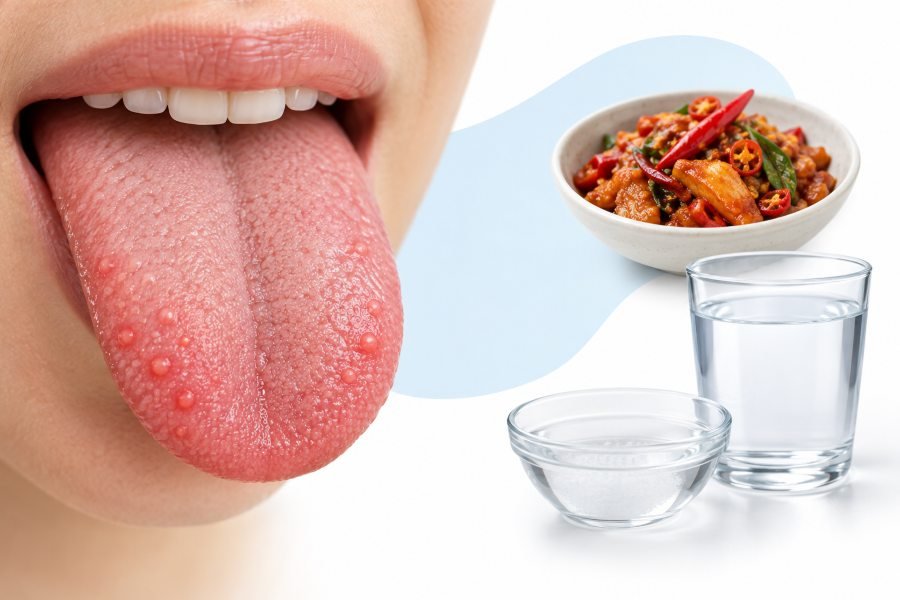
You’re eating lunch, minding your own business, and suddenly there’s a sharp little sting on your tongue. You poke around with your finger or check in the mirror, and sure enough, there’s a small red or white bump sitting right where a moment ago there was nothing. It’s annoying more than anything, but it also raises a question most people never bother asking until it happens to them: what exactly is going on with that bump, and should you be worried about it?
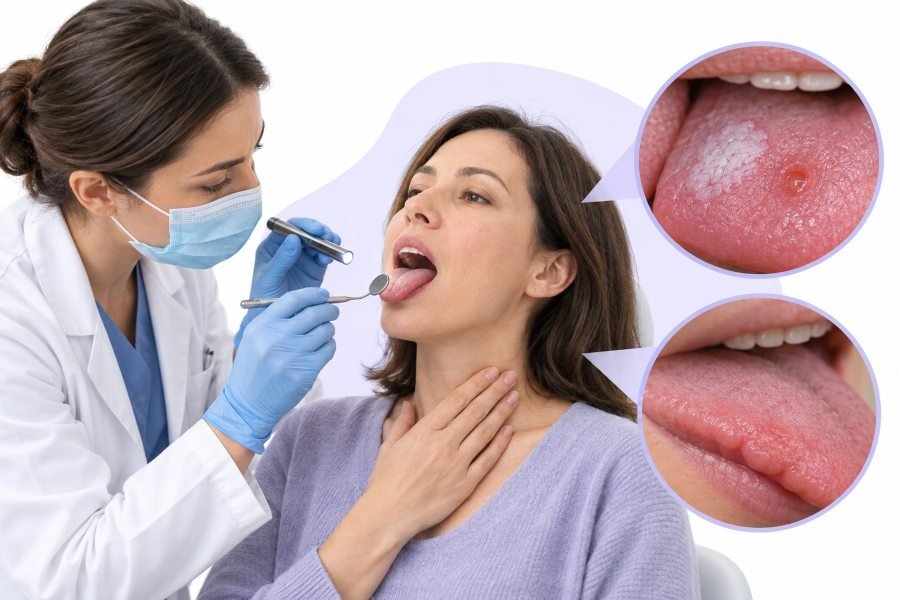
These bumps are technically called papillae, and when one or several become swollen or irritated, doctors often refer to it as inflamed tongue buds, or more precisely, transient lingual papillitis. It’s a common, mostly harmless occurrence that tends to clear up within a few days on its own. Still, because a “tongue bump” can mean a handful of different things depending on the cause, it helps to understand what’s actually happening rather than just guessing.
What Are Tongue Buds, Exactly?
What Are Tongue Buds, Exactly?
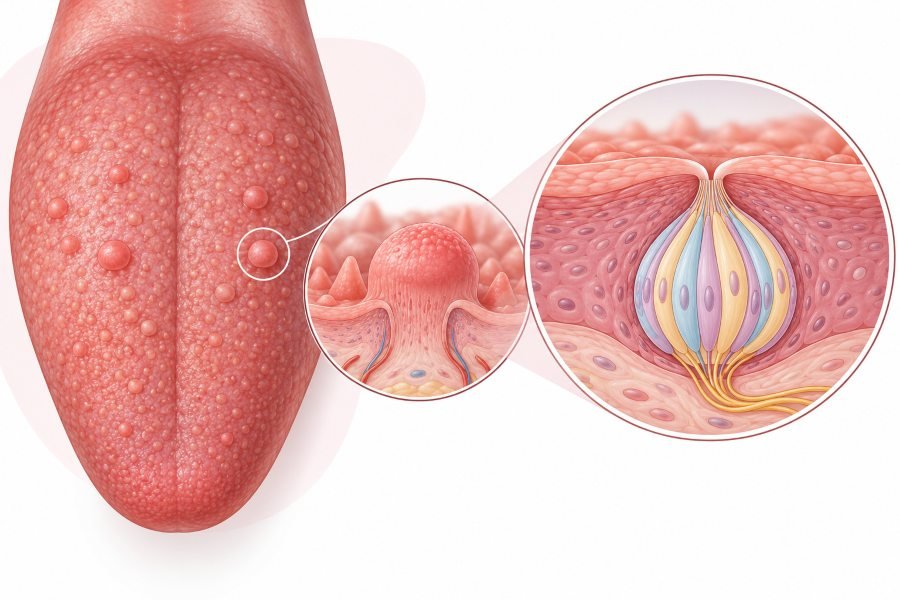
Interestingly, the bumps people commonly call “taste buds” aren’t taste buds at all. Taste buds are microscopic structures that live inside the papillae, invisible to the naked eye. What you’re actually seeing and feeling when a bump flares up is the papilla itself, swollen from irritation.
The tongue has four types of papillae:
Filiform papillae, thread-like structures that cover most of the tongue’s surface and give it texture, though they don’t contain taste buds themselves
Fungiform papillae, small mushroom-shaped bumps scattered across the tip and sides, and the ones most often responsible for that single painful bump people notice
Circumvallate papillae, larger structures arranged in a V-shape toward the back of the tongue
Foliate papillae, located along the sides toward the back
When someone describes a single swollen “taste bud,” they’re almost always describing an irritated fungiform papilla, since these sit in the most exposed, friction-prone parts of the tongue.
What Causes Tongue Buds to Become Inflamed
Everyday Physical Trauma
Biting your tongue accidentally, brushing too hard, or taking a bite of pizza before it’s cooled down are some of the most ordinary triggers around. The papilla at the site of injury swells up as part of the body’s normal healing response, similar to how a bruise forms after a bump on the skin.
Rough or Acidic Foods
Chips, crackers, and anything with sharp edges can scrape delicate tongue tissue. Very acidic foods, think citrus fruit, tomatoes, or vinegar-heavy dressings, can also aggravate papillae that are already a bit sensitive.
Transient Lingual Papillitis
Transient Lingual Papillitis
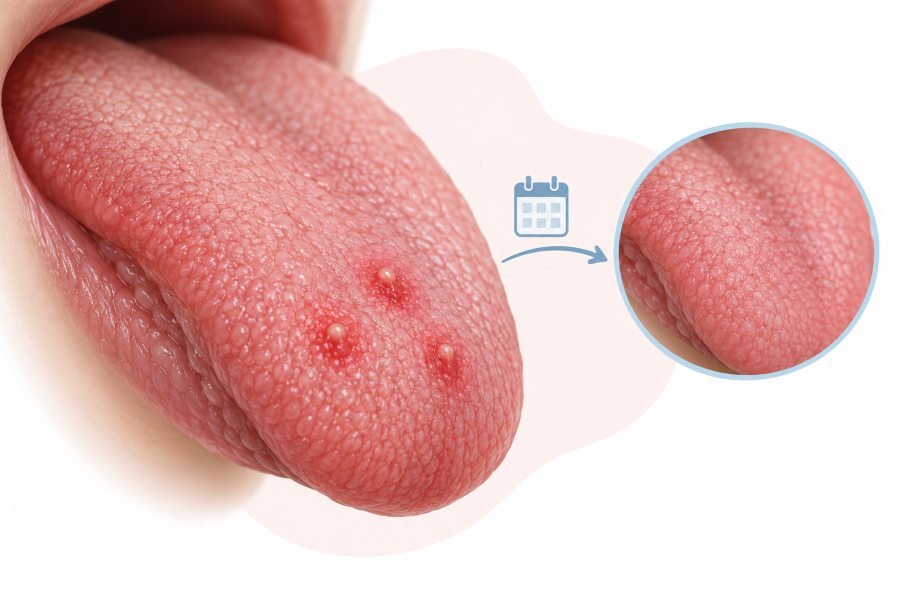
This is the medical term for what’s commonly nicknamed a “lie bump,” even though the old folk belief tying it to dishonesty has no actual basis. It shows up as one or a few small, tender, white or reddish bumps, usually on the tip or edges of the tongue. Researchers haven’t pinned down one exact cause, but it seems connected to minor trauma, certain foods, stress, or small immune responses. The good news is that it’s benign and tends to resolve on its own within a handful of days.
Allergic Reactions
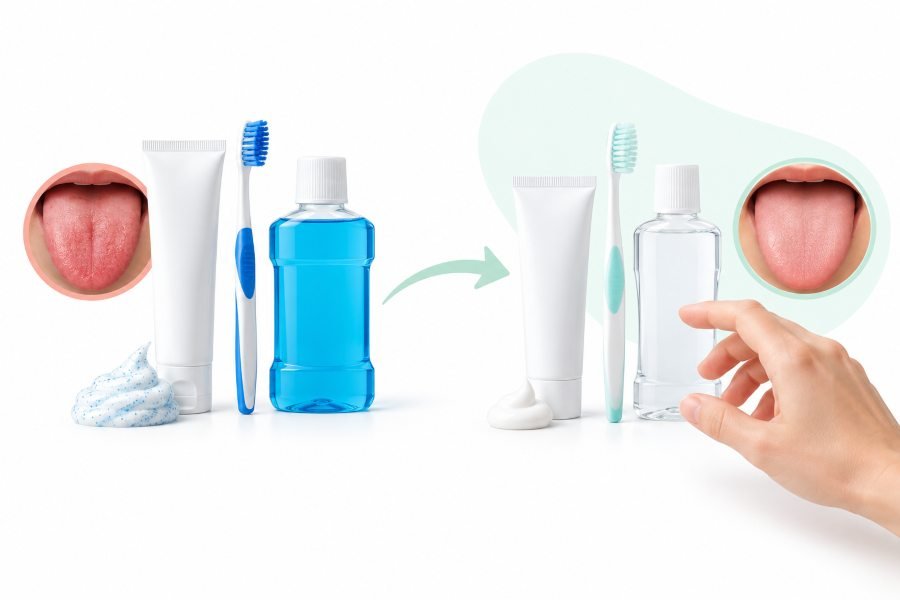
Sometimes the culprit is something you’re using rather than eating. Toothpaste containing sodium lauryl sulfate is a known irritant for some people. Oral allergy syndrome, a cross-reaction some people with pollen allergies experience after eating certain raw fruits or vegetables, can also cause tingling and mild swelling of the tongue.
Nutritional Deficiencies
A tongue that appears unusually smooth, red, or sore, sometimes with papillae that look flattened rather than swollen, can be an early sign of low vitamin B12, folate, or iron levels. This is worth flagging to a doctor rather than brushing off, particularly if it sticks around for weeks or shows up alongside fatigue or pale skin.
Oral Thrush
A fungal overgrowth in the mouth can cause white patches and general irritation across the tongue’s surface. It’s more likely in infants, people with weakened immune systems, denture wearers, and those who’ve recently taken antibiotics or use inhaled steroids.
Geographic Tongue
This condition causes patches of the tongue to temporarily lose their filiform papillae, leaving smooth, reddish, map-shaped areas with slightly raised edges. Despite how it looks, it’s not dangerous, though it can cause mild discomfort with spicy or acidic foods, and the patches often shift location over time.
Acid Reflux
Acid Reflux
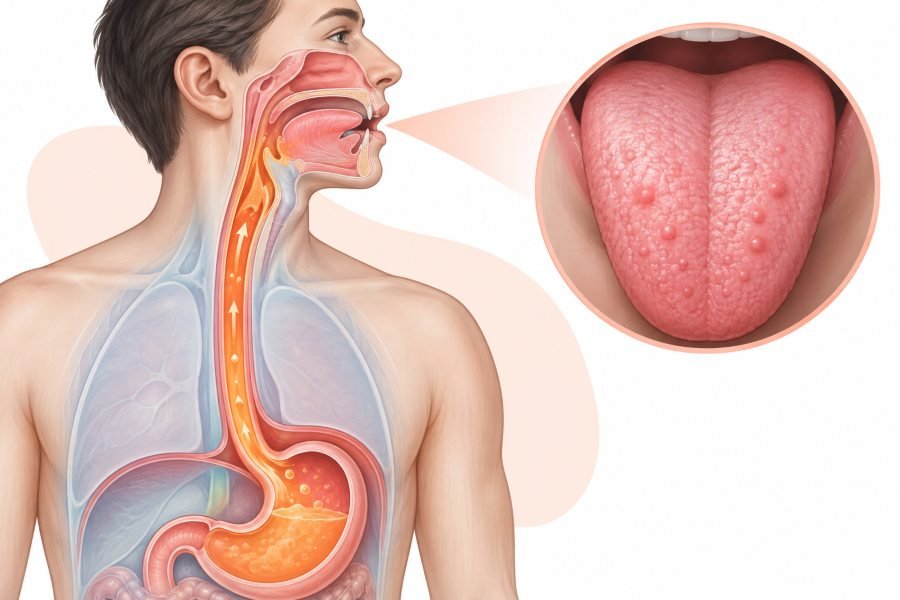
When stomach acid regularly makes its way up toward the throat and mouth, it can irritate tongue tissue over time, contributing to a burning feeling or ongoing inflammation, especially toward the back of the tongue.
Smoking
The heat and chemicals from cigarettes can inflame papillae and change the tongue’s texture with repeated exposure, sometimes leading to a condition called hairy tongue, where the filiform papillae grow longer than usual and trap bacteria.
Infections
Certain viral infections, including herpes simplex and hand-foot-and-mouth disease (which is especially common in young children), can cause painful sores or bumps on the tongue. These usually come paired with other clues, like fever or sores elsewhere in the mouth.
Symptoms Worth Paying Attention To
Symptoms Worth Paying Attention To
Depending on the underlying cause, inflamed tongue buds can show up a little differently, but people typically notice:
One bump or a small cluster, appearing red, white, or slightly yellow
Tenderness or a burning feeling, particularly with spicy, hot, or acidic foods
Localized swelling or, less often, more widespread irritation
A strange or metallic taste
Mild trouble talking or swallowing if swelling is more pronounced
Bumps that appear and disappear on their own, especially with transient lingual papillitis
When It’s Time to See a Doctor
Most cases settle down within a few days without any real intervention. That said, a few signs suggest this isn’t just ordinary irritation:
Symptom
Why It Matters
A bump or sore that lasts longer than two weeks
Persistent lesions should be checked to rule out other causes
Swelling severe enough to affect breathing or swallowing
Could signal a serious allergic reaction needing urgent care
Fever along with mouth sores
May point to a viral or bacterial infection requiring treatment
Tongue changes alongside fatigue or unexplained weight loss
Could indicate a nutritional deficiency or another underlying condition
A firm lump that won’t go away
Should be evaluated rather than watched indefinitely
Recurring white patches that scrape off
Often suggests oral thrush that needs antifungal treatment
Bleeding with no obvious cause
Deserves a proper look rather than assuming it’s minor
If swelling comes on fast, especially with difficulty breathing, a tight feeling in the throat, or swelling of the lips and face, treat it as an emergency. That combination can point to a severe allergic reaction, and it needs immediate medical attention.
How to Find Relief
For the majority of everyday cases, whether from a small burn, an accidental bite, or a passing bout of transient lingual papillitis, symptoms tend to improve within a few days using simple home care.
Warm Saltwater Rinses
Mixing about half a teaspoon of salt into a glass of warm water and swishing several times a day is one of the oldest tricks in the book, and for good reason. Salt water has a mild antiseptic quality and can help bring swelling down.
Cold Foods
Sucking on ice chips or eating something cold and soft, like plain yogurt, can numb the discomfort and calm inflammation, particularly right after a burn or accidental bite.
Giving Irritants a Break
Cutting back temporarily on spicy, acidic, salty, or crunchy foods gives the area a chance to heal without repeated aggravation. Alcohol-based mouthwashes are also worth skipping for a few days, since they tend to sting already-irritated tissue.
Trying a Different Oral Care Product
Trying a Different Oral Care Product
If irritation seems to line up with a new toothpaste or mouthwash, switching to a gentler, SLS-free option for a while can help you figure out whether that product was actually the trigger.
Over-the-Counter Help
Topical oral gels with benzocaine can numb a sore spot locally (these aren’t recommended for young children due to rare but serious risks)
Standard pain relievers such as acetaminophen or ibuprofen can ease general discomfort
Alcohol-free antiseptic rinses may help reduce bacteria without adding to the irritation
Gentle Oral Hygiene
Brushing softly, including a light pass over the tongue itself, helps keep things clean without adding further trauma while it heals. A soft-bristled toothbrush makes a real difference here.
Drinking Enough Water
A dry mouth tends to make irritation feel worse and can slow healing down. Keeping hydrated throughout the day supports the mouth’s natural repair process.
Treating the Root Cause
If the inflammation traces back to something specific, like a vitamin deficiency, reflux, or a fungal infection, lasting relief means addressing that underlying issue rather than only soothing the tongue itself. That might involve:
Blood work to check B12, folate, and iron levels if a deficiency is suspected
Antifungal treatment for confirmed oral thrush
Acid-reducing medication or dietary changes for reflux-related irritation
Allergy testing if a particular food or product keeps triggering flare-ups
When the Bumps Keep Returning
When the Bumps Keep Returning
Recurring transient lingual papillitis tends to frustrate people because it often seems to show up out of nowhere. A few patterns are worth tracking, since they can reveal a personal trigger that a single doctor’s visit might miss:
Whether flare-ups follow specific foods (acidic, spicy, or sugary items are common suspects)
A connection to stress or poor sleep
A pattern linked to a particular toothpaste or mouthwash
Any tendency to cluster around hormonal shifts, which some people notice anecdotally
Keeping a simple note for a few weeks, jotting down what you ate, how stressed you were, and any new products you tried, can sometimes uncover a pattern that wouldn’t be obvious otherwise.
Ways to Reduce Future Flare-Ups
Not every case is preventable, but a handful of habits can lower how often this happens:
Let hot food and drinks cool down before eating
Chew slowly to avoid accidental bites
Use a soft-bristled toothbrush and go easy on pressure
Cut back on extremely spicy or acidic foods if they seem to be a personal trigger
Stay on top of any known nutritional deficiencies with proper supplementation, guided by a doctor
Manage reflux symptoms if GERD plays a role
Cut down on or avoid smoking, since it irritates oral tissue broadly
The Bigger Picture
In the vast majority of cases, an inflamed tongue bud is a small, self-limiting irritation, not unlike a minor scrape on the skin. The tongue has a rich blood supply and heals quickly, which is why most bumps caused by trauma, mild irritation, or transient lingual papillitis fade within a few days without needing any specific treatment.
What actually matters is being able to tell the difference between that ordinary, short-lived irritation and the smaller group of cases where a tongue symptom is hinting at something else, like a deficiency, an infection, reflux, or an allergy. Doctors often describe the tongue as a small mirror of overall health, and unusual or persistent changes in how it looks are one of the more accessible early warning signs the body offers.
If a bump is uncomfortable but isolated and fades within a week or so, home care is usually enough on its own. If it keeps coming back, sticks around longer than expected, or shows up alongside fatigue, unexplained weight loss, or fever, it’s worth having someone take a proper look.
Disclaimer:This article is intended for general informational purposes only and is not a substitute for professional medical advice, diagnosis, or treatment. Always consult a qualified healthcare provider regarding any symptoms you’re experiencing. If you notice signs of a severe allergic reaction, such as difficulty breathing or swallowing, seek emergency medical care right away.
About Doctiplus Doctors Staff
Doctiplus is a trusted global digital health platform that connects patients worldwide with certified doctors for instant online consultations and in person appointments.






 Cardiologist