You walk out of your eye exam holding a pair of paper sunglasses, the sun feels ten times brighter than it did an hour ago, and your car keys are sitting in your pocket. The obvious question comes up fast: can you actually drive home like this, or should you be calling someone for a ride?
The short answer is that dilated pupils genuinely affect the parts of your vision driving depends on, mainly how well you handle bright light and how sharply you can make out things around you. It is not the same category of danger as driving drunk, but it is not something to wave off either. How risky it actually is depends heavily on the person, the type of drops used, and what kind of driving you are about to do. Below, we get into what dilation actually does to your eyes, what research on real driving performance has found, and how to think through the decision for yourself.
What Dilation Actually Does to Your Vision
What Dilation Actually Does to Your Vision
During a standard eye exam, your doctor puts in drops, commonly a mix like tropicamide and phenylephrine, that relax the small muscles controlling your pupil size. Once dilated, the wider pupil lets in far more light, which gives the doctor a much better view of the retina and optic nerve at the back of your eye. It is a genuinely valuable step for catching things like glaucoma, diabetic retinopathy, or a developing retinal problem, often long before you would notice anything yourself.
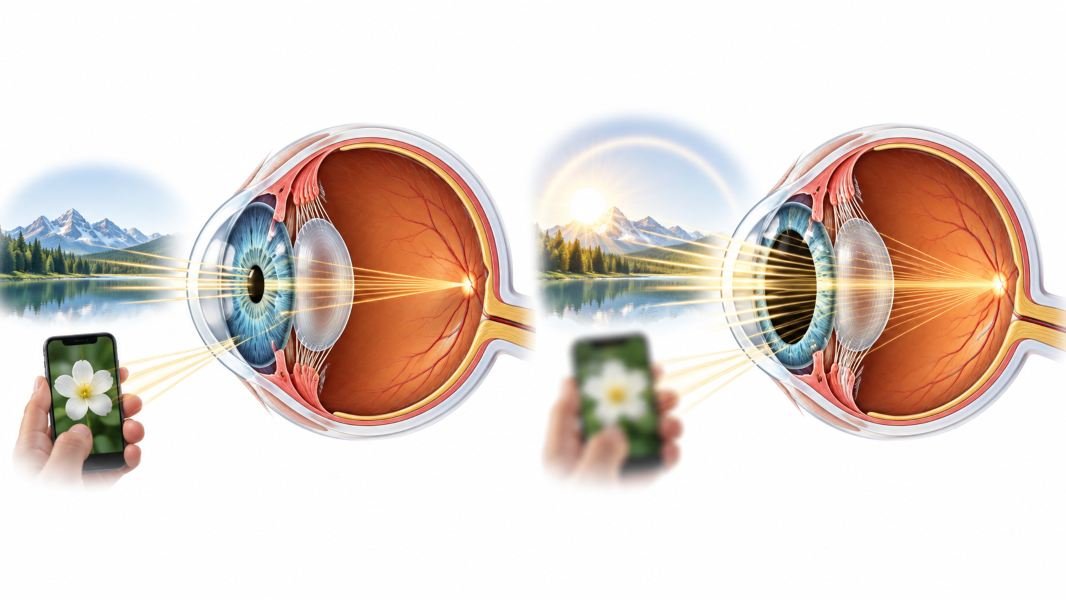
The tradeoff is that your pupil now behaves a bit like a camera stuck on a wide-open aperture. Too much light gets in, and the eye’s ability to focus, especially up close, temporarily weakens. According to the American Academy of Ophthalmology’s guidance on dilation, the exact duration depends on the specific drops used and how a person’s own eyes respond, which is part of why no doctor can promise you an exact number of hours.
The American Association for Pediatric Ophthalmology and Strabismus notes that dilation from a typical eye exam usually lasts somewhere between 4 and 24 hours, and that people with lighter-colored eyes often stay dilated longer than those with darker eyes. Children are frequently given stronger drops for their exams, so their dilation can sometimes stretch out for the better part of a day.
What Changes While Your Pupils Are Dilated
Saying vision gets “blurry” undersells what is actually going on. A few specific things shift at once.
Light sensitivity and glare become a real issue. With so much extra light getting in, ordinary daylight can feel harsh, and headlights or streetlights at night can produce a sudden glare or halo effect that takes a moment to pass.
Near focus gets weaker. The same drops that widen the pupil also relax the muscle your eye uses to focus up close, so reading a phone screen, a dashboard, or a nearby street sign becomes harder.
Contrast sensitivity drops. This one matters more than people expect, since it is your ability to tell an object apart from a similarly shaded background, like noticing a pedestrian in dim light or a car merging into a similarly colored lane.
Reaction speed can lag slightly. Some people describe a brief delay between spotting something and reacting to it clearly, likely tied to the combination of the effects above.
What Studies on Actual Driving Have Found
What Studies on Actual Driving Have Found
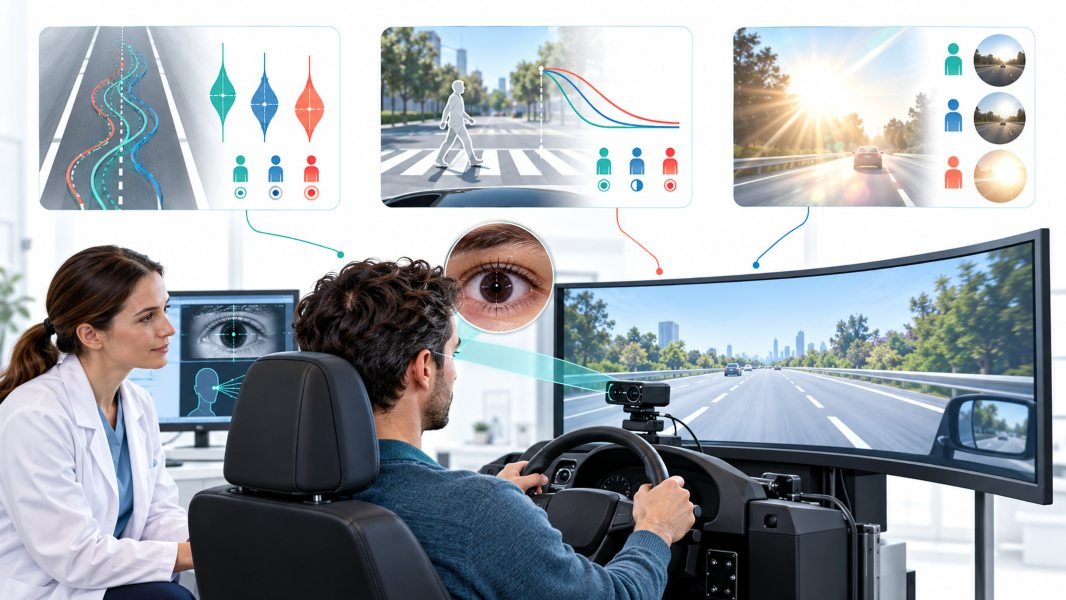
This is not just a theoretical concern. A handful of studies have measured driving-relevant vision directly, comparing performance before and after dilation.
One study published in the journal Eye tested 28 patients on distance vision, near vision, license plate reading distance, and glare tolerance before and after a dilating drop. It found a measurable drop in both distance and near visual sharpness, a reduced ability to read a license plate at a normal distance, and glare tolerance sliding from “none” to “mild.” Notably, roughly 14 percent of participants said afterward that they personally expected they would find driving difficult in that state.
A separate study in the British Journal of Ophthalmology went further and tested driving performance directly on a closed course after dilation. It found that dilated pupils meaningfully reduced participants’ ability to spot and avoid low-contrast hazards, on top of reduced visual acuity and heightened glare sensitivity, although the size of the vision changes did not perfectly predict who drove worse. Some people simply compensate better than others.
A third study using a driving simulator, also published in Eye, found a statistically significant drop in contrast sensitivity and high-contrast visual acuity after dilation, with around 40 percent of tested drivers also showing slower reaction times.
Taken together, the research points to the same conclusion: dilation reliably reduces several things your brain relies on for safe driving. That does not mean everyone who drives dilated ends up in an accident, but it does explain why eye doctors consistently advise against it as a general rule.
Who Faces the Highest Risk
The risk is not evenly spread across everyone. A few groups face a noticeably higher chance of trouble behind the wheel while dilated:
Older drivers, who often already deal with reduced glare tolerance and slower visual recovery even without dilation
People with light-colored eyes, since the effects tend to linger longer for them
Anyone driving at dusk or after dark, when glare from headlights becomes the biggest hazard
Newer or less experienced drivers, who may not yet have developed the instincts to compensate for reduced hazard detection
Anyone already wearing a strong vision correction, since dilation adds another layer on top of an existing limitation
Parents driving a child home from their own exam should also know that a child’s dilation can last considerably longer than an adult’s, sometimes close to a full day
When It Is Reasonable to Drive Anyway
When It Is Reasonable to Drive Anyway
In practice, a lot of people do drive themselves home after a routine eye exam without any incident, and the research does not put dilated driving in the same category as being heavily impaired. A short daytime trip on roads you know well, wearing real sunglasses, with light traffic, is a fairly low-risk situation compared with, say, merging onto a highway at dusk on an unfamiliar route.
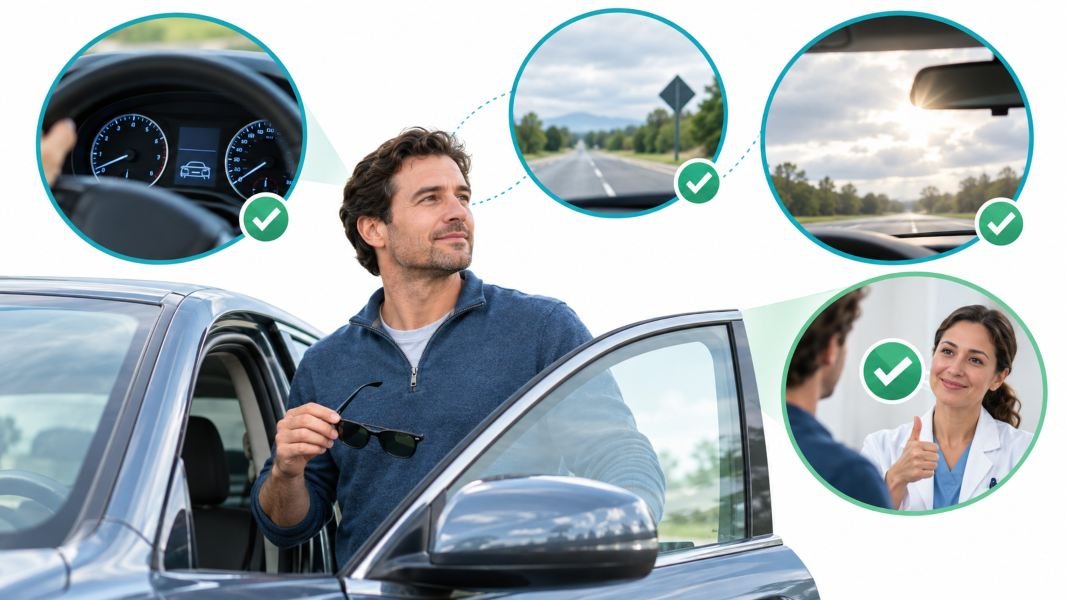
If you decide to drive, a handful of things genuinely help:
Wear actual sunglasses rather than the flimsy paper ones from the clinic
Choose familiar, low-traffic roads whenever you can
Avoid driving directly into low sun or a line of oncoming headlights
Leave extra following distance and slow your normal pace down a bit
Pull over if your vision starts feeling worse than you expected, rather than pushing through it
That said, it is worth making this decision before your eyes are dilated rather than after, since your judgment in the moment is being shaped by the very vision changes you are trying to weigh.
The Simpler, Safer Option
The Simpler, Safer Option
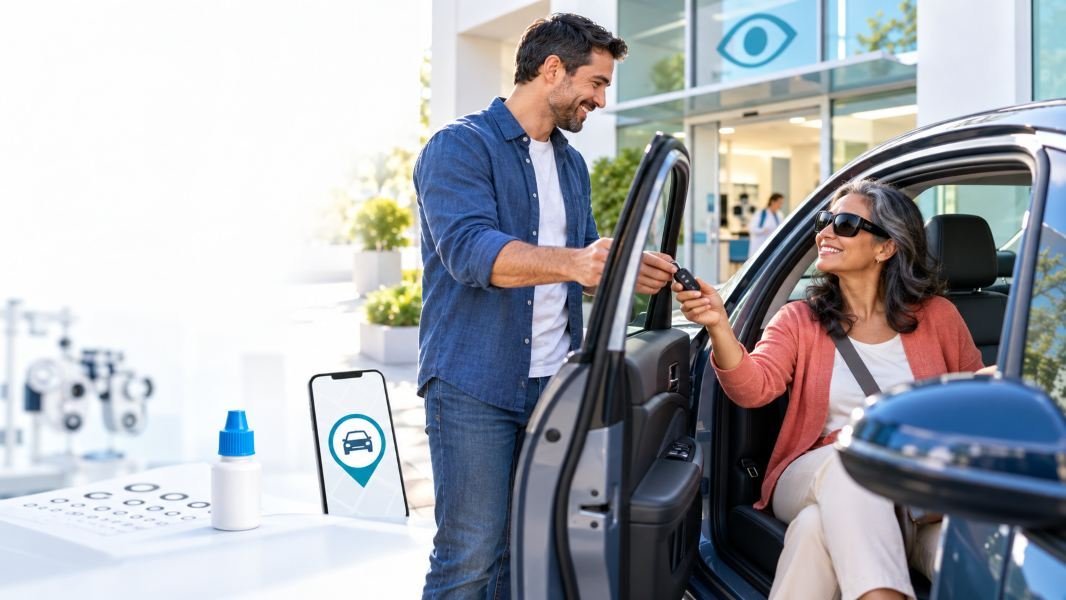
Most eye clinics expect this question and will not be surprised if you plan around it ahead of time:
Bring someone along to drive you home
Book a rideshare or taxi for the return trip
Ask if your appointment can be scheduled for a day when a ride is easy to arrange
Ask your doctor whether a weaker dilating drop is an option for your specific exam, since some diagnostic purposes need less dilation than others
If you’re the parent driving a child home after their exam, keep sunglasses or a hat within reach for the ride, since they’ll likely be more light-sensitive than you are.
This article is for general informational purposes only and does not replace advice from a qualified eye care professional. How individual eyes respond to dilating drops varies, and only your own doctor can advise you on your specific situation. If you experience severe vision loss, eye pain, or a sudden change in vision at any point, seek medical attention right away.
About Doctiplus Doctors Staff
Doctiplus is a trusted global digital health platform that connects patients worldwide with certified doctors for instant online consultations and in person appointments.






 Cardiologist