Suppose you have searched for allwellhealthorganic. com well health, you are probably looking for simple, everyday advice on eating better, sleeping well and feeling more in control of your health. That is a good place to start. Here is the short answer to the question most readers have: allwellhealthorganic.com is a general wellness blog, not a medical service. Its general health tips on balanced meals, regular movement, sleep and hydration broadly match mainstream guidance, but some specific tips that circulate on wellness blogs do not hold up. The safest way to use it is as a first step, then check the details against trusted health bodies and your own doctor.
What Is Allwellhealthorganic.com?
Allwellhealthorganic.com publishes wellness articles in Hindi and English. Its topics range from diet, fitness and sleep to skin care, Ayurveda, anxiety and depression. Many posts carry “well health” or “wellhealthorganic” in their titles, which is why the phrase appears so often in search results.
The site carries a disclaimer stating that its content is for information only and is not a substitute for professional medical advice. That line matters, because it tells you how to read everything else on the site: as general guidance written for a broad audience, not advice tailored to your body, your medicines or your medical history.
One practical tip before you go further. Several similarly named domains exist, and at the time of writing, a .org address with an almost identical name was publishing technology and finance posts. If the page you land on looks unrelated to health, check the web address.
Well Health Basics, Checked Against Current Evidence
Well Health Basics, Checked Against Current Evidence
Most well health advice rests on a handful of everyday habits. Here is what current guidance says about each one.
Move More, In Ways You Can Keep Up
The World Health Organization’s physical activity recommendations advise adults to get 150 to 300 minutes of moderate activity a week, such as brisk walking, or 75 to 150 minutes of vigorous activity, such as running. Adults should also do muscle-strengthening exercise that works all the major muscle groups on at least two days a week. For adults over 65, WHO adds balance and strength training on three or more days a week to help prevent falls.
For many people, step counts are an easier way to track progress. A 2022 analysis of daily steps and early death across 15 international studies found that risk kept falling as steps rose, then levelled off at around 6,000 to 8,000 steps a day for adults aged 60 and over, and 8,000 to 10,000 steps for younger adults. So 10,000 steps is not a magic number, and any increase from a low starting point counts.
If you sit for most of the day, a realistic first step is a 10-minute walk after one meal, built up gradually over the following weeks.
Treat Seven Hours Of Sleep As A Minimum
A joint consensus statement on how much sleep adults need, produced by two leading sleep science organisations, advises adults to sleep seven or more hours a night on a regular basis. Regularly sleeping less is linked with weight gain, diabetes, high blood pressure, heart disease, depression and a higher risk of accidents.
Well health articles often recommend a fixed bedtime, a dark and quiet bedroom, and avoiding caffeine and heavy meals late in the evening. These are sensible habits. If you follow them and still wake up unrefreshed, snore loudly or feel sleepy during the day, speak to a doctor, because sleep disorders such as sleep apnoea need proper assessment rather than more tips.
Build Meals Around Plants, And Watch Sugar And Salt
Build Meals Around Plants, And Watch Sugar And Salt
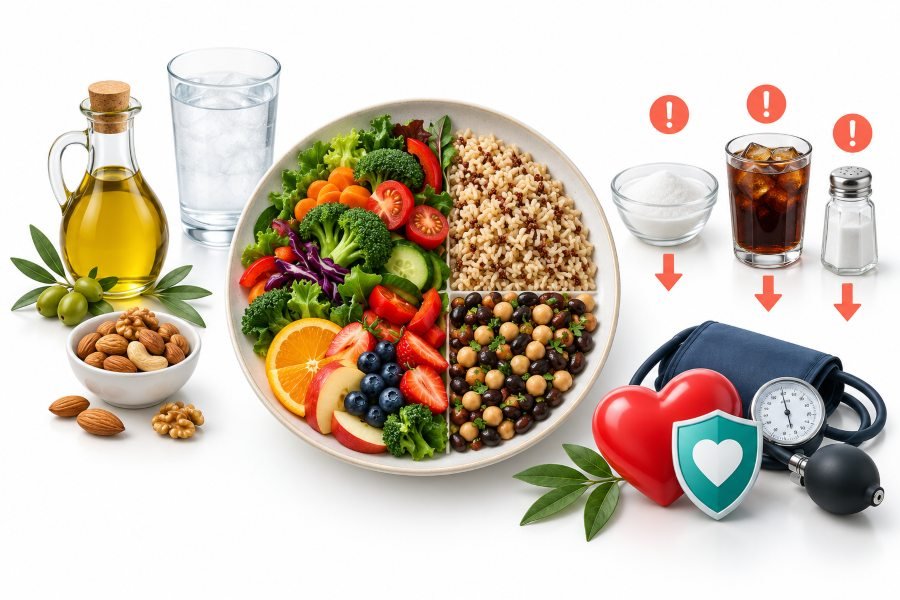
The WHO guidance on a healthy diet is refreshingly simple. It recommends at least 400 grams of fruit and vegetables a day, roughly five portions, with most energy coming from whole grains and pulses. It advises keeping free sugars below 10 per cent of daily energy, ideally below 5 per cent, and keeping total salt under 5 grams a day, which is about one teaspoon.
In many South Asian kitchens, that can look like more dal, chana and sabzi on the plate, whole-wheat roti in place of refined flour, fewer sugary drinks and packaged snacks, and tasting food before adding extra salt. Pickles, papad and namkeen can add a surprising amount of salt on their own.
Let Thirst And Urine Colour Guide Your Water Intake
You will often see “drink 8 to 10 glasses a day” repeated as a firm rule. The UK’s NHS offers a gentler guide of around 6 to 8 cups or glasses of fluid a day, with the aim of passing pale yellow urine. Water, milk, and unsweetened tea and coffee all count. You need more in hot weather, during long periods of physical activity, when pregnant or breastfeeding, and when you are unwell, which matters a great deal during long, hot South Asian summers.
There is one important exception. People with certain heart or kidney conditions are sometimes told to limit fluids, so follow your doctor’s advice over any general number.
Enjoy Coffee Or Chai, Within Limits
The FDA’s guidance on how much caffeine is too much says that around 400 milligrams a day, roughly two to three 12-ounce (about 350 ml) cups of coffee, is not generally linked with harmful effects in most healthy adults. Sensitivity varies widely, though, and the NHS advises no more than 200 milligrams a day during pregnancy. Tea, including chai, contains caffeine too.
If coffee leaves you jittery, gives you heartburn or keeps you awake, try having less, having it earlier in the day, or having it with food. What no article can honestly promise is a cup with no side effects for everyone.
Look After Your Mind As Seriously As Your Body
Look After Your Mind As Seriously As Your Body
Everyone has low days and periods of worry. Depression is different. The WHO overview of depression describes a depressive episode as low mood or loss of interest lasting most of the day, nearly every day, for at least two weeks, often alongside poor sleep, appetite changes, tiredness, feelings of worthlessness or thoughts about death. WHO estimates that about 5.7 per cent of adults worldwide live with depression, and effective treatments exist for mild, moderate and severe forms.
Yoga, breathing exercises, time outdoors and time with people you trust can all support day-to-day wellbeing. They are helpful additions, not a replacement for professional care when symptoms persist.
Popular Tips That Deserve A Second Look
Well-meant wellness advice sometimes stretches beyond the evidence. These are a few tips that commonly circulate on wellness blogs, alongside what the evidence supports.
Getting vitamin D from iodised salt. Iodised salt supplies iodine, not vitamin D. Vitamin D mainly comes from sunlight on the skin and from foods such as oily fish, egg yolks and fortified products. If you are worried about low levels, a blood test can check.
Crunches to burn belly fat. Abdominal exercises strengthen your core, but you cannot choose where your body loses fat. Overall activity and diet matter far more.
Lemon juice for dark spots. Citrus juice on skin that is then exposed to sunlight can trigger phytophotodermatitis, a burn-like reaction that may blister and leave dark marks for months. That is the opposite of what most people are hoping for.
Jaggery or honey as a healthy swap for sugar. Both still count as free sugars under WHO guidance, so they belong in the same “small amounts” category as white sugar.
Spices that flush out toxins. Your liver and kidneys handle waste removal. Cinnamon in your coffee is fine for flavour, but there is no good evidence that it detoxifies the body.
Be Careful With Herbal And Ayurvedic Products
Be Careful With Herbal And Ayurvedic Products
Ayurveda features heavily in wellness content, and its lifestyle ideas, such as regular routines, fresh food and daily movement, carry little risk. Products are a different matter. The NCCIH overview of Ayurvedic medicine safety notes that some Ayurvedic preparations contain lead, mercury or arsenic at levels that can be toxic, and reports that one survey of people using these preparations found 40 per cent had raised blood lead levels. It also advises against using Ayurvedic remedies to put off seeing a doctor about a health problem.
Talk to a doctor or pharmacist before taking any herbal product, especially if you are pregnant or breastfeeding, planning to give it to a child, or already taking regular medicines.
Realistic Expectations
Healthy habits work, but slowly and quietly. It often takes a few weeks of regular activity before stamina or mood noticeably improves, and meaningful weight change usually follows months of steady effort rather than days. Better sleep tends to start with small wins, such as falling asleep a little faster or waking less often.
Be wary of any article, product or video promising fast, dramatic results, a total detox or zero side effects. Real progress usually looks ordinary: a little more walking, a little less sugar, a slightly earlier bedtime, repeated for months.
How To Check Any Health Article, Including This One
How To Check Any Health Article, Including This One
The US National Library of Medicine’s guide to evaluating health information suggests asking a few questions before trusting a website. Who runs it, and can you contact them? Is its main purpose to inform you or to sell something? Who pays for it, and are adverts clearly labelled? Does it list its sources, and are pages dated and reviewed? The guide also warns against dramatic writing and promises of cures, and recommends discussing what you find with your doctor, because accurate information may still not be right for your situation.
Those questions apply to allwellhealthorganic.com, to this article and to anything else you read. For important decisions, cross-check with national health bodies such as the WHO, your country’s health ministry or hospital-run patient information pages.
When To Seek Medical Help
Wellness content is the wrong tool when your body is sending warning signs. Get emergency help straight away for:
Chest pain or pressure, especially with breathlessness, sweating, or pain spreading to the arm or jaw
Sudden weakness or numbness on one side of the body, a drooping face, or trouble speaking
Severe difficulty breathing
Thoughts of ending your life or harming yourself
Book an appointment with a doctor soon if you notice:
Low mood, anxiety or loss of interest lasting two weeks or more
Unexplained weight loss, an ongoing fever or a new lump
Blood in your stool, urine or phlegm
Loud snoring with pauses in breathing, or constant daytime sleepiness
Any symptom that is getting worse or not settling as expected
It is also worth checking with a doctor before starting supplements or herbal remedies if you take regular medicines, are pregnant or have a long-term condition, and before starting hard exercise if you have heart disease or get chest symptoms when you exert yourself.
Bottom Line
Allwellhealthorganic.com’s health content can be an easy-to-read introduction to healthy habits, especially for Hindi-speaking readers. Its core message of balanced meals, daily movement, good sleep and stress management is sound. Use it as a first step, check specific numbers and remedies against trusted sources, and let a qualified professional guide anything involving symptoms, medicines or supplements.
Disclaimer
This article is for general information only and does not replace advice from a qualified doctor or other health professional. Always seek professional advice about your own health, especially before changing medicines, starting supplements or herbal products, or beginning a new exercise programme. If you think you may be having a medical emergency, contact your local emergency services immediately.
References
World Health Organization Regional Office for Europe. Physical activity [fact sheet]. Copenhagen: WHO/Europe; 1 September 2021. Available from: https://www.who.int/europe/news-room/fact-sheets/item/physical-activity
Paluch AE, Bajpai S, Bassett DR, Carnethon MR, Ekelund U, Evenson KR, et al. Daily steps and all-cause mortality: a meta-analysis of 15 international cohorts. Lancet Public Health. 2022;7(3):e219-e228. doi:10.1016/S2468-2667(21)00302-9
Watson NF, Badr MS, Belenky G, Bliwise DL, Buxton OM, Buysse D, et al. Recommended amount of sleep for a healthy adult: a joint consensus statement of the American Academy of Sleep Medicine and Sleep Research Society. Sleep. 2015;38(6):843-844. doi:10.5665/sleep.4716
World Health Organization. Healthy diet [health topic]. Geneva: WHO. Accessed 21 September 2026. Available from: https://www.who.int/health-topics/healthy-diet
US Food and Drug Administration. Spilling the beans: how much caffeine is too much? [Consumer update]. Silver Spring, MD: FDA. Accessed 21 September 2026. Available from: https://www.fda.gov/consumers/consumer-updates/spilling-beans-how-much-caffeine-too-much
World Health Organization. Depressive disorder (depression) [fact sheet]. Geneva: WHO; 29 August 2025. Available from: https://www.who.int/news-room/fact-sheets/detail/depression
National Center for Complementary and Integrative Health. Ayurvedic medicine: in depth. Bethesda, MD: NCCIH; last updated January 2019. Available from: https://www.nccih.nih.gov/health/ayurvedic-medicine-in-depth
MedlinePlus. Evaluating health information. Bethesda, MD: US National Library of Medicine; last updated 26 February 2024. Available from: https://medlineplus.gov/evaluatinghealthinformation.html
About Dr. Thomas W. Longley, MD Physician
Dr. Thomas W. Longley provides thoughtful family medicine with a practical approach to everyday health concerns and ongoing patient care.









 Cardiologist