You run your tongue along the back of your mouth and there it is, a puffy, tender patch of gum tissue you didn’t notice yesterday. Maybe it hurts when you bite down, maybe it’s just an odd pressure, but either way it’s hard to ignore once you’ve found it. Swelling at the very back of the mouth has a handful of common explanations, and while most of them aren’t emergencies, a few genuinely need a dentist’s attention sooner rather than later.
This article walks through what’s most likely causing it, how to tell the difference between something minor and something that needs prompt care, and what helps in the meantime.
Why the Back of the Mouth Is Especially Prone to This
Why the Back of the Mouth Is Especially Prone to This
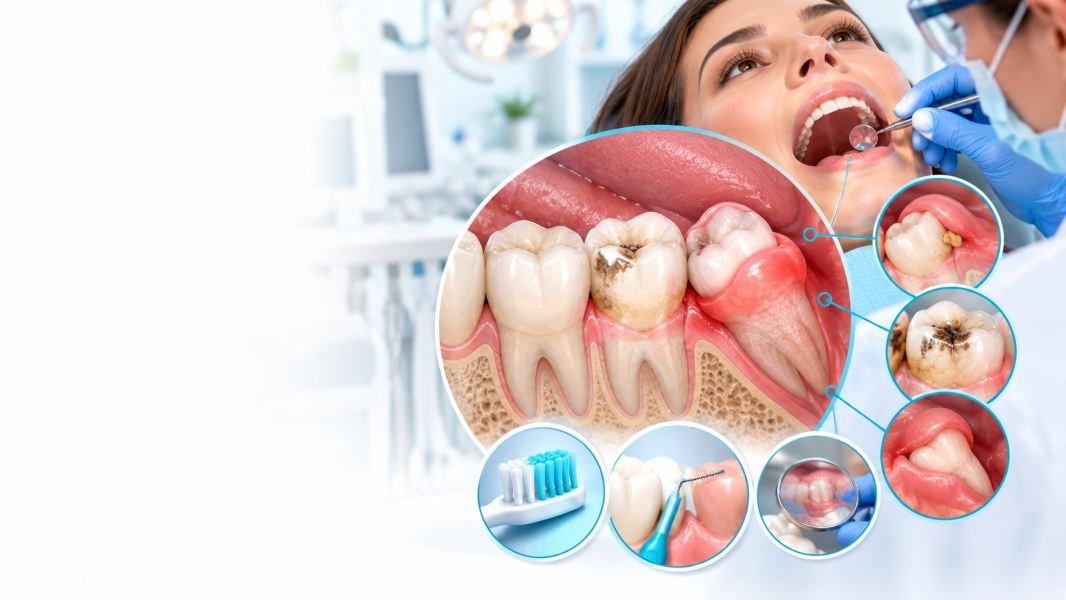
The back corners of your mouth are harder to clean, harder to see, and home to your last set of teeth to come in, which makes them a common site for irritation. A few structural reasons this area tends to flare up more than the front of the mouth:
Toothbrush bristles often don’t reach all the way back with the same pressure or angle
Food debris collects more easily around the last molars
Wisdom teeth, when present, often erupt at odd angles or only partially, creating spots that are nearly impossible to clean properly
Common Causes of Swollen Gums in the Back
Pericoronitis
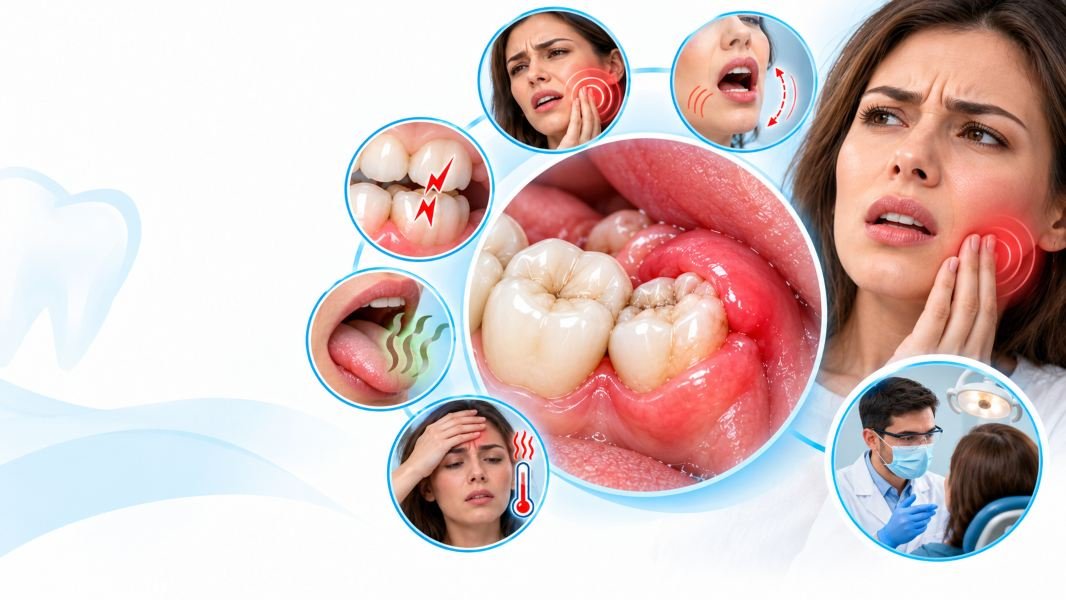
This is one of the most frequent culprits specifically for swelling behind the last molar. Pericoronitis is inflammation and infection of the gum tissue around a tooth that hasn’t fully come through, most often a wisdom tooth. When a wisdom tooth erupts only partially, a flap of gum tissue, sometimes called an operculum, can cover part of the tooth and trap food and bacteria underneath it. The surrounding gum becomes red, swollen, and often painful, especially when biting down, since the opposing tooth can repeatedly strike the inflamed flap.
Gingivitis and Periodontal Disease
According to the Cleveland Clinic, gingivitis is the earliest stage of gum disease, and common symptoms include red, swollen, and bleeding gums. It’s caused primarily by plaque buildup along the gumline, and because back teeth are harder to brush and floss thoroughly, gingivitis often shows up there first or worst. Left untreated, it can progress into periodontitis, a more serious form of gum disease involving inflammation that can eventually affect the bone supporting your teeth.
Trapped Food or Debris
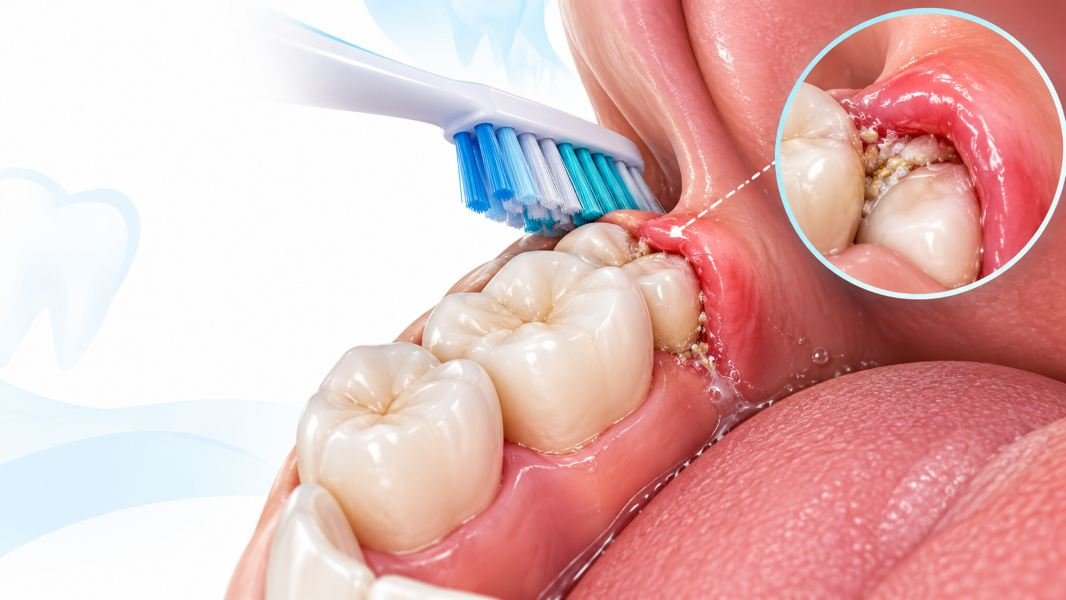
Sometimes the explanation is simpler than an infection. A stray popcorn kernel, a piece of meat, or seed lodged between the back molars and the gum can cause localized swelling and tenderness within hours. This type usually resolves quickly with careful flossing or a dental visit to remove the debris.
Tooth Decay or an Abscess
Tooth Decay or an Abscess
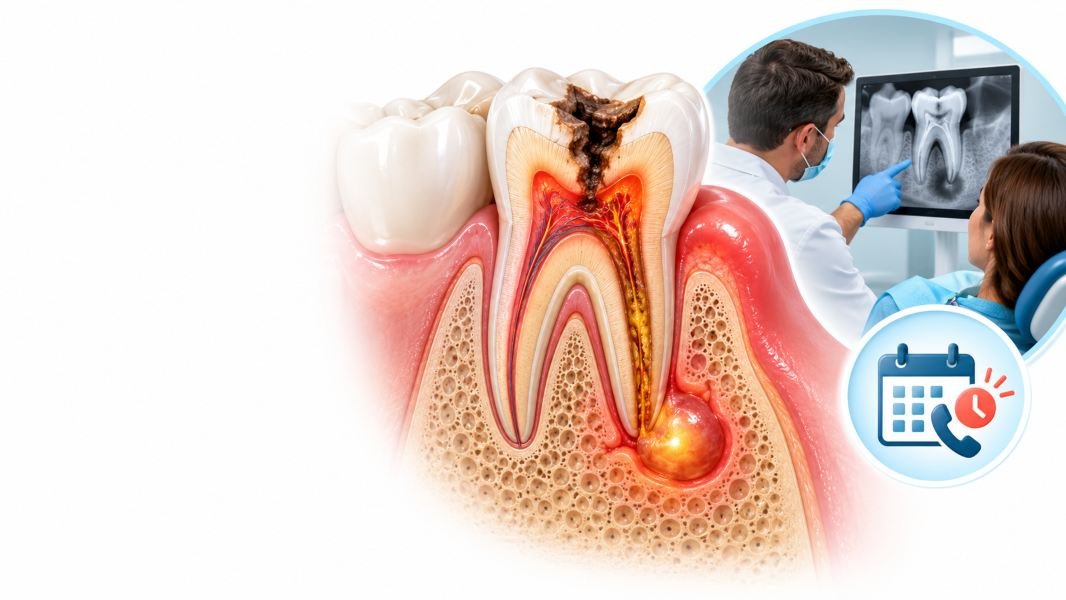
A cavity near the gumline on a back tooth, or an infection at the root of a tooth, can cause the surrounding gum to swell. An abscess in particular tends to come with more intense, often throbbing pain, and sometimes a visible bump or pimple-like spot on the gum.
Ill-Fitting Dental Work
A poorly fitted filling, crown, or partial denture that puts pressure on the gum in the back of the mouth can cause ongoing irritation and swelling in that specific spot.
Canker Sores or Minor Trauma
Accidentally biting the inside of your cheek or gum, or a canker sore developing near the back teeth, can cause localized swelling that’s uncomfortable but typically resolves within a week or two on its own.
Symptoms Worth Paying Attention To
Symptoms Worth Paying Attention To
According to the Cleveland Clinic’s overview of swollen gums, swelling is typically accompanied by redness, bleeding, and tenderness, and the gums may appear reddish, purple, shiny, or smooth depending on the cause. Alongside general swelling, watch for:
Pain that worsens when chewing or biting down
A bad taste or persistent bad breath
Difficulty fully opening your mouth
Swollen lymph nodes in the neck
A low-grade fever
Pus or discharge near the swollen area
Visible gum flap over a partially emerged tooth
When to See a Dentist Right Away
Most causes of swollen back gums are not emergencies, but a few signs mean you shouldn’t wait for a routine appointment:
Symptom
Why It Matters
Fever alongside gum swelling
Can indicate a spreading infection needing prompt treatment
Difficulty swallowing or opening your mouth fully
May signal the infection is affecting surrounding tissue
Facial swelling beyond the gum itself
Can indicate the infection is spreading beyond the local area
Severe, worsening pain
Often points to an abscess or advancing infection
Swelling that doesn’t improve after a few days of home care
Suggests a cause that needs professional treatment, not time
Recurring swelling in the same spot
Common with pericoronitis and often needs a long-term fix, not repeated short-term relief
How This Is Typically Treated
How This Is Typically Treated
Treatment depends entirely on the underlying cause, which is why a dental exam matters more than guessing at home.
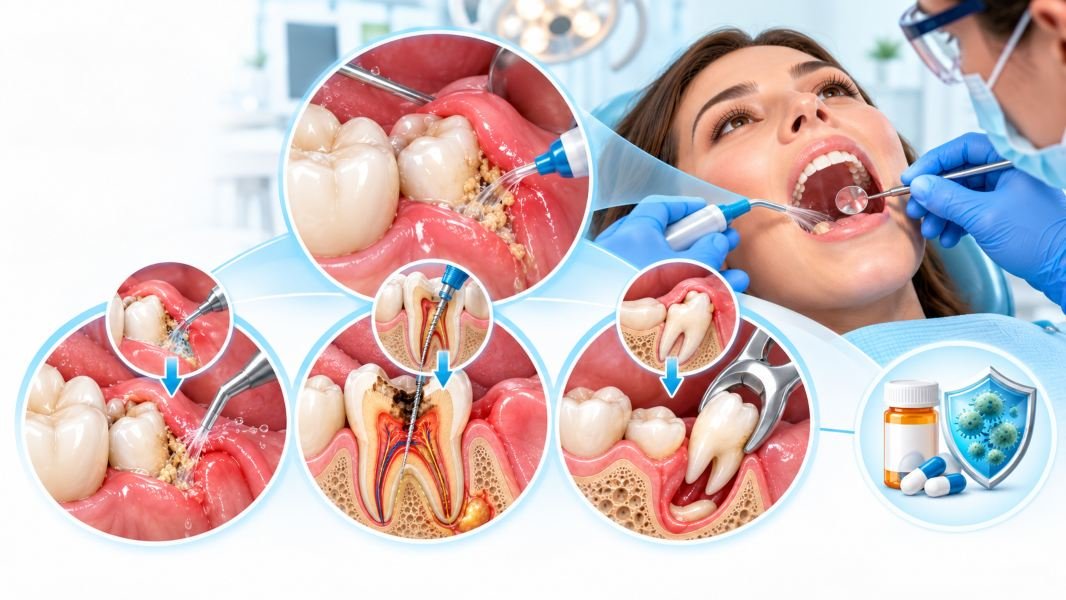
For pericoronitis, care often starts with professional cleaning around the area, pain relief, and antibiotics if there are signs the infection is spreading. If it keeps recurring, a dentist may recommend removing the gum flap or the wisdom tooth itself.
For gingivitis, the Cleveland Clinic notes that this stage of gum disease is reversible with a professional cleaning and improved daily oral hygiene, since the underlying cause is typically plaque buildup rather than permanent tissue damage.
For trapped debris, a thorough cleaning or careful flossing is often all that’s needed.
For decay or an abscess, treatment may involve a filling, root canal, or in some cases extraction, depending on how far the problem has progressed.
For ill-fitting dental work, an adjustment or replacement of the appliance usually resolves the irritation.
What You Can Do at Home in the Meantime
While waiting for a dental appointment, a few things can ease discomfort without masking a problem that needs professional care:
Rinse gently with warm salt water several times a day
Use a soft-bristled toothbrush and avoid aggressive brushing over the swollen area
Avoid very hot, cold, spicy, or hard foods that might further irritate the spot
Over-the-counter pain relievers like ibuprofen or acetaminophen can help manage discomfort
Avoid picking at or poking the area, even if it’s tempting
None of these replace an actual dental evaluation if the swelling persists, worsens, or keeps coming back.
Preventing Future Flare-Ups
A few habits meaningfully lower the odds of recurring swelling in this area:
Brush carefully and deliberately behind the last molars, not just the front-facing surfaces
Floss daily, including around partially erupted or crowded back teeth
Keep up with regular dental checkups, since early gum disease often has no obvious symptoms
Ask your dentist about your wisdom teeth specifically if you’re prone to repeated swelling in that area, since a proactive removal may prevent recurring episodes
This article is for general informational purposes only and does not replace advice from a qualified dental professional. If you experience fever, facial swelling, difficulty swallowing, or severe or worsening pain, seek dental or medical care promptly.
About Doctiplus Doctors Staff
Doctiplus is a trusted global digital health platform that connects patients worldwide with certified doctors for instant online consultations and in person appointments.





 Cardiologist