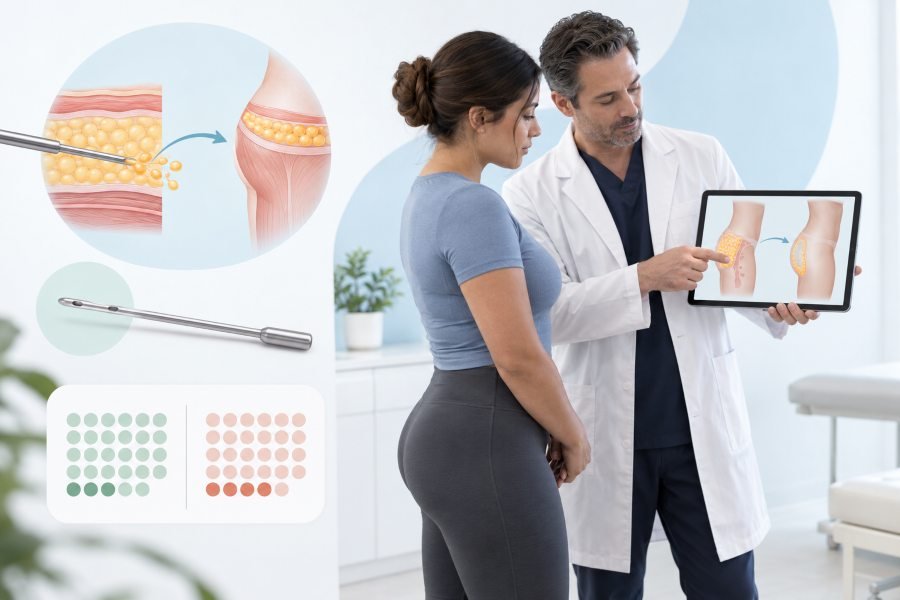
A BBL, short for Brazilian butt lift, is an operation that takes fat out of one part of your body with liposuction, cleans it, and injects it into your buttocks and hips to change their shape. Nothing is lifted, and nothing about it is particularly Brazilian, which is why surgeons increasingly call it gluteal fat grafting or subcutaneous buttock augmentation. The name matters less than the fact sitting underneath it, which most people searching this term have already half heard: this procedure has killed more patients per operation than any other cosmetic surgery, and the reasons why are specific, understood, and largely preventable.
If you are weighing this up, these are the facts to hold on to:
It is two operations in one session: a liposuction and a fat graft, done under general anaesthetic in most cases.
Around half the injected fat does not survive, so the result you see at two weeks is not the result you keep
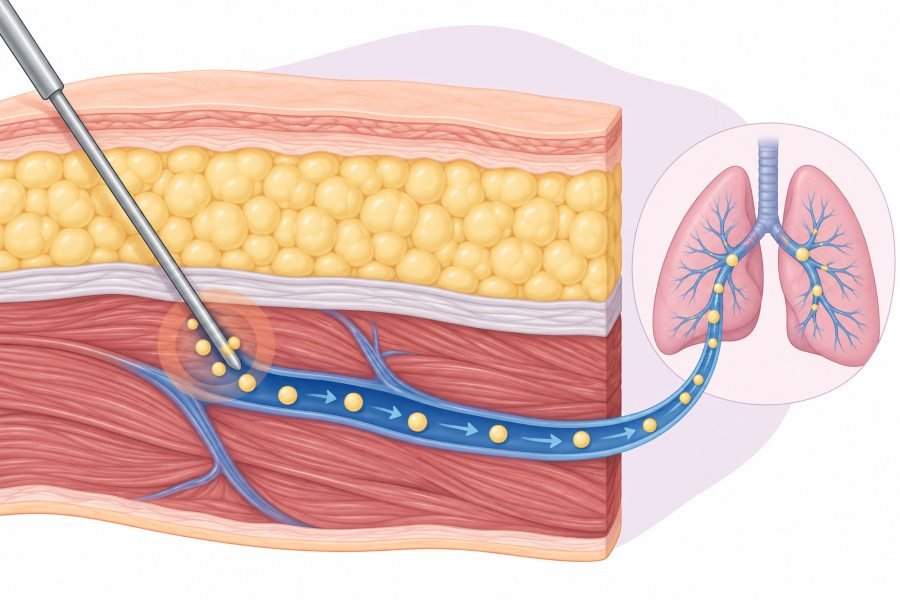
The danger is not the liposuction; it is fat entering the large veins inside the buttock muscle.
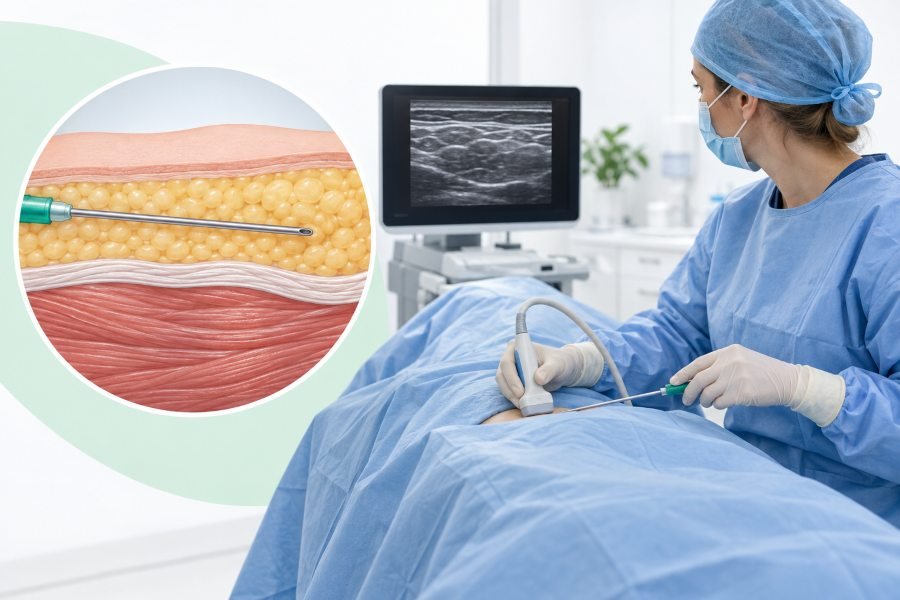
Fat must go above the muscle, never into it or beneath it, and ultrasound is how a surgeon proves where the cannula is
Mortality figures have improved substantially since 2017, but only in the hands of surgeons following the current technique.
A liquid BBL is a completely different and largely unregulated procedure, not a gentler version of this one.
What The Operation Actually Does To Your Body
The surgeon marks the donor areas, usually the abdomen, flanks, lower back or thighs, and removes fat through small cannula incisions. That fat is processed to separate blood, oil and fluid, leaving viable fat cells. It is then injected through separate small incisions into the fatty layer sitting on top of the gluteal muscle, in thin passes rather than one large deposit, because fat only survives where it can pick up a blood supply from surrounding tissue.
Stage
What happens
Why it matters to you
Assessment
Body fat, skin quality and donor sites reviewed
Very lean patients may not have enough fat to graft
Liposuction
Fat harvested from two or more areas
Your waist shape changes as much as your buttocks
Processing
Fat filtered or centrifuged
Poor processing lowers how much fat survives
Injection
Fat placed above the gluteal fascia
The single step where deaths occur
Healing
Graft takes or resorbs over months
Final volume is unknown for three to six months
Two points get lost in before and after photos. The contour change comes partly from the liposuction, not only the fat added, and the amount of fat that can safely be placed is limited by the space available in the subcutaneous layer rather than by how much you would like.
Why This Operation Has The Worst Safety Record In Cosmetic Surgery
Why This Operation Has The Worst Safety Record In Cosmetic Surgery
Inside and beneath the gluteus maximus run the superior and inferior gluteal veins. They are wide, they are thin-walled, and they drain straight into the iliac veins and then the inferior vena cava, which leads to the heart and lungs. If a cannula tears one of those veins while fat is being pushed under pressure, fat enters the circulation and travels to the lungs. This is pulmonary fat embolism, and it can kill within minutes on the table or hours afterwards in recovery. The multisociety safety advisory issued by plastic surgery organisations noted that autopsies of patients who died after BBL surgery shared the same findings again and again: fat inside the gluteal muscles, fat below the muscles, damage to a gluteal vein, and massive fat emboli in the heart or lungs.
Warning signs that need emergency care rather than reassurance:
Sudden breathlessness, chest pain or a racing heart during or after surgery
Confusion, agitation or unusual drowsiness in recovery
Low oxygen readings, blue lips or fingertips
Fever, spreading redness, foul-smelling drainage or severe pain in the days afterwards
Calf pain or swelling, which can point to a blood clot rather than a fat embolism
None of these are things to sleep on or message a clinic about the next morning. They belong in an emergency department.
Numbers Have Moved, And It Is Worth Knowing By How Much
The figure most people have heard is one death in every three thousand operations. That came from a survey published by an Aesthetic Surgery Education and Research Foundation task force, which asked nearly five thousand surgeons worldwide about their experience. The task force report on mortality from gluteal fat grafting concluded that the procedure carried significantly higher mortality than any other aesthetic operation, and recommended injecting only into the subcutaneous space, avoiding cannulas smaller than four millimetres, and never angling the cannula downward.
A follow-up survey two years later found the picture had changed. According to the Aesthetic Surgery Journal study on improved BBL safety, fat embolism of any kind fell from roughly one in a thousand cases to one in two and a half thousand, and the mortality trend moved from about one in 3,448 to one in 14,952. Ninety-four percent of surgeons surveyed knew about the recommendations.
Measure
2017 survey
2019 follow-up
Any pulmonary fat embolism
About 1 in 1,030
About 1 in 2,492
Deaths
About 1 in 3,448
About 1 in 14,952
Surgeons aware of the safety guidance
Not applicable
94 percent
That improvement is real, and it is also conditional. It reflects board-certified plastic surgeons who changed their technique. It says nothing about a clinic where the operator is not a plastic surgeon, where volume is high, or where the injection plane is not documented.
What Safe Technique Looks Like Now
What Safe Technique Looks Like Now
The consensus has narrowed to a small number of non-negotiables, and one US state wrote them into law. Florida’s legislation on office surgery requires that gluteal fat injections be performed under ultrasound guidance to confirm the fat is going into the subcutaneous space, and that the surgeon may not delegate the injection or the fat extraction to anyone else. The state bill analysis setting out those requirements is unusually readable for legislation and worth a look if you want to know what a regulator considers the minimum. A retrospective series of more than eighteen hundred patients published in the Aesthetic Surgery Journal reported on outcomes using ultrasound-guided gluteal fat transfer with fat placed only above the muscle.
What that translates to in a consultation:
Fat placed in the subcutaneous plane only, with the surgeon able to say so plainly
Real-time ultrasound used while the cannula is moving, not a scan taken before or after
A recording or note of the ultrasound kept in your medical record
A rigid cannula of at least four millimetres, angled upward or parallel rather than down
The surgeon performing the injection personally
A limited number of these cases per day, since several deaths have clustered at the end of surgical lists
General anaesthetic with a qualified anaesthetist, and a facility equipped for emergencies
Questions That Separate A Surgeon From A Sales Pitch
Consultations for this procedure are often run by patient coordinators rather than doctors, and photographs do most of the persuading. The useful questions are boring ones, and the quality of the answers tells you a great deal.
Which board are you certified by, and in what specialty
Do you use ultrasound during the injection, and will the recording go in my notes
Which plane do you inject into, and how do you confirm it during the case
How many of these do you do in a day, and where am I on the list
Who provides my anaesthetic, and what is their qualification
What happens if I develop breathing problems in recovery, and which hospital takes me
How many revisions have your patients needed in the past year
What is your policy if I want to cancel after paying a deposit
A surgeon who is comfortable with this operation will answer all of it without irritation. Pressure to decide today, a discount that expires, or an offer to add procedures at the last minute are the patterns that have shown up repeatedly in coroners’ inquests.
What Recovery Actually Demands
The recovery is more restrictive than most people expect, and underestimating it is one of the main reasons results disappoint. Pressure on the graft in the early weeks squashes the fat cells before they establish a blood supply, so the instructions about sitting are not a formality.
Period
What life looks like
Common mistakes
First two weeks
Sleeping on your front or side, no direct sitting, drains possible
Sitting on the flight or car ride home
Two to six weeks
Short sitting on a cushion that offloads the buttocks, compression garment worn
Returning to the gym too early
Six to twelve weeks
Gradual return to normal sitting and exercise
Assuming the shape is final
Three to six months
Swelling settles and graft survival becomes clear
Judging the result before this point
Other realities worth planning for: bruising across the donor areas, numbness that can last months, lumpiness or firm areas that soften with time, and a need for help at home in the first week. The NHS guidance on surgical fat transfer and its risks notes that around half the injected fat does not survive, which is why further surgery is sometimes needed to reach the intended volume.
Money Conversation Nobody Has Properly
Quoted prices are usually surgeon fees only. Anaesthesia, facility fees, garments, medication, time off work and any revision are extra, and those additions routinely add several thousand to the total. Average surgeon fee data published by The Aesthetic Society on plastic surgery costs gives a baseline, and the NHS puts a UK surgical fat transfer in the region of a few thousand pounds upward depending on the areas treated.
Ask for an itemised quote covering surgeon, anaesthetist, facility, garments and follow-up.
Ask what a revision costs and whether any part of it is included.
Ask who pays if you need readmission or a longer hospital stay.
Budget for two to four weeks of reduced earnings if your work involves sitting or physical effort
Treat finance offers with the same scepticism you would apply to any other credit agreement taken under time pressure.
Remember that the cheapest quote often removes the exact things that make the operation safer, including ultrasound, a dedicated anaesthetist and proper aftercare.
Travelling Abroad Changes The Risk Calculation
Travelling Abroad Changes The Risk Calculation
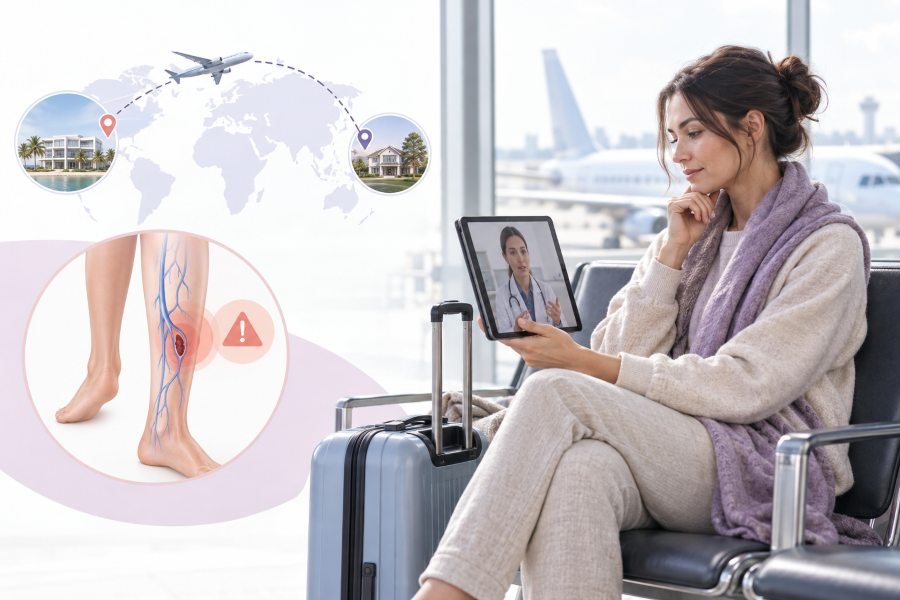
Package pricing abroad is genuinely much lower, and people travel for understandable reasons. The problem is not the country; it is the structure of the deal. Multiple procedures bundled together lengthen anaesthetic time. Consultations happen by message rather than in person. Consent is sometimes taken hours before surgery. Then you fly home, which adds clot risk, and if something goes wrong, you present to a health service that did not operate and has no records from the clinic that did.
Points that consistently show up in UK inquests and complication reviews:
Procedures added or upgraded shortly before surgery at a discount.
No named surgeon until the day itself
Combined surgery, often a tummy tuck, liposuction and BBL in one sitting
Aftercare consisting of a hotel stay and a return flight
Complications treated later by a domestic health service at high cost
Difficulty pursuing any legal remedy across jurisdictions
If you do travel, the defensive moves are to refuse combined procedures, insist on a video or in-person consultation with the operating surgeon well before travel, get the surgical plan in writing, stay in country for at least a week after surgery, and register with a local doctor before you go so that follow-up has somewhere to land.
A Liquid BBL Is Not A Softer Version Of This
Non-surgical or liquid BBLs involve injecting fillers or other materials into the buttocks. They are marketed as a low-risk alternative, and in parts of the world they are performed by people with no medical training at all, in salons, rented rooms and private homes. Large-volume filler in this area has caused sepsis, tissue death, disfigurement and death. In the UK, a parliamentary committee called for an immediate ban on liquid BBLs and other high-harm procedures, describing a market that has grown far faster than the rules meant to keep people safe, and urging that such treatments be restricted to appropriately qualified medical professionals.
Until that regulation exists, the practical safeguards are simple:
Check that the practitioner is a registered medical professional, not a beauty practitioner with a certificate
Ask exactly what substance is being injected and in what volume.
Refuse any procedure offered in a home, hotel or non-clinical setting.
Be sceptical of any claim that a filler is permanent, dissolvable or entirely safe in large volumes.
Know that advertising standards bodies have already acted against providers in this space for downplaying risk.
Alternatives Worth Weighing Before You Commit
Alternatives Worth Weighing Before You Commit
Some people who consult about a BBL are better served by something else entirely, and a good surgeon will say so.
Option
What it does
Main trade-off
Smaller volume fat transfer
Modest shaping with less fat injected
Subtler change
Liposuction alone
Narrows the waist and improves contrast
No added volume
Buttock implants
Adds fixed volume
Higher infection and revision rates
Structured glute training
Builds real muscle over months
Slow, and will not replicate a graft
Doing nothing for now
Costs nothing and closes no doors
Requires sitting with the feeling
Weight stability matters across all of these. Grafted fat behaves like the fat it came from, so significant weight loss or gain after surgery will change the result.
Part Of This Decision That Is Really About Health
Cosmetic surgery decisions are rarely only about shape. They often arrive during a hard year, after a breakup, after pregnancy, or after months of comparing yourself to filtered images built to be unmatchable. That does not make anyone shallow, and wanting to change how you look is not a character flaw. It does mean the decision deserves the same care you would give any other significant health choice, rather than being made in a comment section at midnight.
Some ways to protect yourself that have nothing to do with surgical technique:
Wait out a cooling-off period of at least a few months between first interest and booking.
Notice whether the distress is about this one feature or about your body in general, since the second pattern rarely resolves with an operation.
Speak to your own doctor before booking, not only to the clinic selling the procedure
Ask for a psychological assessment if you have ever been told you may have body dysmorphic disorder, or if the thought of the feature takes up hours of your day.
Take a break from accounts and filters that make you feel worse, and see whether the urgency changes.
Tell someone close to you the real plan and the real cost, since secrecy tends to travel with decisions we are unsure about
Treat sleep, food, movement and mood as part of the same project, because recovery from any surgery goes better in a body that is being looked after
Permit yourself to change your mind at any point, including after you have paid a deposit
Disclaimer
This article is general health information and is not medical advice. It cannot replace an assessment by a qualified surgeon or doctor who has examined you and knows your medical history. Risks, regulations and available procedures vary by country and change over time, so verify the current position where you live or plan to be treated. If you are considering any cosmetic procedure, speak to a registered medical professional first, and seek emergency care immediately for breathlessness, chest pain, confusion or signs of infection after surgery.
References
Mofid MM, Teitelbaum S, Suissa D, Ramirez-Montañana A, Del Vecchio D, Rubin JP, Gutowski K, Del Río A, Bartolini J. Report on mortality from gluteal fat grafting: recommendations from the ASERF task force. Aesthetic Surgery Journal. 2017;37(7):796-806. doi:10.1093/asj/sjx004
Rios L Jr, Gupta V. Improvement in Brazilian butt lift (BBL) safety with the current recommendations from ASERF, ASAPS, and ISAPS. Aesthetic Surgery Journal. 2020;40(8):864-870. doi:10.1093/asj/sjaa093
Del Vecchio D, Kenkel JM. Practice advisory on gluteal fat grafting. Aesthetic Surgery Journal. 2022. doi:10.1093/asj/sjac082
Augmented safety profile of ultrasound-guided gluteal fat transfer: retrospective study with 1815 patients. Aesthetic Surgery Journal. 2024;44(4):NP263. doi:10.1093/asj/sjad377
Ultrasound-guided gluteal fat grafting: what is the evidence? A systematic review and meta-analysis. Aesthetic Surgery Journal. 2025. doi:10.1093/asj/sjaf059
Multisociety Gluteal Fat Grafting Task Force. Safety advisory on gluteal fat grafting. American Society of Plastic Surgeons, January 2018.
Florida House of Representatives. CS/HB 1561 Office Surgeries, final bill analysis. Chapter 2024-181, Laws of Florida, approved 10 May 2024.
Women and Equalities Committee, UK Parliament. Health impacts of breast implants and other cosmetic procedures, HC 869. Published February 2026.
National Health Service. Surgical fat transfer. NHS cosmetic procedures information.
The Aesthetic Society. Average plastic surgery costs. Patient resources.
About Doctiplus Doctors Staff
Doctiplus is a trusted global digital health platform that connects patients worldwide with certified doctors for instant online consultations and in person appointments.






 Cardiologist