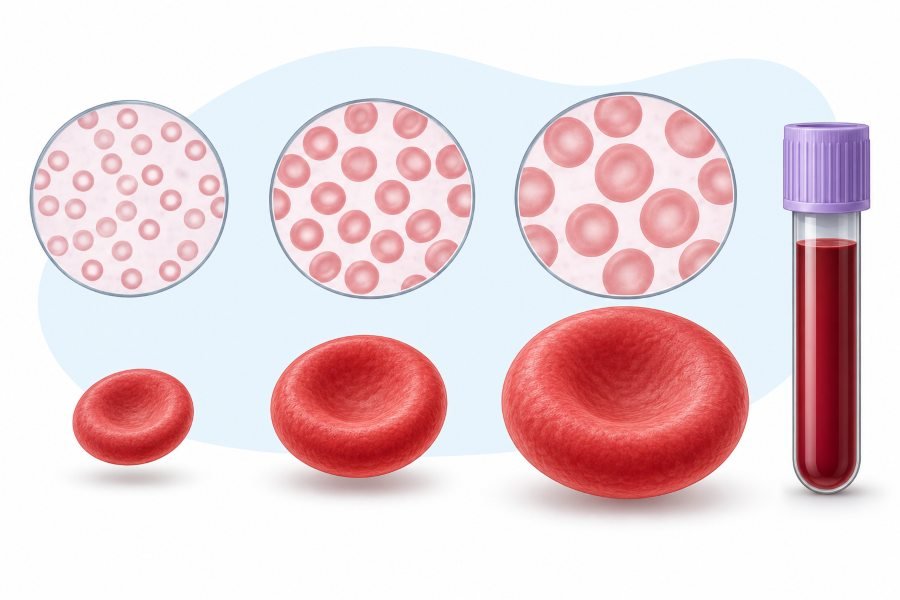
If you have landed here holding a printout with MCV flagged high or low, the first useful thing to know is that MCV on its own diagnoses nothing. It is a clue, not a verdict. MCV stands for mean corpuscular volume, and it describes the average size of your red blood cells. Doctors care about it because different problems change red cell size in different directions, so the number acts as a signpost pointing towards which follow-up test is worth doing next.
The basics in one place:
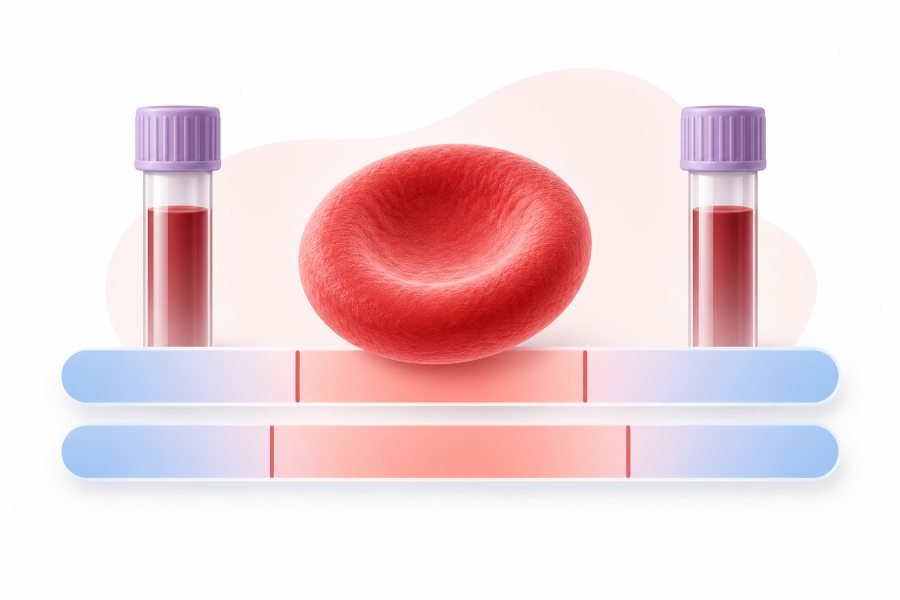
MCV is reported in femtolitres, written fL, and most adult labs treat roughly 80 to 100 fL as normal
It comes as part of a complete blood count, so you did not have a separate MCV test
Below the range is called microcytosis, above it is macrocytosis
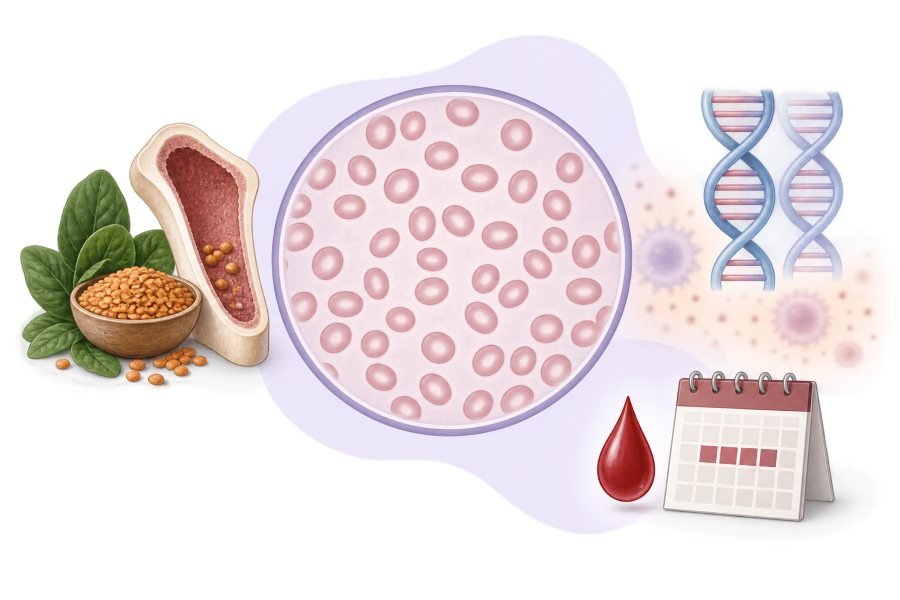
Iron problems tend to shrink red cells, vitamin B12 and folate problems tend to enlarge them
A slightly abnormal MCV with a normal haemoglobin is common and often turns out to be minor
The number is an average, which means it can look perfectly normal while two opposite problems cancel each other out
What The MCV Number Actually Measures
Modern analysers either measure red cell volume directly as cells pass through a sensor, or calculate it from your haematocrit and red cell count. Either way, MCV tells you about size only. It says nothing about how many red cells you have, how much haemoglobin is inside them, or how well they carry oxygen. Those are separate numbers on the same report. As the plain-language MedlinePlus explanation of the MCV blood test puts it, red cells that are too small or too large can point towards anaemia, a vitamin shortage, or another condition.
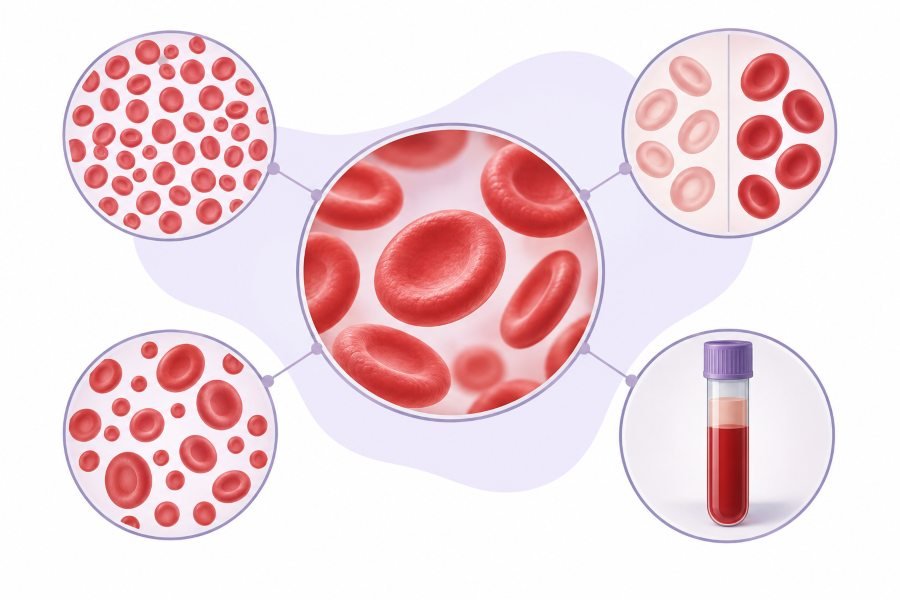
What sits alongside it on the same page of results:
Haemoglobin, the amount of oxygen-carrying protein in your blood
Haematocrit, the proportion of blood volume made up of red cells
RBC count, how many red cells there are
MCH and MCHC, how much haemoglobin sits inside an average cell
RDW, how much your red cells vary in size from each other
Platelets and white cells, which matter when the marrow itself is the problem
What Counts As Normal And Why Your Lab May Disagree
What Counts As Normal And Why Your Lab May Disagree
There is no single universal cutoff. Different analysers and different reference populations produce slightly different ranges, which is why the numbers printed beside your result are the ones that apply to you. The StatPearls reference on mean corpuscular volume uses 80 to 100 fL for adults, while some laboratories use an upper limit closer to 96 or 98 fL. Children run lower, and newborns run considerably higher.
Group
Typical MCV guide
Note
Adults
About 80 to 100 fL
Upper limit varies by lab
Older adults
Same range applied
Mild macrocytosis becomes more common
Children
Lower than adults, rising with age
Age-specific ranges are essential
Newborns
Well above adult range
Falls over the first months
Pregnancy
Often slightly higher
Assessed alongside haemoglobin
Anaemia itself is defined by haemoglobin, not by MCV. The World Health Organization guideline on haemoglobin cutoffs published in 2024 was the first substantial revision of those thresholds in decades, keeping most longstanding values while adjusting some for young children and for altitude. You can have a normal haemoglobin with an abnormal MCV, and that combination is worth investigating rather than ignoring.
Low MCV And What Usually Sits Behind It
Low MCV And What Usually Sits Behind It
Small red cells generally mean the body is short of the raw material for haemoglobin, or is struggling to assemble it. Iron deficiency is the most common reason worldwide, and thalassaemia trait is the second most common in populations where it is prevalent.
Cause
How it usually looks
What confirms it
Iron deficiency
Low MCV, high RDW, low ferritin
Ferritin, transferrin saturation
Thalassaemia trait
Very low MCV with a normal or high RBC count
Haemoglobin electrophoresis, HbA2
Anaemia of chronic disease
Mildly low or normal MCV
Inflammatory markers, underlying condition
Lead exposure
Low MCV with basophilic stippling
Blood lead level
Sideroblastic anaemia
Low MCV, high ferritin
Blood film, marrow assessment
Two practical points here matter more than most articles admit. First, in an adult man or a postmenopausal woman, iron deficiency is a symptom rather than a diagnosis, and the question of where the iron went usually needs answering, often with bowel investigation. Second, iron supplements are not a safe default. Someone with thalassaemia trait taking iron they do not need can accumulate iron over time, which is why the NIH iron fact sheet for health professionals stresses that supplementation belongs in the hands of a clinician who has confirmed deficiency rather than guessed at it.
High MCV And What Usually Sits Behind It
Enlarged red cells are common. Reviews of primary care populations put macrocytosis at around three percent, and many of those people are not anaemic at all. The American Family Physician review on evaluating macrocytosis identifies alcohol, vitamin B12 and folate deficiency, and medications as the leading causes, and recommends checking a vitamin B12 level in every patient with a raised MCV.
Cause
Mechanism in plain terms
Clue that points to it
Vitamin B12 deficiency
DNA production in marrow slows
Neurological symptoms, sore tongue
Folate deficiency
Same mechanism, different vitamin
Poor diet, pregnancy, coeliac disease
Alcohol
Direct marrow effect
Liver tests, drinking history
Medications
Interference with DNA synthesis
Methotrexate, hydroxyurea, some antivirals and anticonvulsants
Liver disease
Altered red cell membranes
Liver function tests
Hypothyroidism
Slowed metabolism
Thyroid function tests
Reticulocytosis
Young cells are larger
Recent bleeding or haemolysis
Myelodysplastic syndrome
Faulty marrow production
Older age, other cell lines affected
Degree matters. Mild elevation just above the range has a long and mostly benign list of causes. A markedly raised MCV, particularly above 120 fL, points strongly towards B12 deficiency or a marrow problem and deserves prompt attention rather than a repeat test in six months.
When Your MCV Is Normal But Something Is Still Wrong
This is the part that catches people out. MCV is an average, so if you are short of iron and short of B12 at the same time, the small cells and the large cells average out to a number that looks reassuring. The same happens early in a deficiency, before the cell population has shifted, and in anaemias where size is not affected at all.
Combined iron and B12 or folate deficiency, common after bariatric surgery or in coeliac disease
Early deficiency caught before red cell size has changed
Chronic kidney disease, where the marrow lacks the hormone signal to produce cells
Acute blood loss, where the cells lost were normal sized
Haemolysis, where cells are destroyed rather than badly made
Mixed picture in someone with both thalassaemia trait and B12 deficiency
RDW is the number that often gives the game away. When red cells vary widely in size, RDW rises even if the average stays normal, which is why a normal MCV with a high RDW is worth a second look rather than a shrug.
The Numbers Your MCV Should Never Be Read Without
The Numbers Your MCV Should Never Be Read Without
A single index in isolation is close to meaningless. What turns MCV into useful information is the company it keeps on the report and the targeted tests that follow.
Test
What it adds
When it is ordered
Haemoglobin
Tells you whether anaemia exists at all
Always, same sample
RDW
Flags mixed populations of cells
Always, same sample
RBC count
High count with low MCV suggests thalassaemia trait
Always, same sample
Ferritin
The most useful marker of iron stores
Low MCV
Vitamin B12 and folate
Confirms or excludes the classic macrocytic causes
High MCV
Reticulocyte count
Shows whether marrow is responding
Any unexplained anaemia
Blood film
Human eyes catch shapes machines average away
Unclear or severe results
Clinicians also use simple ratios as a first sort. The Mentzer index divides MCV by the red cell count, with lower values leaning towards thalassaemia trait and higher values leaning towards iron deficiency. It is a screening shortcut rather than a diagnosis, and it is never a substitute for ferritin and electrophoresis.
Why Your MCV Can Simply Be Wrong
Analysers measure what is in the tube, and sometimes what is in the tube misrepresents what is in your body. A spuriously abnormal MCV is not rare, and repeating the test on a fresh sample resolves many of them. The Medscape reference on MCV interpretation notes that cold-reacting antibodies causing red cells to clump can push the reported MCV falsely high.
Cold agglutinins, where clumped cells are counted as one large cell
Very high blood glucose, which causes cells to swell in the diluting fluid
Marked leukocytosis, where white cells are miscounted as red cells
A sample that sat too long before analysis, allowing cells to swell
Recent blood transfusion, which mixes donor cells with your own
A brisk reticulocyte response after bleeding or treatment, which is real but temporary
If your result surprises your doctor, or does not fit your symptoms, a repeat is often the sensible next step rather than an immediate cascade of investigations.
What A Sensible Follow-Up Actually Looks Like
What A Sensible Follow-Up Actually Looks Like
An abnormal MCV should trigger a short, logical sequence rather than either panic or silence. Most people can expect a conversation about diet, alcohol, medication and periods, then a small number of targeted blood tests, then a plan.
Expect questions about heavy menstrual bleeding, diet, alcohol intake, medications and family origin
Expect ferritin for a low MCV, and B12, folate and liver and thyroid tests for a high one
Expect a repeat count rather than a diagnosis if the abnormality is borderline
Expect iron treatment, when indicated, to take weeks to move the MCV, since the change depends on new cells being made
Expect a referral if macrocytosis stays unexplained, especially in older adults or when platelets or white cells are also abnormal
Do not start supplements before the tests, since taking iron or B12 first can obscure the very results your doctor needs
One warning deserves emphasis on its own. Taking folic acid can correct the blood picture of vitamin B12 deficiency while nerve damage quietly continues. The NHS guidance on vitamin B12 or folate deficiency anaemia makes the point that although many symptoms improve with treatment, some nervous system problems can become permanent if the condition is left untreated. That is why B12 is checked before folate is prescribed, and why numbness, pins and needles, balance trouble or memory changes alongside a high MCV should be mentioned to your doctor straight away.
Symptoms That Change How Urgent This Is
Symptoms That Change How Urgent This Is
An abnormal MCV in someone who feels completely well is usually a slower conversation. An abnormal MCV alongside certain symptoms is not.
Breathlessness at rest, chest pain, fainting or a racing heart
Black or bloody stools, or vomiting blood
Menstrual bleeding that soaks through protection hourly or floods
Unintentional weight loss, night sweats or persistent fevers
Numbness, tingling, unsteadiness, confusion or memory change
Yellowing of the eyes or skin, or dark urine
Easy bruising, bleeding gums or repeated infections
The first two of those belong in an emergency department rather than a routine appointment.
Questions Worth Taking To Your Appointment
Follow-up visits are short, and knowing what to ask changes what you leave with.
Is my haemoglobin normal, or am I actually anaemic
What was my RDW, and does it fit with the MCV
Which single cause do you think is most likely, and what would confirm it
Do I need a ferritin, a B12, or both
Given my family background, should thalassaemia trait be ruled out before I take iron
Could any of my current medications be causing this
When should this be rechecked, and what result would concern you
Can I have a copy of the full blood count for my own records
Looking After The Blood You Have
Whatever your MCV turns out to mean, red cell health rests on a small number of ordinary things done consistently. None of this replaces treatment for a confirmed deficiency, and none of it should be used to avoid getting the cause identified. It does, however, support the marrow that has to rebuild your red cells every few months, since each one lives only about one hundred and twenty days.
Eat iron from both sources, meat and fish for haem iron, and pulses, leafy greens, tofu and fortified cereals for the non-haem kind
Pair plant iron with vitamin C, since a citrus fruit or peppers alongside a lentil meal meaningfully improves absorption
Move tea and coffee away from mealtimes, because the compounds in them bind iron and reduce how much you take up
Take vitamin B12 seriously if you eat a vegan or largely plant-based diet, since reliable sources are fortified foods or a supplement rather than vegetables
Keep folate up through beans, greens, citrus and fortified grains, and follow pregnancy advice on supplementation
Be honest with yourself about alcohol, which raises MCV directly and is one of the most common causes of the finding
Mention heavy periods to a doctor rather than treating them as normal, since they are a leading and very fixable cause of iron deficiency
Keep your own file of blood counts, because a trend over three years tells a clinician far more than a single value
Go back for the recheck you were told to have, since the follow-up count is where most of the real answers appear
Disclaimer
This article is general health information and is not medical advice. It cannot replace an assessment by a doctor who knows your history and can examine you. Reference ranges vary between laboratories, and results must be interpreted alongside your symptoms and your other blood values. Do not start or stop supplements or medication on the basis of a single test result. Seek urgent medical care for chest pain, severe breathlessness, fainting, or signs of significant bleeding.
References
Maner BS, Moosavi L. Mean corpuscular volume. In: StatPearls. Treasure Island, FL: StatPearls Publishing. NCBI Bookshelf ID NBK545275.
Kaferle J, Strzoda CE. Evaluation of macrocytosis. American Family Physician. 2009;79(3):203-208. PMID 19202968.
Van Vranken M. Evaluation of microcytosis. American Family Physician. 2010;82(9):1117-1122. PMID 21121557.
Savage DG, Ogundipe A, Allen RH, Stabler SP, Lindenbaum J. Etiology and diagnostic evaluation of macrocytosis. American Journal of the Medical Sciences. 2000;319(6):343-352. PMID 10875288.
Braat S, et al. Haemoglobin thresholds to define anaemia: estimates from international data sources. The Lancet Haematology. 2024;11(4):e253-e264. doi:10.1016/S2352-3026(24)00030-9
Sachdev HS, Porwal A, Acharya R, Ashraf S, Ramesh S, Khan N, Kapil U, Kurpad AV, Sarna A. Haemoglobin thresholds to define anaemia in a national sample of healthy children and adolescents aged 1 to 19 years in India: a population-based study. The Lancet Global Health. 2021. doi:10.1016/S2214-109X(21)00077-2
World Health Organization. Guideline on haemoglobin cutoffs to define anaemia in individuals and populations. Geneva: WHO; 2024. ISBN 978-92-4-008854-2.
National Institutes of Health Office of Dietary Supplements. Iron: fact sheet for health professionals. Bethesda, MD: NIH ODS.
National Health Service. Vitamin B12 or folate deficiency anaemia. NHS health information.
US National Library of Medicine. MCV (mean corpuscular volume). MedlinePlus lab tests information.
About Dr. Thomas W. Longley, MD Physician
Dr. Thomas W. Longley provides thoughtful family medicine with a practical approach to everyday health concerns and ongoing patient care.






 Cardiologist
One thought on “What is an MCV Blood Test? Low and High Mean Corpuscular Volume”