Lying awake night after night is exhausting. If trazodone was meant to fix that and it hasn’t quite done the job, it’s natural to wonder whether a bigger dose would help. Before you change anything, it’s worth knowing where the real limits are and what the research says a higher dose can and can’t do for sleep.
Short Answer
There is no official trazodone max dose for sleep, because trazodone is not approved by the US Food and Drug Administration (FDA) to treat insomnia. Its only approved use is major depressive disorder in adults. For depression, the current FDA prescribing information for trazodone sets a limit of 400 mg a day for outpatients and 600 mg a day for patients treated in a hospital, always split into divided doses.
Sleep doses are much lower. When doctors prescribe trazodone off-label for insomnia, they usually use somewhere between 25 mg and 100 mg at bedtime. Some go higher when a person is also being treated for depression, but for sleep problems alone there is little reason to climb toward the depression range. In practice, your maximum is the dose your own prescriber has set for you. The 400 mg figure on the label is not a target for insomnia.
Why The Sleep Dose Is So Much Lower
Why The Sleep Dose Is So Much Lower
Trazodone behaves differently at different doses. At low doses, it mainly blocks serotonin 5-HT2A receptors, histamine H1 receptors, and alpha-1 adrenergic receptors, and that combination is what makes people drowsy, according to a clinical review of trazodone on the NIH’s NCBI Bookshelf. Its antidepressant effect relies more on blocking serotonin reuptake, which needs higher doses taken over days to weeks.
This means the sleepy effect is already there at low doses. Raising the dose mostly adds more of the effects that cause trouble, such as dizziness, a drop in blood pressure when you stand up, and grogginess the next morning. The same review notes that in studies of people whose insomnia was linked to depression, 50 mg to 100 mg a day improved sleep, with 100 mg working best. Much of the sleep research has tested doses in this lower range, so there is little evidence that going higher helps insomnia on its own.
Typical Trazodone Doses At A Glance
The table below shows how sleep doses compare with the labeled depression doses. It is a general guide, not a dosing plan.
Situation
Usual dose
Starting dose for sleep
Often 25 mg to 50 mg at bedtime
Common range for sleep
25 mg to 100 mg at bedtime
Depression, starting dose (FDA label)
150 mg a day in divided doses
Depression, outpatient maximum (FDA label)
400 mg a day in divided doses
Depression, inpatient maximum (FDA label)
600 mg a day in divided doses
For depression, the label allows the dose to rise by 50 mg a day every three to four days. There is no equivalent step-up plan for sleep, which is one more reason not to increase your dose without talking to your prescriber.
What Can Lower Your Personal Limit
A dose that suits one person can be too much for another. These factors often call for a lower dose or closer monitoring:
Being 65 or older. Older adults are more likely to feel dizzy, fall, or develop low sodium levels. The NCBI review suggests a reduced dose of 100 mg a day for older patients.
Liver or kidney problems. Trazodone hasn’t been studied in these groups, so the label advises caution.
Certain other medicines. Strong CYP3A4 inhibitors, such as clarithromycin, itraconazole, and ketoconazole, raise trazodone levels in the blood, and the label says a lower trazodone dose should be considered.
Heart rhythm problems. Trazodone can prolong the QT interval. The label notes that serious rhythm problems have been reported even at doses of 100 mg a day or less, so a low dose is not automatically risk-free.
Alcohol and other sedatives. These add to trazodone’s drowsiness and raise the risk of falls and accidents.
What To Realistically Expect From Trazodone For Sleep
What To Realistically Expect From Trazodone For Sleep
Honest expectations matter here. Trazodone can help some people, but the benefit is usually modest.
A 2024 meta-analysis of 44 trials in CNS Drugs, covering 3,935 participants, found that trazodone improved sleep quality and reduced the number of times people woke during the night. In sleep lab recordings, people slept about 28 minutes longer and spent about 13 fewer minutes awake after first falling asleep. However, people did not feel they were sleeping any longer, and the drug had only a small effect on how quickly they fell asleep.
A 2018 Cochrane review of antidepressants for insomnia reached a similar view. Low-dose trazodone may give a small, short-term improvement in sleep quality, and the reviewers found no evidence to support long-term use. They also found low-quality evidence of more side effects than placebo, including morning grogginess and dry mouth.
Because the evidence is limited, the American Academy of Sleep Medicine’s guideline on insomnia medications suggests that doctors not use trazodone for trouble falling or staying asleep. It is a “weak” recommendation, based on a single trial of a 50 mg dose. A weak recommendation leaves room for individual judgment, so trazodone may still be a sensible choice for some people after a careful discussion, such as someone who also has depression.
So if 50 mg or 100 mg gives you a somewhat better night but not a perfect one, that may simply be what trazodone can offer. A higher dose is unlikely to change the picture much, and it raises the chance of side effects.
Side Effects And Risks Worth Knowing
The most common side effects include drowsiness, dizziness, headache, dry mouth, blurred vision, tiredness, a stuffy nose, and mild swelling. Trazodone has a half-life of roughly 5 to 9 hours, so a bedtime dose can still leave you foggy in the morning.
Less common but more serious risks include:
Low blood pressure and falls. Trazodone can make you dizzy or faint when you stand up. A matched-cohort study of nursing home residents found that people newly started on low-dose trazodone were no less likely to have a fall-related injury than people started on a benzodiazepine.
Heart rhythm changes. This risk is higher if you have heart disease, a personal or family history of long QT syndrome, or take other medicines that affect heart rhythm.
Priapism. An erection that lasts more than four hours, whether it is painful or not, needs emergency care to prevent permanent damage.
Serotonin syndrome. The risk rises when trazodone is combined with other serotonin-affecting drugs, such as SSRI or SNRI antidepressants, triptans for migraine, tramadol, fentanyl, lithium, buspirone, tryptophan, or St. John’s wort. Warning signs include agitation, confusion, a fast heartbeat, sweating, fever, muscle stiffness or twitching, and diarrhea.
Bleeding. Taking trazodone with aspirin, NSAIDs such as ibuprofen, warfarin, or other blood thinners can increase bleeding risk.
Low sodium. This is more likely in older adults and people taking diuretics. Look out for headache, confusion, weakness, and feeling unsteady.
Eye problems. In people with narrow drainage angles in the eye, trazodone can trigger angle-closure glaucoma, which causes eye pain, vision changes, and redness.
Mood changes. Trazodone carries a boxed warning because antidepressants increased suicidal thoughts and behaviors in clinical trials among people aged 24 and younger. It can also trigger mania in people with bipolar disorder.
Trazodone must never be taken with a monoamine oxidase inhibitor (MAOI), including linezolid or intravenous methylene blue, or within 14 days of stopping one.
Stick to your prescribed dose. Don’t raise it, and don’t take an extra tablet in the middle of the night, unless your prescriber has told you to.
Take it shortly after a light snack, as the label advises. Food changes how fast the drug is absorbed, with peak levels at about one hour on an empty stomach and about two hours after food, so ask your prescriber how far before bed to take it.
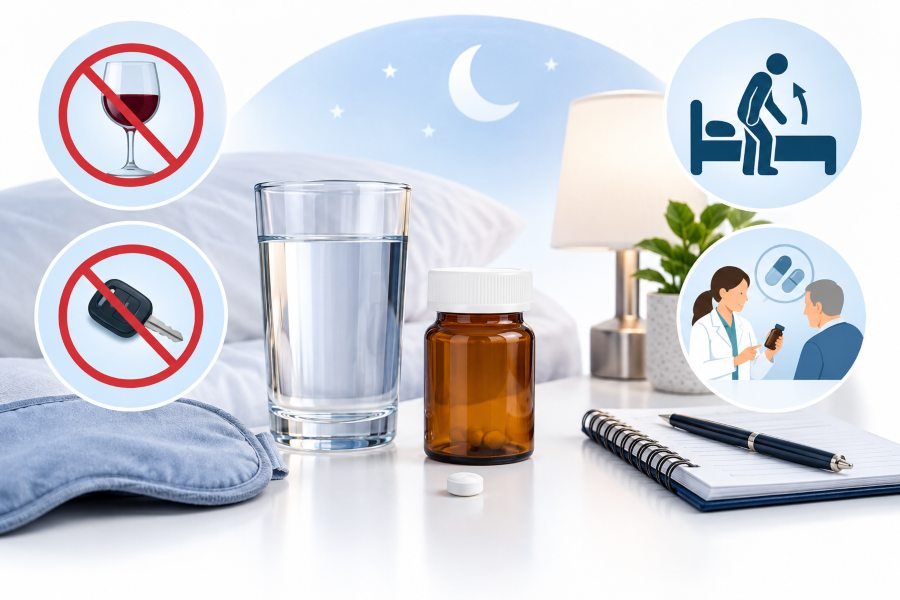
Get up slowly. Sit on the edge of the bed for a minute or two before standing, especially during the night.
Skip alcohol. It makes drowsiness and dizziness worse.
Wait before driving. Don’t drive or use machinery until you know how trazodone affects you, including the morning after.
Keep a medicine list. Include over-the-counter drugs and supplements, and show it to your pharmacist whenever something new is added.
Never double up on a missed dose. If you forget a bedtime dose, ask your pharmacist whether to take it late or skip it, since a late dose can leave you groggy the next day.
Don’t stop suddenly. After regular use, stopping abruptly can cause dizziness, nausea, anxiety, irritability, and rebound sleep problems. Your prescriber can help you taper.
It also helps to look beyond medication. The AASM guideline on behavioral treatments for insomnia gives a strong recommendation for cognitive behavioral therapy for insomnia (CBT-I). CBT-I combines education about sleep, a structured sleep schedule, and techniques for changing unhelpful thoughts about sleep, usually over about four to eight sessions. It is available in person, by video, and through digital programs.
It’s discouraging when a medicine that once helped seems to fade. Before assuming you need more trazodone, it’s worth asking whether something else is disturbing your sleep. Loud snoring, gasping, or pauses in breathing can point to sleep apnea. An urge to move your legs in the evening may suggest restless legs syndrome. Low mood, worry, pain, reflux, frequent nighttime urination, caffeine, alcohol, and irregular sleep times can all keep insomnia going, and some medicines can interfere with sleep too.
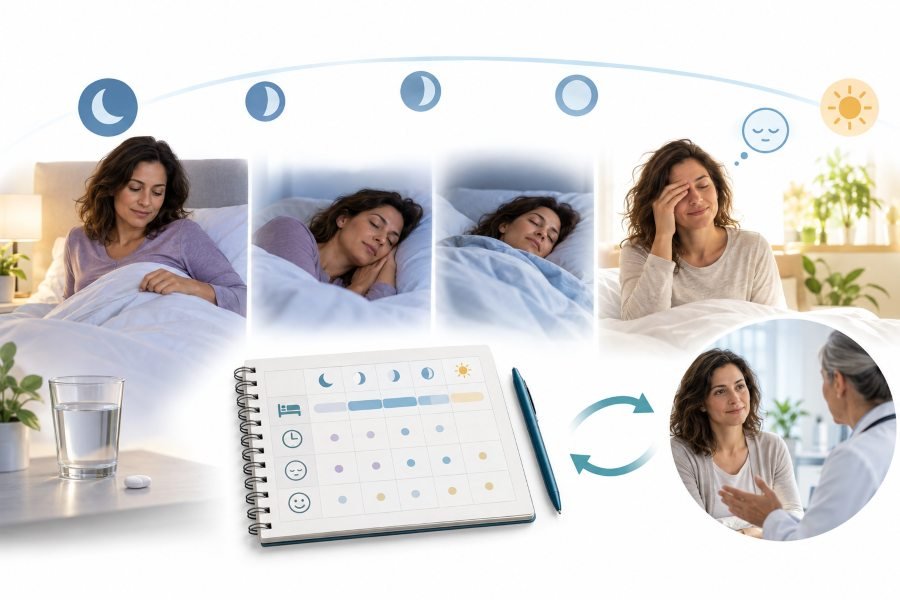
Keeping a simple sleep diary for one to two weeks gives your doctor something concrete to work with. Note when you go to bed, when you wake, how often you wake at night, any naps, caffeine and alcohol intake, and when you took your dose. With that information, your doctor can adjust the timing, look for other conditions, refer you for CBT-I, or suggest a different treatment with stronger evidence for insomnia.
When To Seek Medical Help
When To Seek Medical Help
Call 911 or your local emergency number, or go to the nearest emergency room, if:
Someone has taken more trazodone than prescribed and is very hard to wake, has fainted, is having a seizure, has trouble breathing, or has chest pain or an irregular heartbeat. In the US, you can also call Poison Help at 1-800-222-1222 for guidance.
An erection lasts more than four hours.
You notice signs of serotonin syndrome, such as fever, confusion, a racing heart, and muscle stiffness or twitching.
You develop sudden eye pain or changes in your vision.
You have thoughts of harming yourself. In the US, you can call or text 988 to reach the 988 Suicide and Crisis Lifeline at any time. Outside the US, contact your local crisis line or emergency services.
Book an appointment with your doctor soon if:
Morning drowsiness is affecting your driving, work, or safety.
You feel dizzy when standing, or you have fallen or nearly fallen.
Your mood, anxiety, or restlessness is new or getting worse.
Your insomnia continues despite treatment, or you feel you need more medicine to get the same effect.
You are pregnant, planning a pregnancy, or breastfeeding.
You are starting or stopping any other medicine or supplement.
Frequently Asked Questions
Question
Answer
Is 50 mg of trazodone a high dose for sleep?
No. A 50 mg dose is within the commonly used range for sleep and is a common starting dose. It is also the dose tested in the trial that informed the AASM guideline.
Can I take more if I still can’t sleep?
Not without talking to your prescriber first. Higher doses can increase side effects, and there may be another reason your sleep isn’t improving that more trazodone won’t fix.
Is trazodone addictive?
Trazodone is not a controlled substance in the US, and its label reports no signs of drug-seeking behavior in clinical studies. However, stopping suddenly after regular use can cause withdrawal-type symptoms, so changes should be planned with your prescriber.
How long can I safely take trazodone for sleep?
Most trazodone research for insomnia is short-term, and a Cochrane review found no evidence supporting long-term use for insomnia. If you’ve been taking it for months, it is reasonable to discuss with your prescriber whether it is still helping and whether you still need it.
Bottom Line
The label maximum of 400 mg a day applies to depression, not insomnia. For sleep, doses usually stay between 25 mg and 100 mg, and even in that range the benefits tend to be modest. There is no separate trazodone max dose for sleep, so the safest limit is the one your prescriber sets for you. If your current dose isn’t enough, a conversation with your doctor is a better next step than a bigger tablet, and CBT-I can tackle the habits and thought patterns that keep insomnia going.
Disclaimer
This article is for general information only and is not medical advice. It does not replace a consultation with a doctor, pharmacist, or other qualified health professional who knows your medical history. Never start, stop, or change the dose of any medicine without guidance from your prescriber. If you think you or someone else has taken too much trazodone, call emergency services or Poison Help (1-800-222-1222 in the US) right away.
References
Trazodone Hydrochloride Tablets, USP [prescribing information]. East Windsor, NJ: Aurobindo Pharma USA, Inc.; revised September 2025. Repackaged by Bryant Ranch Prepack. DailyMed, US National Library of Medicine. Accessed September 21, 2026.
Shin JJ, Saadabadi A. Trazodone. In: StatPearls [Internet]. Treasure Island (FL): StatPearls Publishing; 2026 Jan-. Updated February 29, 2024. PMID: 29262060.
Sateia MJ, Buysse DJ, Krystal AD, Neubauer DN, Heald JL. Clinical practice guideline for the pharmacologic treatment of chronic insomnia in adults: an American Academy of Sleep Medicine clinical practice guideline. J Clin Sleep Med. 2017;13(2):307-349. doi:10.5664/jcsm.6470
Everitt H, Baldwin DS, Stuart B, Lipinska G, Mayers A, Malizia AL, Manson CCF, Wilson S. Antidepressants for insomnia in adults. Cochrane Database Syst Rev. 2018;5(5):CD010753. doi:10.1002/14651858.CD010753.pub2
Kokkali M, Pinioti E, Lappas AS, Christodoulou N, Samara MT. Effects of trazodone on sleep: a systematic review and meta-analysis. CNS Drugs. 2024;38(10):753-769. doi:10.1007/s40263-024-01110-2
Bronskill SE, Campitelli MA, Iaboni A, Herrmann N, Guan J, Maclagan LC, et al. Low-dose trazodone, benzodiazepines, and fall-related injuries in nursing homes: a matched-cohort study. J Am Geriatr Soc. 2018;66(10):1963-1971. doi:10.1111/jgs.15519
Edinger JD, Arnedt JT, Bertisch SM, Carney CE, Harrington JJ, Lichstein KL, et al. Behavioral and psychological treatments for chronic insomnia disorder in adults: an American Academy of Sleep Medicine clinical practice guideline. J Clin Sleep Med. 2021;17(2):255-262. doi:10.5664/jcsm.8986
Trazodone. MedlinePlus Drug Information. Bethesda (MD): US National Library of Medicine; American Society of Health-System Pharmacists. Last revised October 15, 2025. Accessed September 21, 2026.
About Julio Rodríguez Medicine Specialist
Julio Rodríguez brings focused medical expertise and thoughtful patient care, helping people address health concerns with clarity and confidence.







 Cardiologist